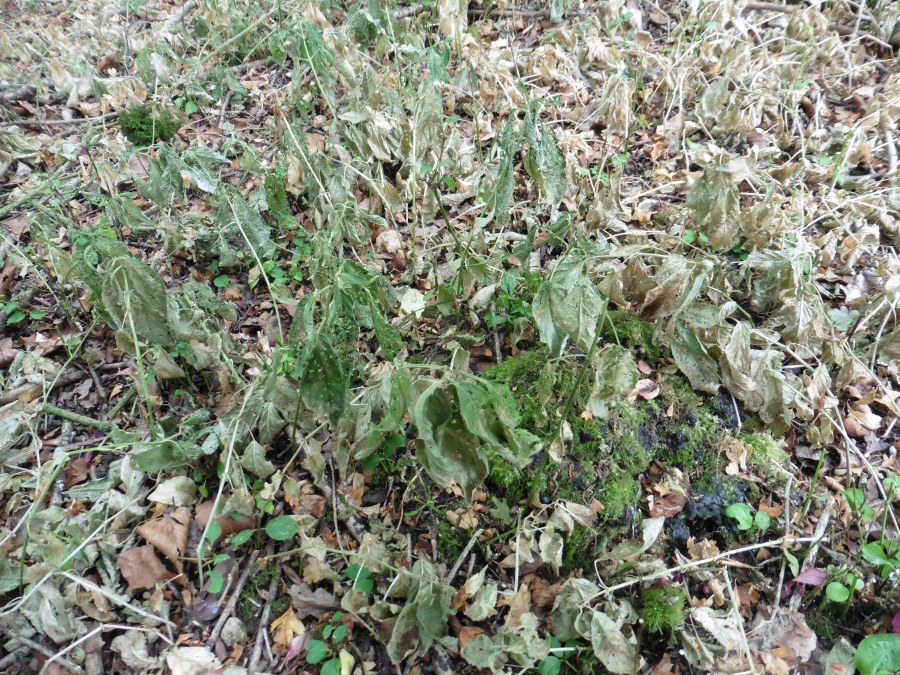
I went up into the woods last week to see how they were faring in the heatwave: at first site, surprisingly well, especially compared to the grassland. The grasses were dry and sere but much of the bramble under the trees still looked green. The canopy buffers conditions below such that the ground and vegetation does not suffer the same temperature extremes as out in the open and more moisture may be retained in the soil. However, even under the trees the wood false-brome grass was burnt off, in some areas dog’s mercury was wilting badly and closer inspection of the bramble found the leaves crimping up and the fruits often black but dry.


Sere grass versus green bramble
Rackham used to say that British broadleaved woods burnt like wet asbestos, i.e hardly at all. However he might now have changed his mind somewhat had he lived to see the current record heatwaves and drought. I think the fire risk even in broadleaved woodland understories is becoming significant in summers such as this. We can no longer view it as just something that just affects conifer stands. It is perhaps comparable to the shift that happened after the 1987 storm – suddenly more ecologists recognised windblow as a potential disturbance factor in ancient woods, because the evidence was there in terms of uprooted trees, whereas previously it was seen mainly as an issue for commercial plantations.
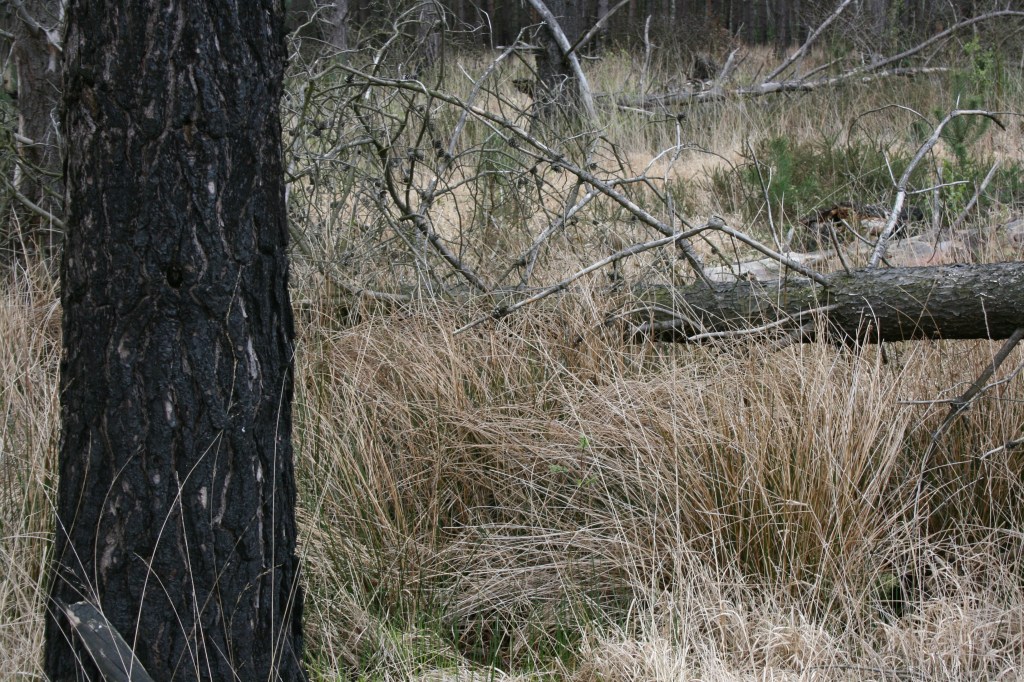
A fire in Swinley Forest plantations
But back to fires; there have been claims and counter-claims about whether rewilding approaches are likely to make wildfire more or less likely to spread. As often with conservation and land-use, it depends on the type of site and type of action undertaken (or not undertaken). Blocking drains, introducing beavers and restoring wetland conditions should in the medium to long-term reduce fire-risk over the areas concerned and may also reduce the spread of fire across a landscape by creating natural wetland firebreaks. In the short-term and on the fringes of the bogs increased growth of heather or other flammable vegetation could increase the fuel load.

Wetland development around a beaver re-introduction project
Reducing livestock numbers on heath or grassland, stopping controlled burning, is likely to lead to increased fuel load in the short term. However, replacing sheep grazing with free-ranging cattle or ponies could in the longer-term lead to reduced dominance of molinia and bracken and development of a more varied vegetation mix where fire might spread less quickly. The flammability of different species is important: birch and blackthorn scrub development on heath or grassland might slow fire spread; gorse and pine exacerbate it.

Dense gorse development, a potential fire risk
Leaving broadleaved woodland alone (minimum intervention) will in most years probably not of itself have a big effect on flammability; shade levels are likely to increase, there may be more dead wood on the ground but that will generally be quite moist (because of the shade). Greater fire risk could come if large gaps start to develop in the canopy as is happening in some woods from ash dieback. Managers will need to consider if the increased growth bramble, bracken or grass is likely to be a problem from a fire-risk or other perspective, either in the short or longer term. This may lead to a need for more intervention than originally planned, for example by introducing grazing by cattle or ponies. Moreover in a very dry summer such as we are having in south-eastern Britain even vegetation that might not normally burn, could go up in flames.


Dead wood in a minimum intervention area; ash dieback creating gaps in canopy
Adaptive management is going to be needed more than ever, with increased drought and fire being part of picture. Rewilding or minimum intervention approaches should still be considered where there are thought to be longer-term benefits: just as farmers will be growing cereal crops notwithstanding the unfortunate cases this year where whole fields have burnt.

Wilting dog’s mercury


