There is a lovely short story which imagines a distant world, where the Diamondwood Forest – from the trees, ground flora, to the decomposers (the clean-up squad) – is in fact one interconnected supra-organism whose controlling being is large turtle-like creature. The Forest realises that the only way of stopping humans wrecking the system is to allow them to cut some trees, but in a way that is sustainable. So, it sets about manipulating the local human colonists to, unknowingly, become its guardians. The story follows the Forest’s defeat of a rampant logging attempt and restoration of calm.
| The organism that was the Diamondwood Forest grew quiet again. The quiet spread back to its central mind unit in the Queen Grove, and the unit began to relax towards somnolence. A crisis had been passed, perhaps the last of the many it had foreseen when human beings first arrived on the world of Wrake. The only defence against Man was Man. Understanding that, it had laid its plans. On a world now owned by Man, it adopted Man, brought him into its ecology, and its ecology into a new and again successful balance. J.H. Schmitz (1965) Balanced Ecology |
How unlike the forest life of our own dear world! Some of the early ecologists did view climax vegetation communities as being a bit like super-organisms, but this view fell out of fashion. Communities were rarely homogenous and succession pathways were very dependent on the particular disturbance histories of the local spot: nature was chaotic. However, in some ways we are now moving back towards the idea that a forest (say) is much more than just the sum of its component parts.

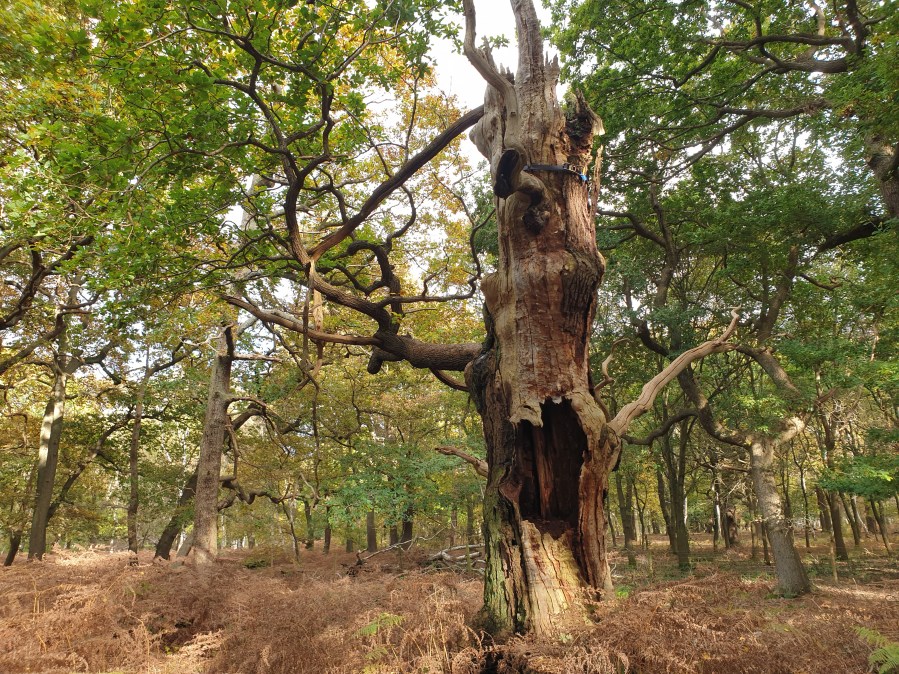
‘Climax’ native pine woodland
When species come together in particular ways there may be emergent properties: trees together create a new microclimate below them, and if on sufficient scale can affect the macro-climate over them. There is apparent co-operation as well as competition between species and individuals growing together, for example through transfers of nutrients via the mycorrhizal networks.
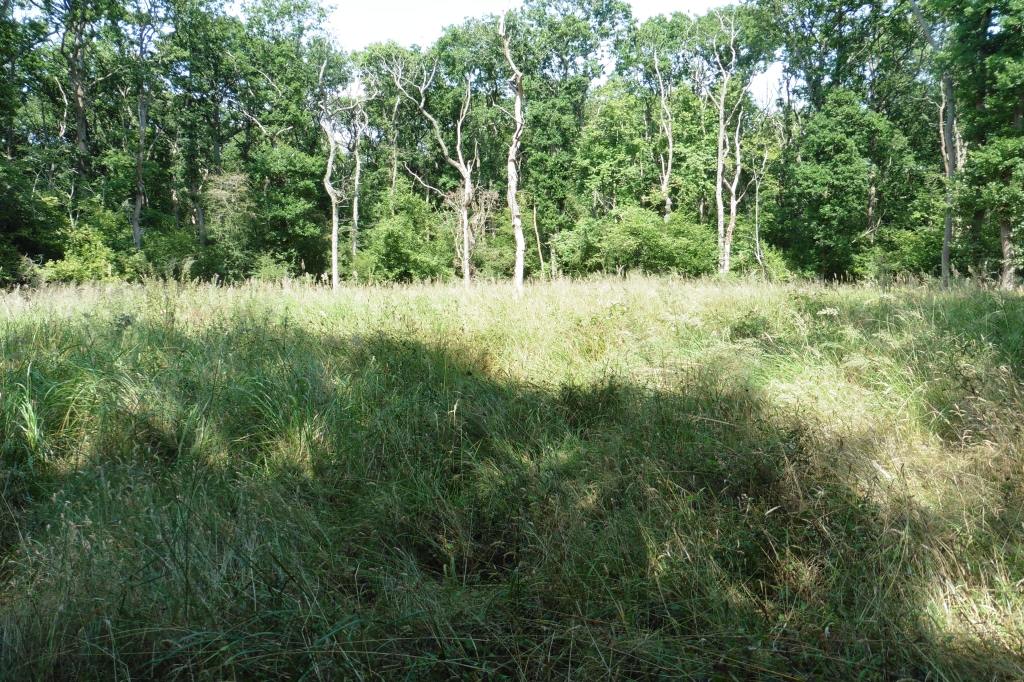
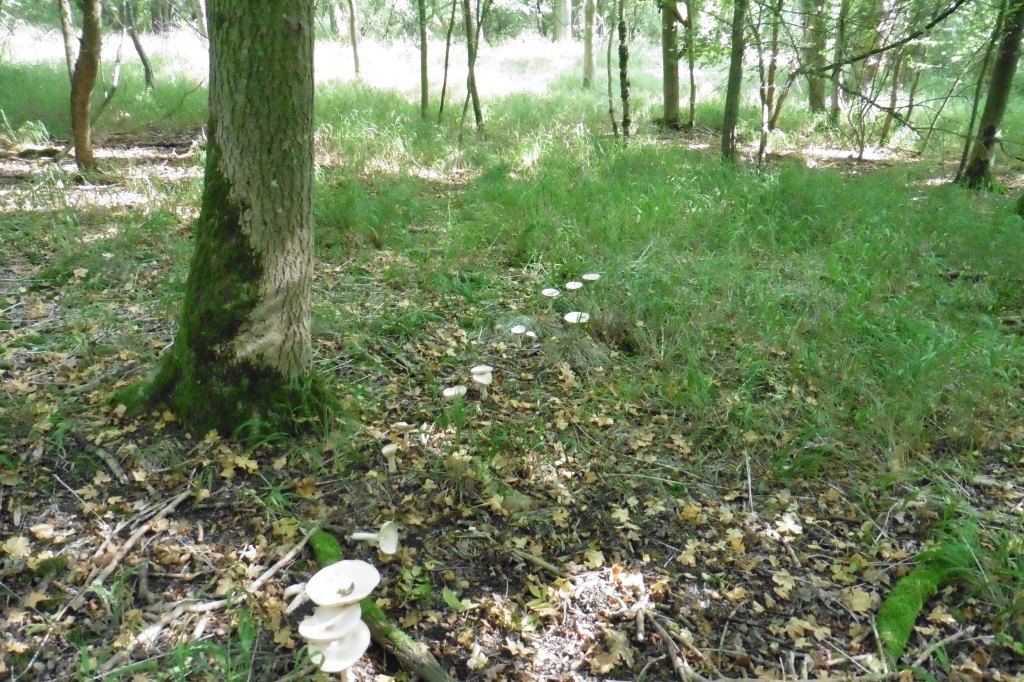
Cool under the canopy compared to out in the sun; the above-ground parts of fungi are but a tiny part of the underground network
There is communication at a distance, as when a tree releases compounds into the air as a reaction to insect attack that then stimulate other trees to increase production of defence chemicals in their leaves. Through epigenetics trees may be able to ‘pass on’ their experiences of drought or pathogen attack to their offspring. This does not mean there is deliberate, deterministic action to favour tree and forest survival: trees and forests are simply reacting to external stimuli. These reactions will be favoured by natural selection if they allow for greater reproduction and survival.
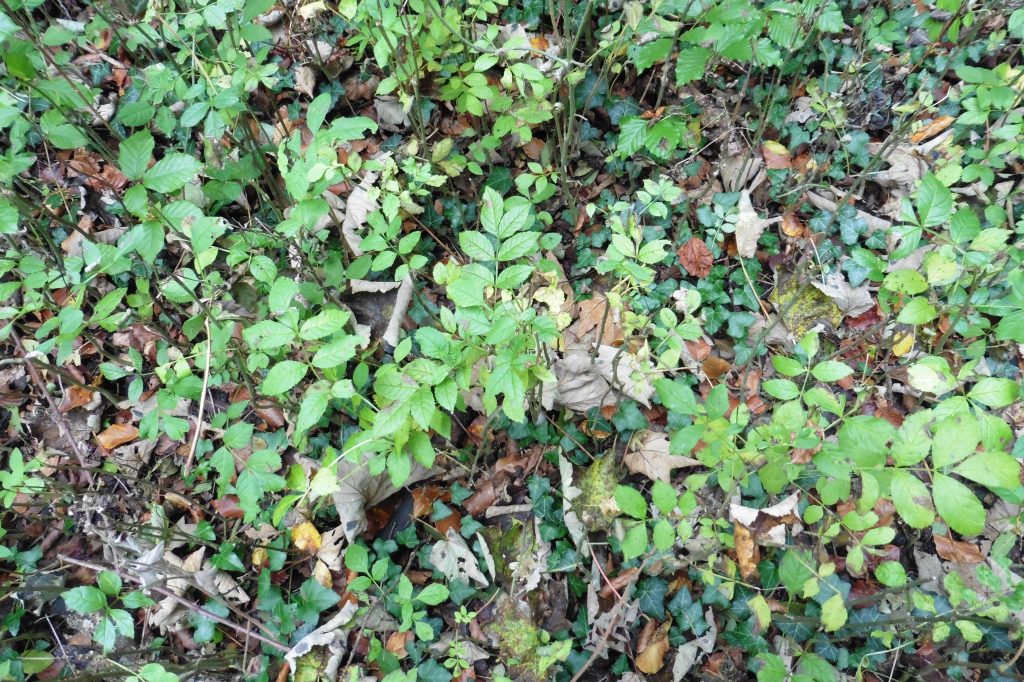
These ash seedlings may have higher levels of resistance to ash dieback as a result of their parents exposure to stress.
In the Diamondwood Forest humans were incorporated into the local ecology, stimulating regeneration of new stands, by small scale harvesting of the trees which were highly prized for their timber and decorative properties. Forestry practice in Britain is increasingly moving towards smaller scale working which it is expected will allow a more sustainable yield of timber as well as of the other benefits that we desire from our woodland (biodiversity, water management, shady places to walk, stored carbon).

A forestry group looking at continuous cover forestry practice
As yet there is no evidence that there is a Diamondwood-type central mind-unit controlling what goes on in our forests. – perhaps just as well, since such a mind might take justified revenge on humans for the damage that we have done over the millenia: think Old Man Willow in Tolkein’s Old Forest on the edge of the Shire. Instead, we, as consumers, of forest products need to adjust our behaviours and reduce our demands such that what we want is more in line with what can be sustainably produced.


