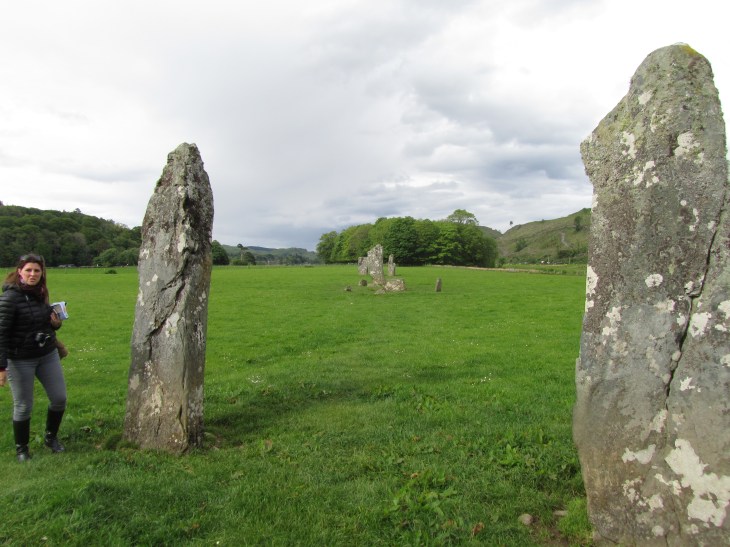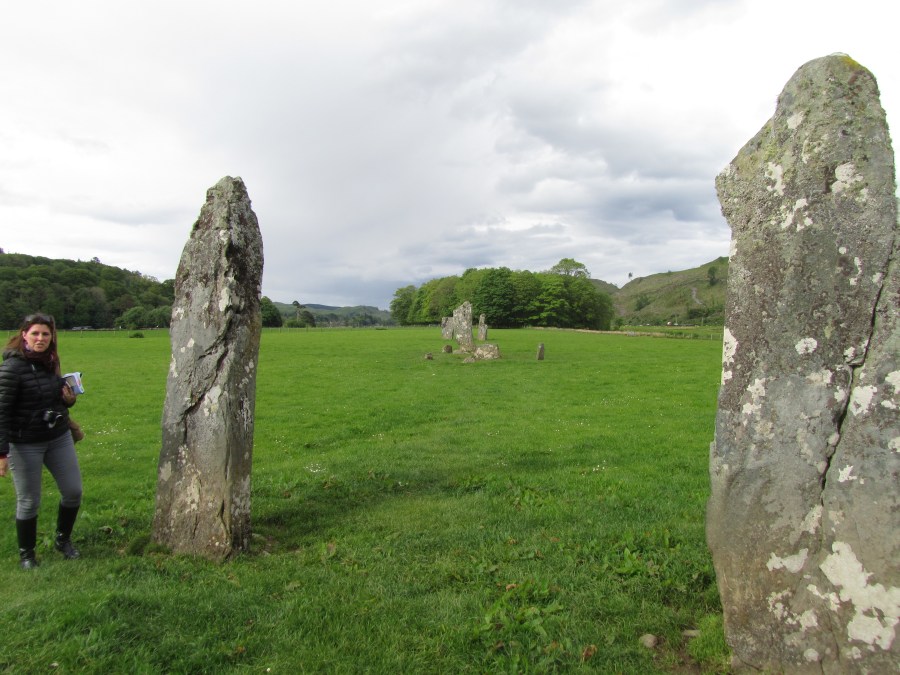
I first stayed in Kilmartin, just north of Lochgilphead in 2014 because it was close to some woods I wanted to visit, and discovered it was also the centre of a fantastic prehistoric and historic landscape. The Kilmartin Hotel made a friendly and comfortable base.
So well worth another visit and an opportunity to go to Taynish National Nature Reserve. In the twelve years with the Nature Conservancy Council when Scotland was within my remit I only managed to get there once. It is not the sort of place you go to ‘in passing’, being on a peninsula, down a single track, dead-end road, but well worth the effort particularly as there was a rather fine outdoor art exhibition around the ruined mill on the loch side.
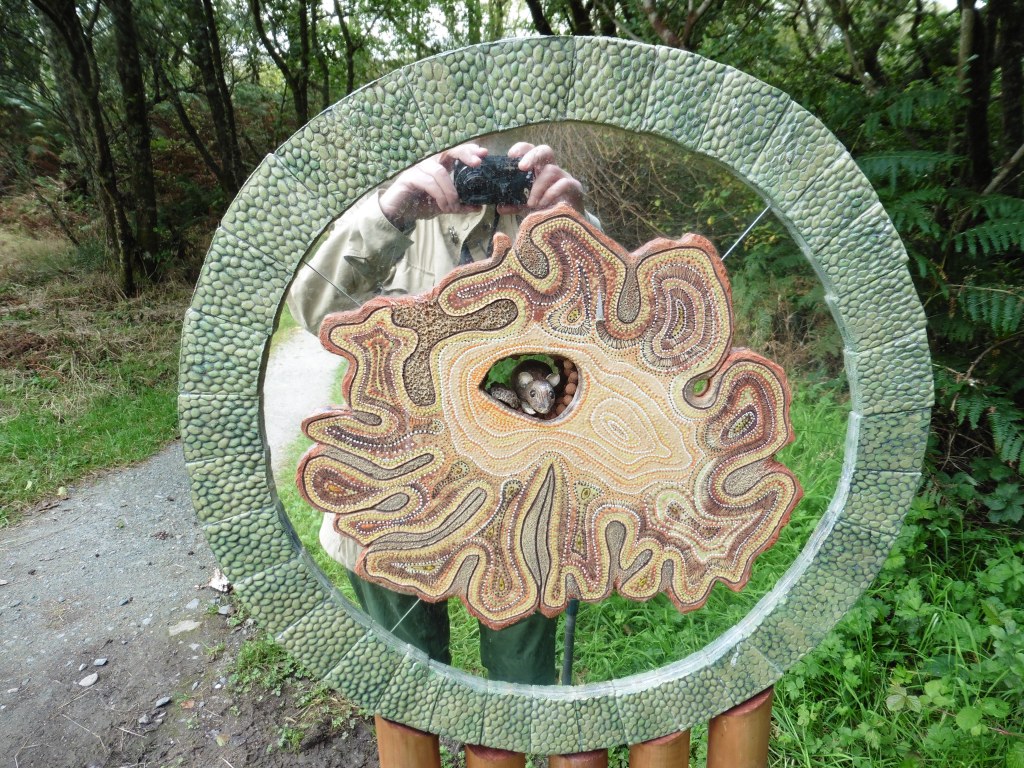
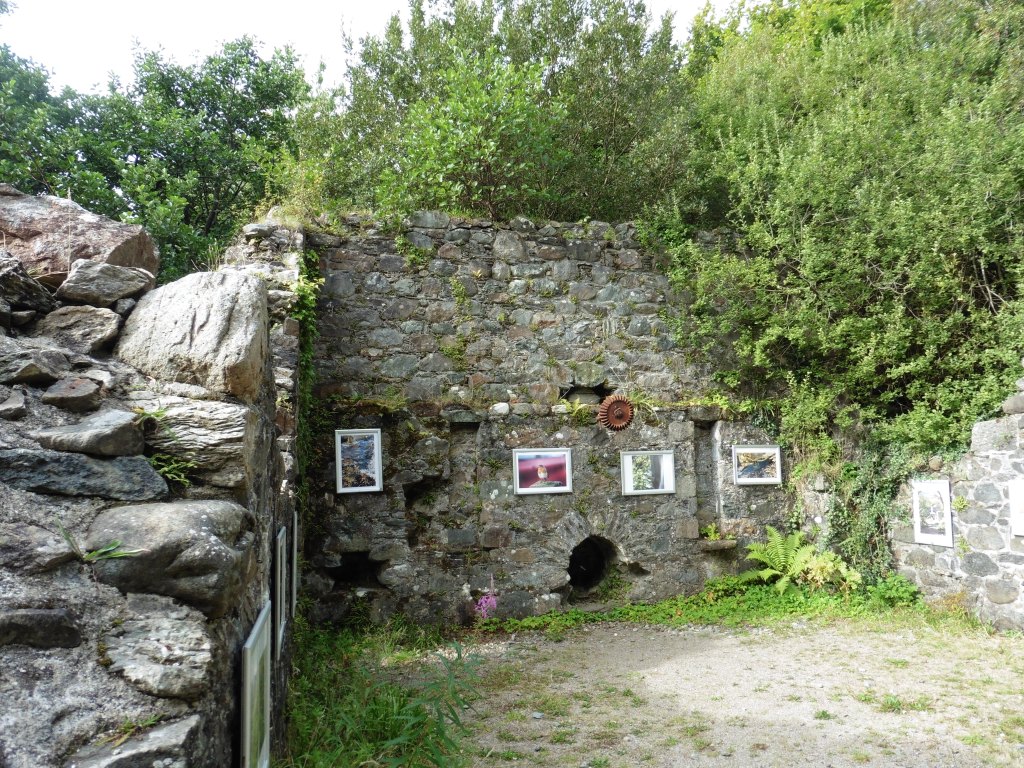
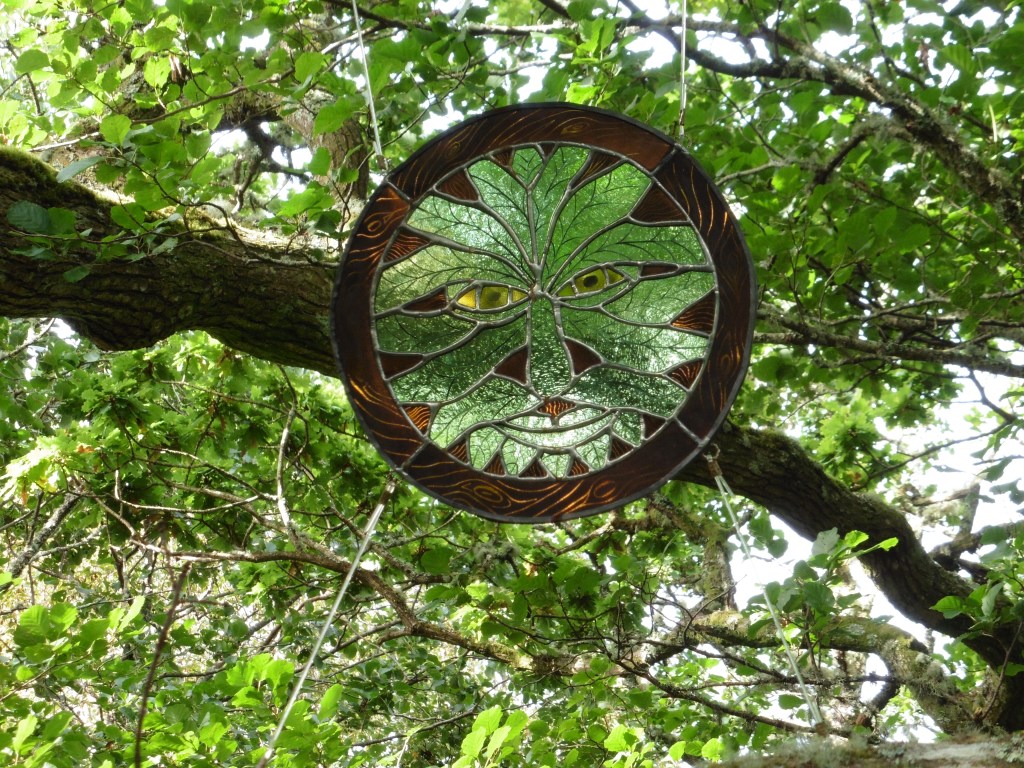
Art in the woodland
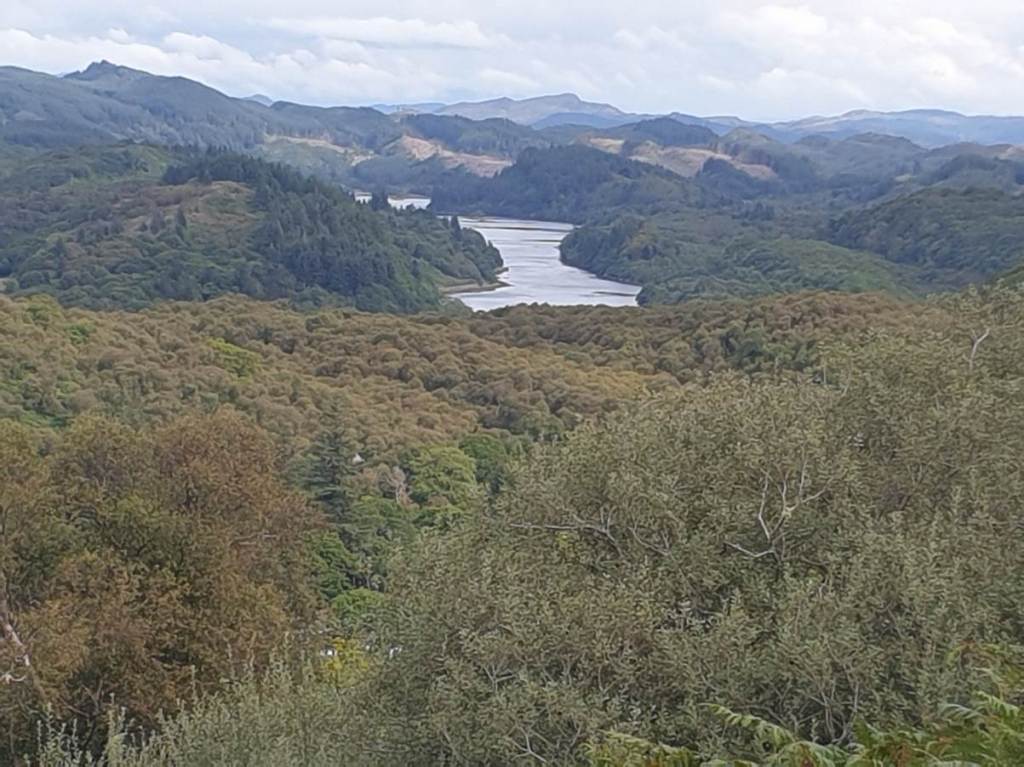
The reserve is a mixture of low ridges and valleys with woodland on the steep valley sides, lochs or boggy land in the valley bottoms and open grass/heath on the tops of the ridges.
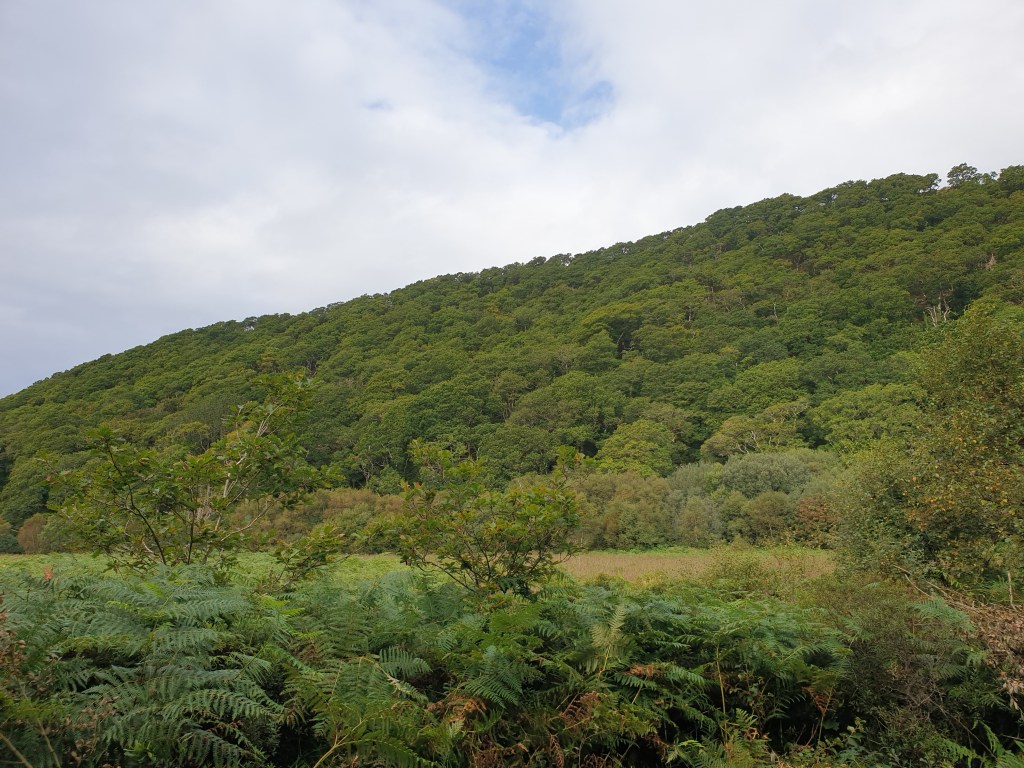
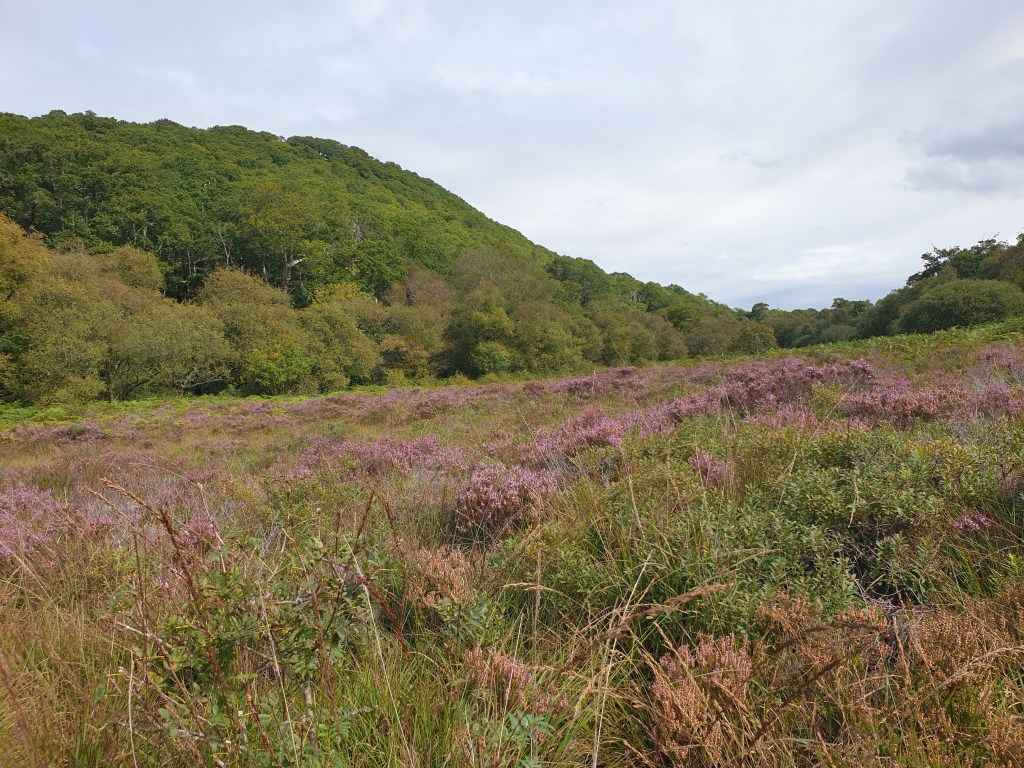
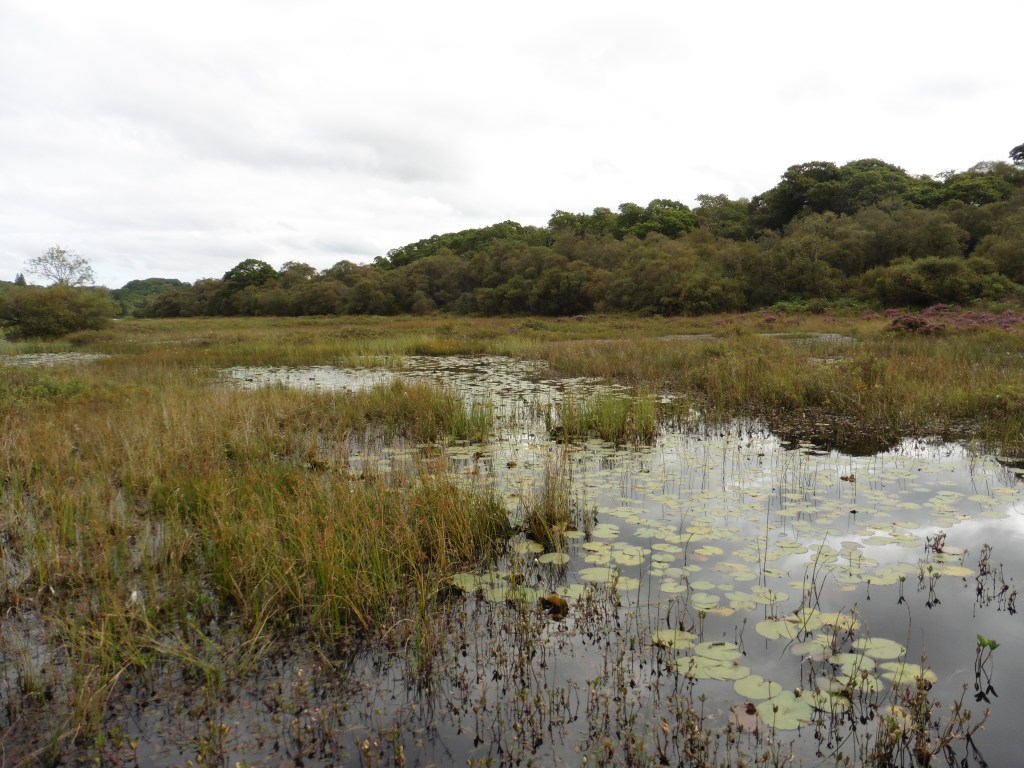
Wooded slopes and boggy valleys
The slope woodland is mainly oak over dense moss-bilberry communities (W17 type). Some of the trees are multi-stemmed individuals that might be remnants of coppice. Given the history of 18th/19th century iron and bark industries in the region it would be surprising if the oakwoods had not been exploited in this way. However there were no signs of charcoal hearths. Much of the woodland now has more of a high forest structure, perhaps promoted from former coppice, natural regeneration or deliberate 19th century planting, as in some Lochaber sites. There are the remains of amenity plantings (lime, sycamore) elsewhere on the peninsula. Small areas of alder coppice were seen, often looking like recent colonisation of the flatter lochside ground: mainly the iris-meadowsweet-creeping buttercup (W7 type) flora. Birch was common with willow over Molinia on flat boggy ground and spreading on to some of the open heathy ridges (W4 type).
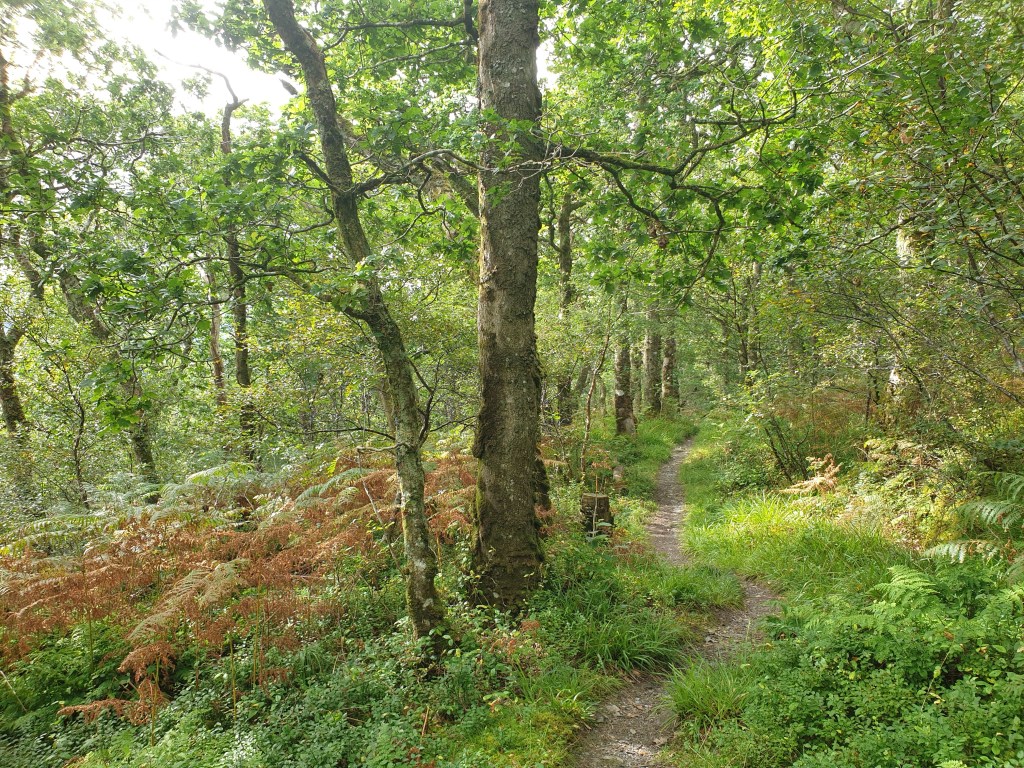
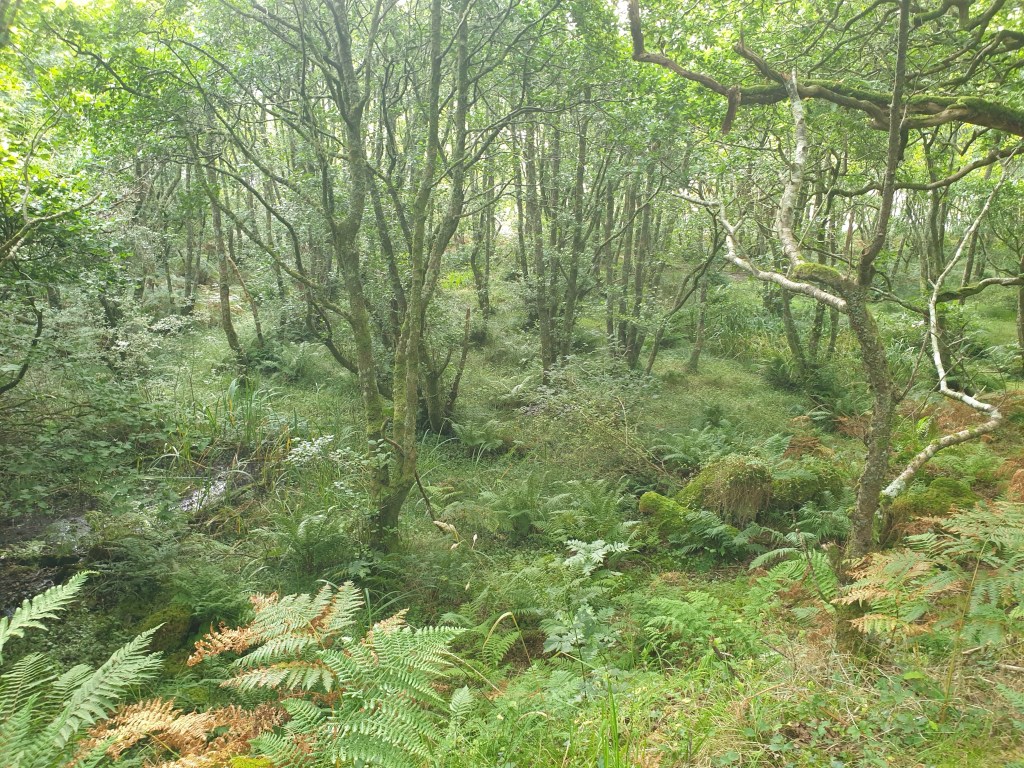
Oak high forest on the slopes; alder on the lochside flats.
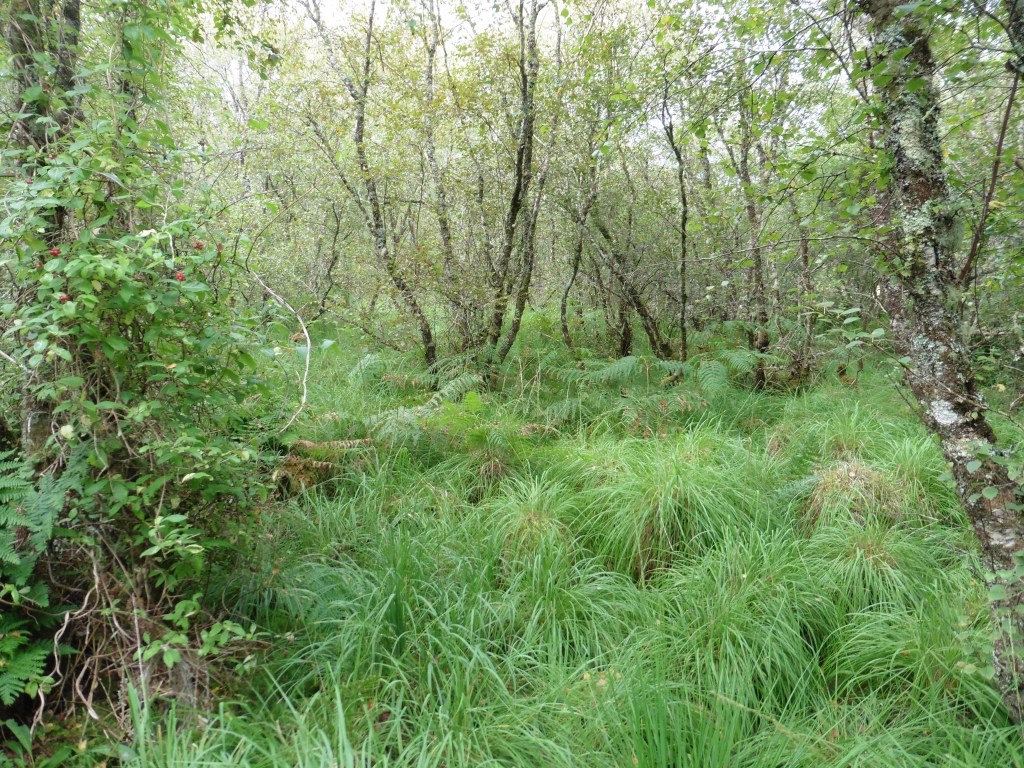
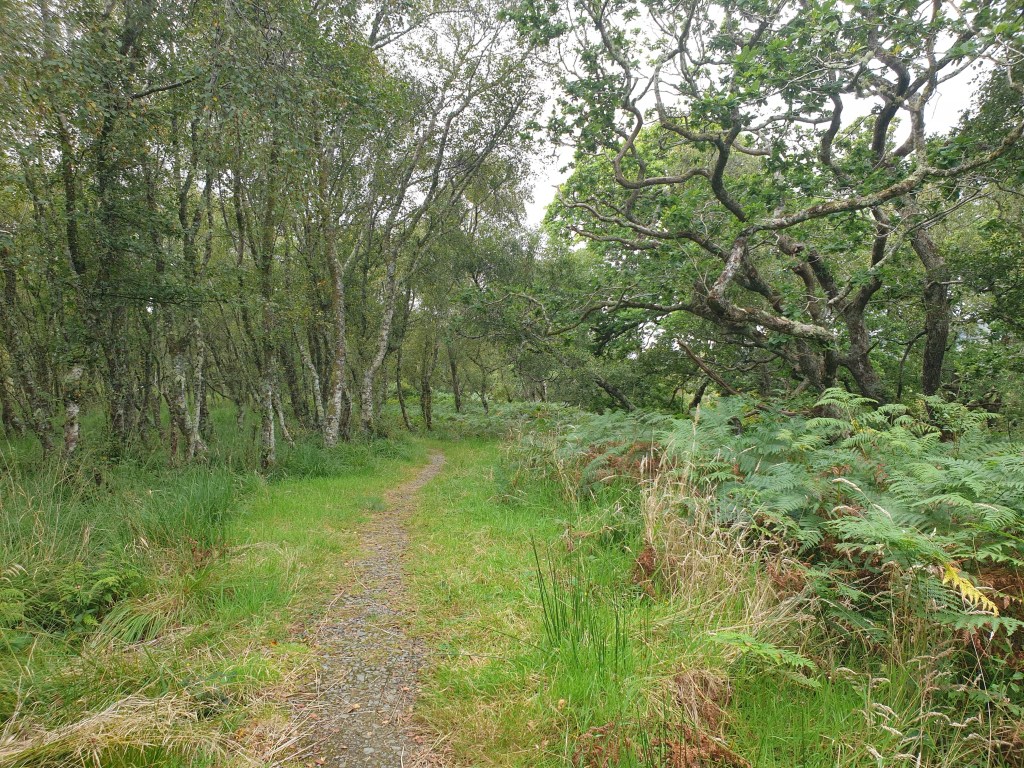
Birch-willow-Molinia on flat boggy ground; birch colonisation of heathy ridge tops to left of path, oak on slope to right.
As well as areas of semi-natural woodland the peninsula is heavily afforested, so important to watch out for the timber trucks along single track roads.
Now we associate the semi-natural woodland primarily with oak, but stands of hazel can be locally dominant where the ground is a little richer. It is not quite the hazel ‘monoculture’ found at Ballachuan, as there were generally some very scattered ash and oak amongst the bushes.
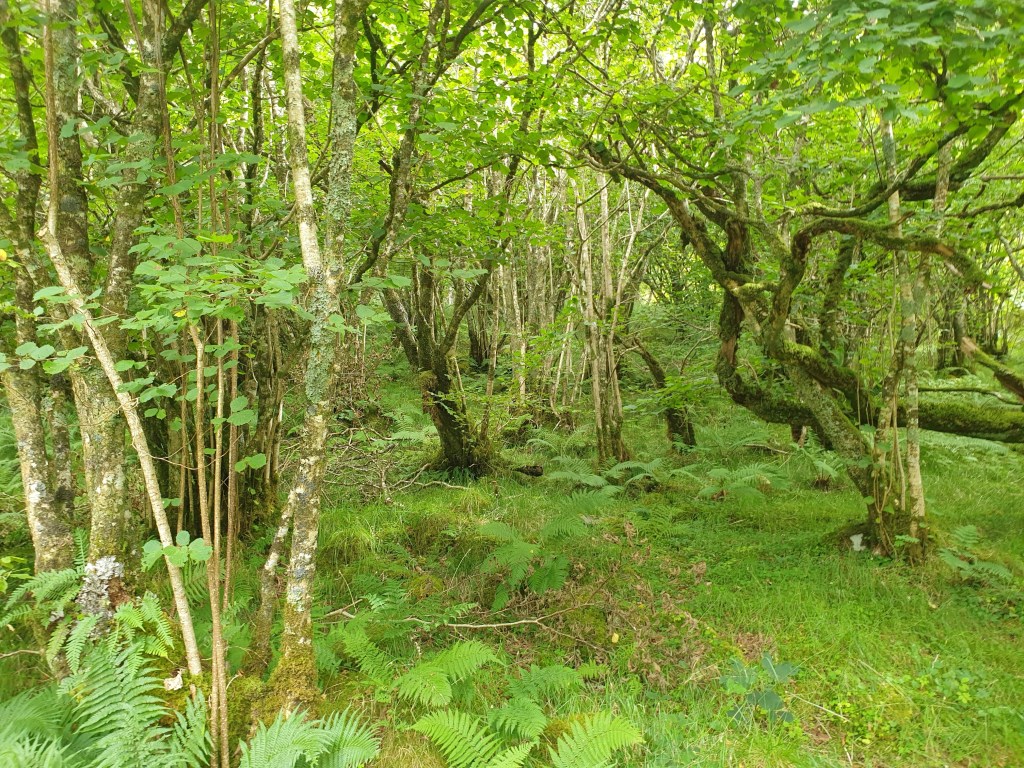
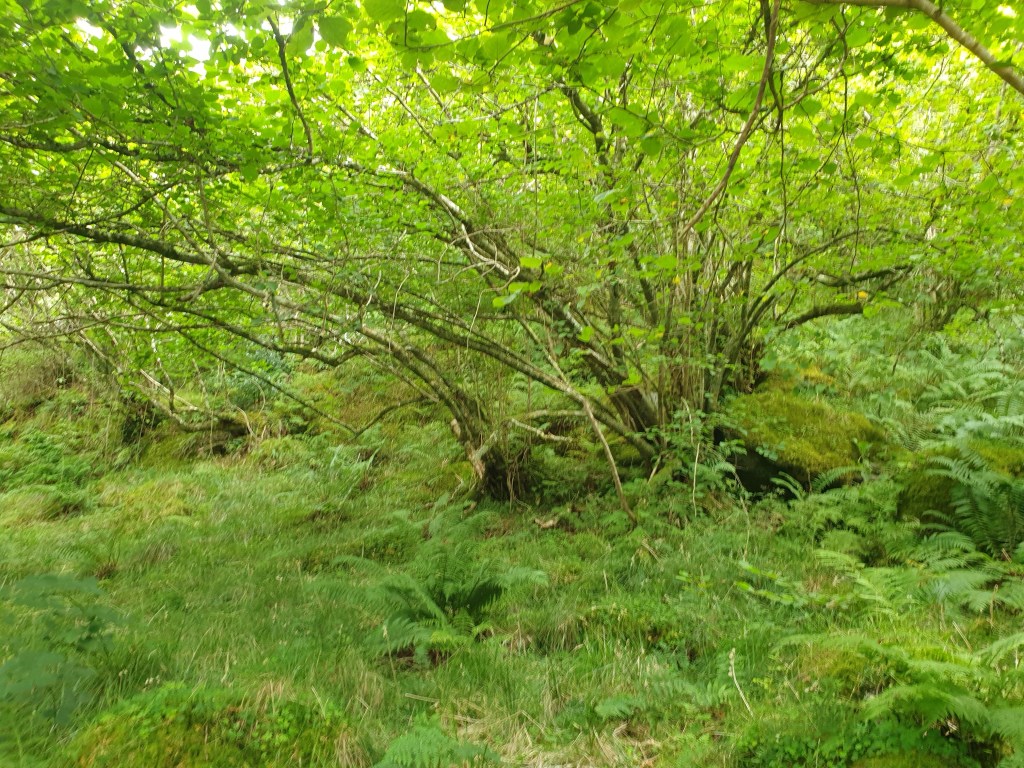
Hazel in the Knapdale wildlife reserve
Crinan Wood (Woodland Trust) was viewed along the path from the swing bridge in the south through to the Canal Basin in the north. The main block has oak and birch with abundant hazel. Around the lower edges there is also some beech and sycamore.
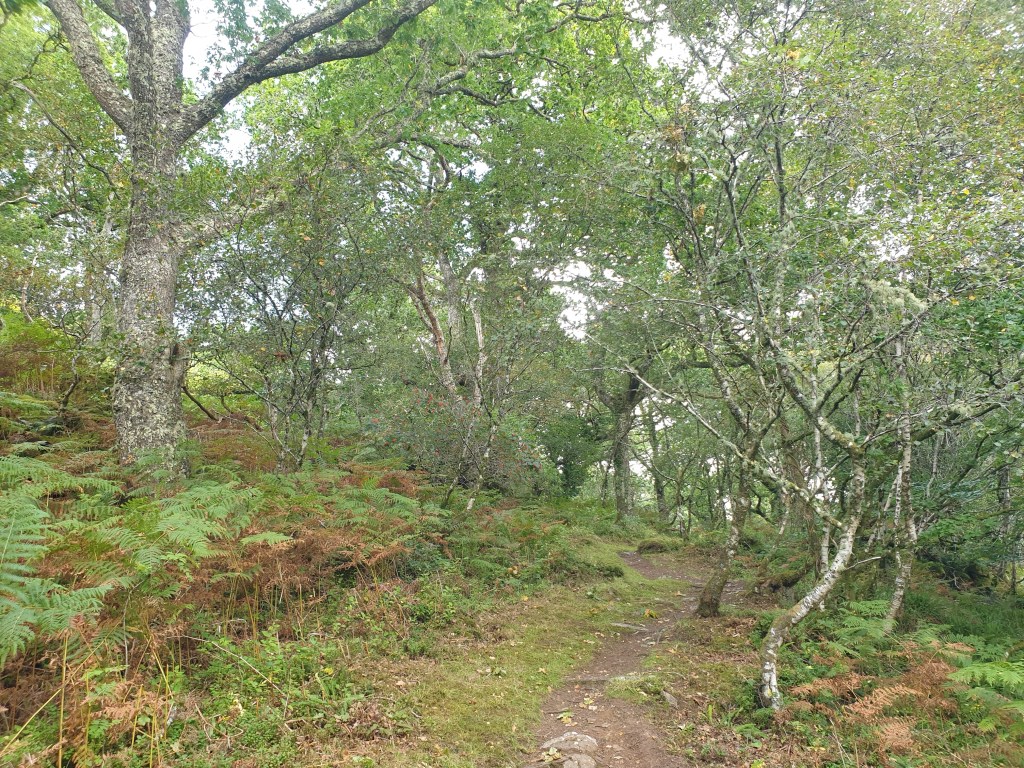
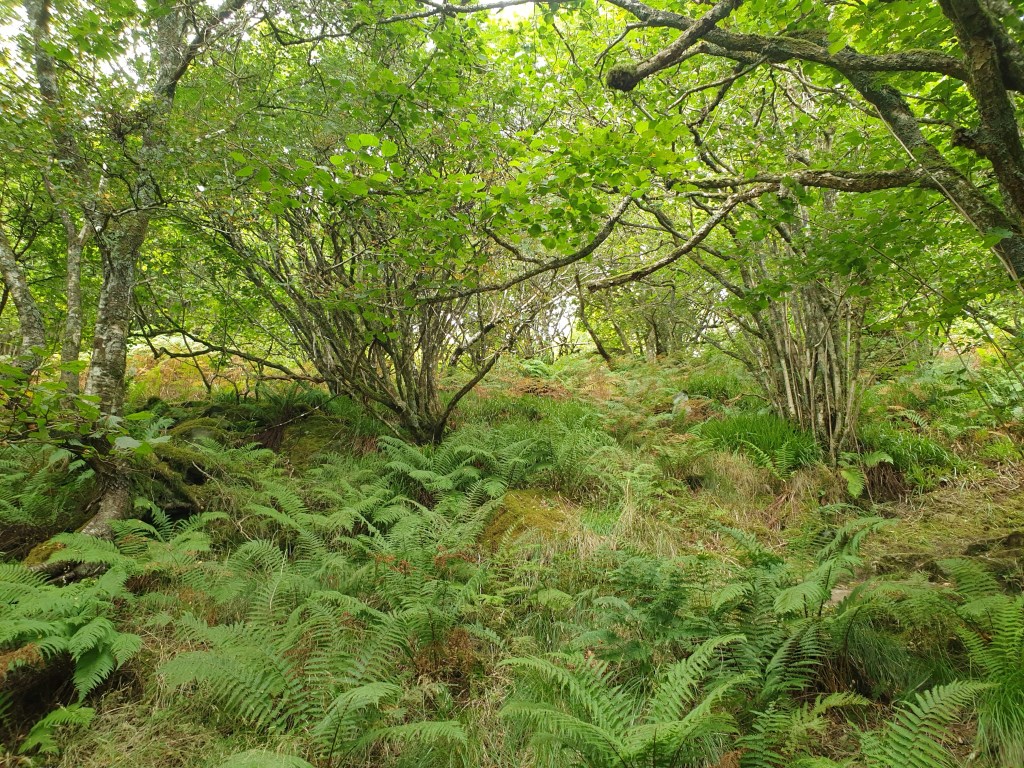
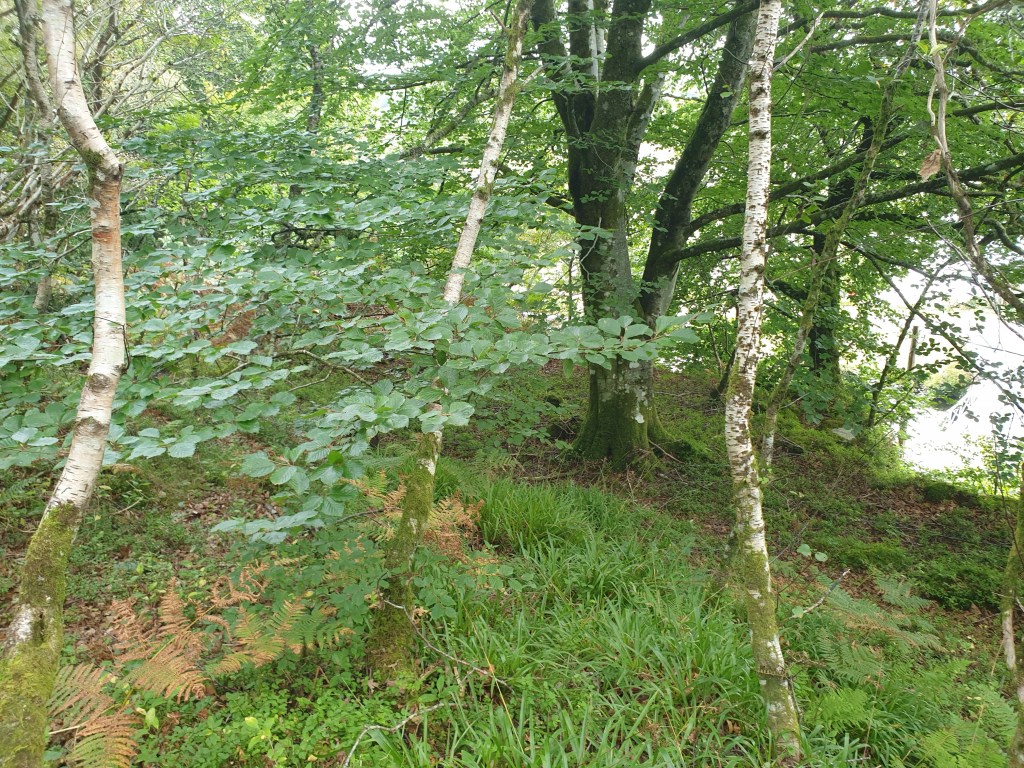
Crinan: oak-birch; areas of hazel dominance; mature beech
The mature oak appear from the ring count for one c.80 cm dbh tree to be about 200 years: e.g. post-Trafalgar regeneration or planting.
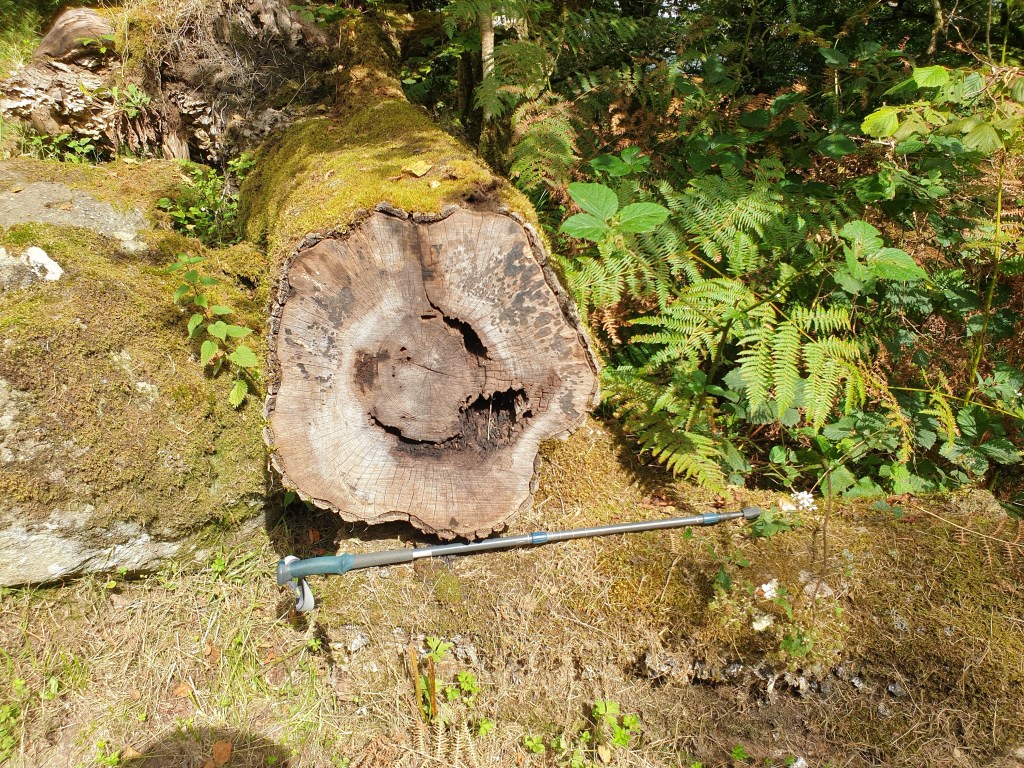
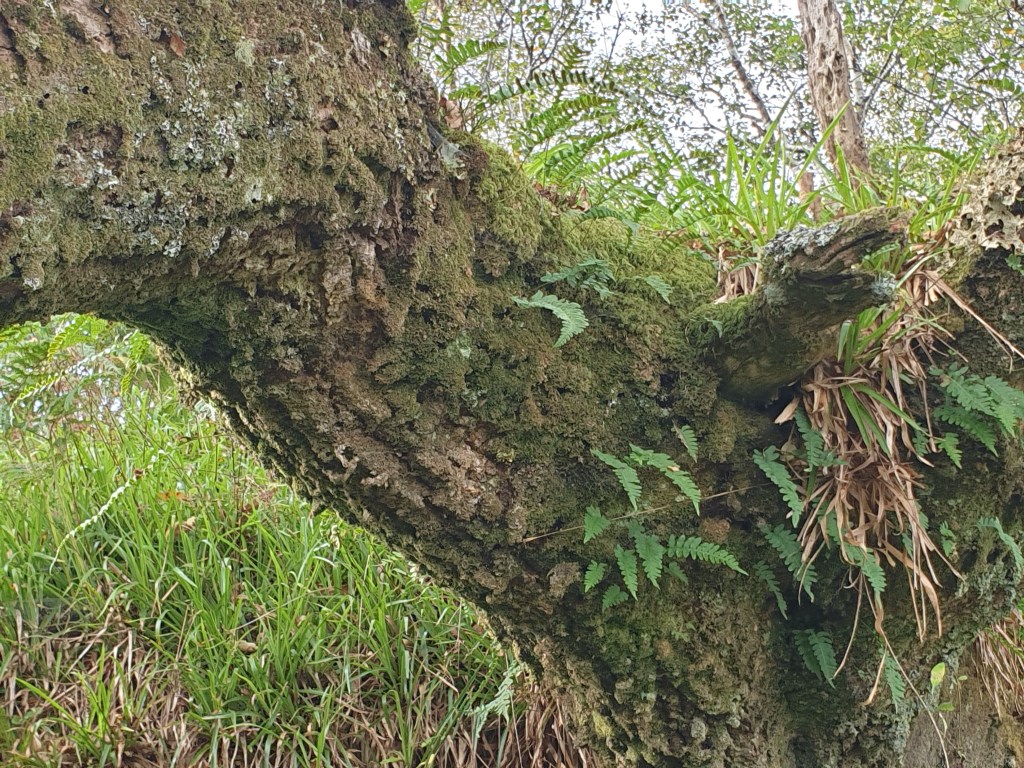
Cut log, allowing a ring count; underside of part windblown tree with lichens and polypody, and Great Woodrush in background
As expected epiphytes are abundant but ground level bryophytes did not seem that well developed. Instead the ground flora was abundant ferns, bracken and Luzula sylvatica, this last perhaps suggests that the wood is not that heavily grazed.
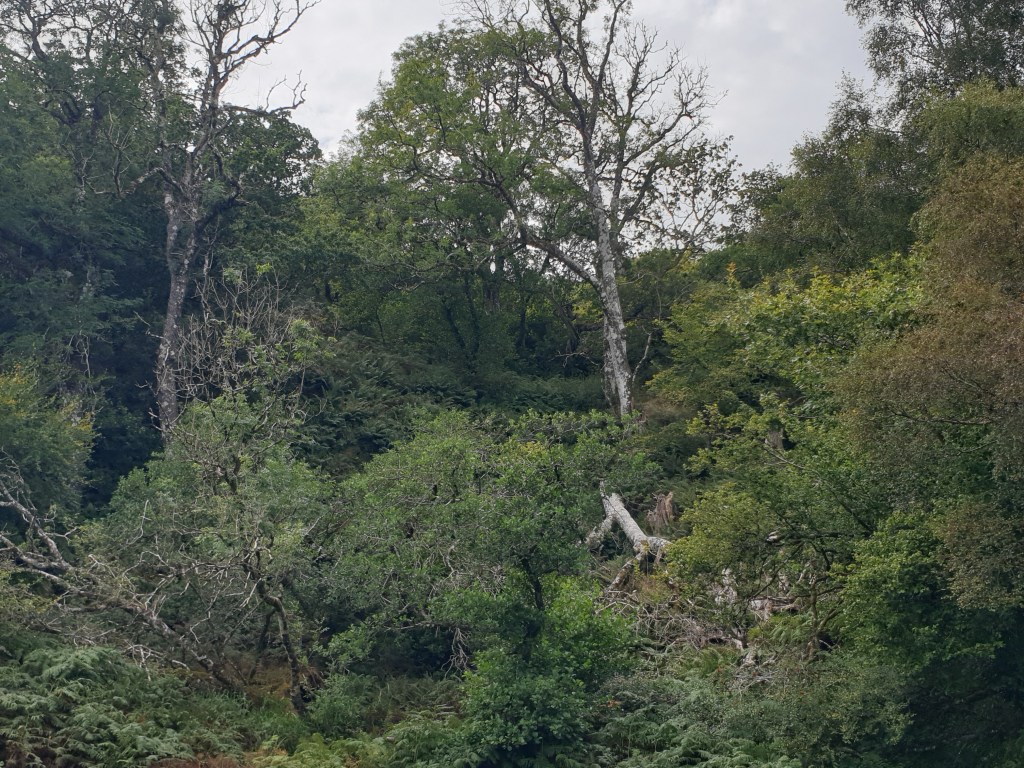
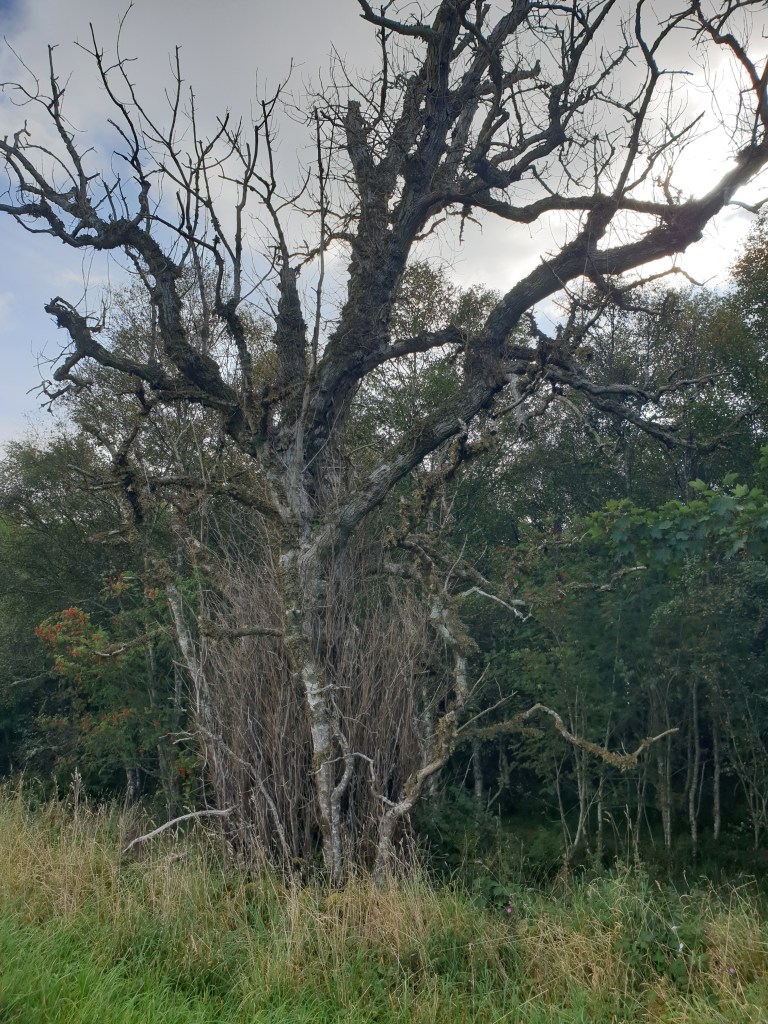
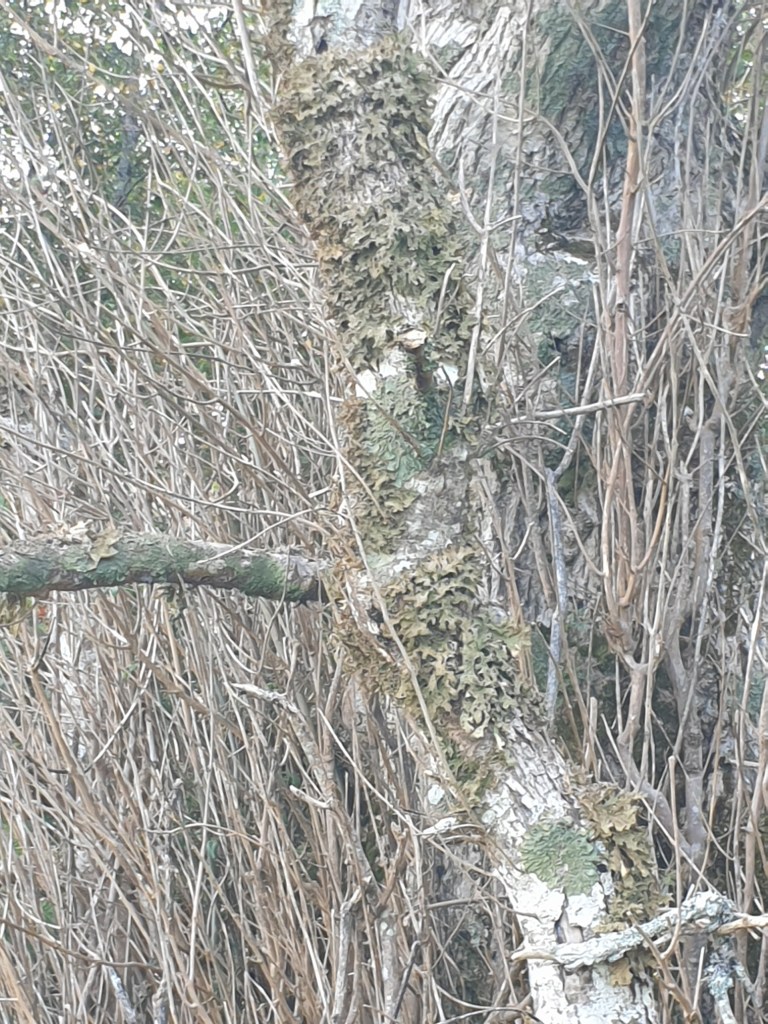
Dying ash above the Crinan Canal; dead ash on roadside (Mhoine Mor); Lobario on dead ash.
Ash dieback was prevalent, including on quite large trees. By contrast, there are still some healthy mature elms.
Around Kilmartin itself the balance of peatland and woodland was reversed: looking down from Dunadd Castle there is the expanse of Mhoine Mhor lowland peat bog with wooded islands of higher ground. This mixture provides a potential analogue for open and closed landscape patterns in the early Holocene period, before farming. The Kilmartin Museum then provides an insight into how actively the landscape must have been worked in the past. Timber was used in massive monuments, for buildings such as crannogs in particular, as well as more mundanely for fuel, particularly for metalworking.
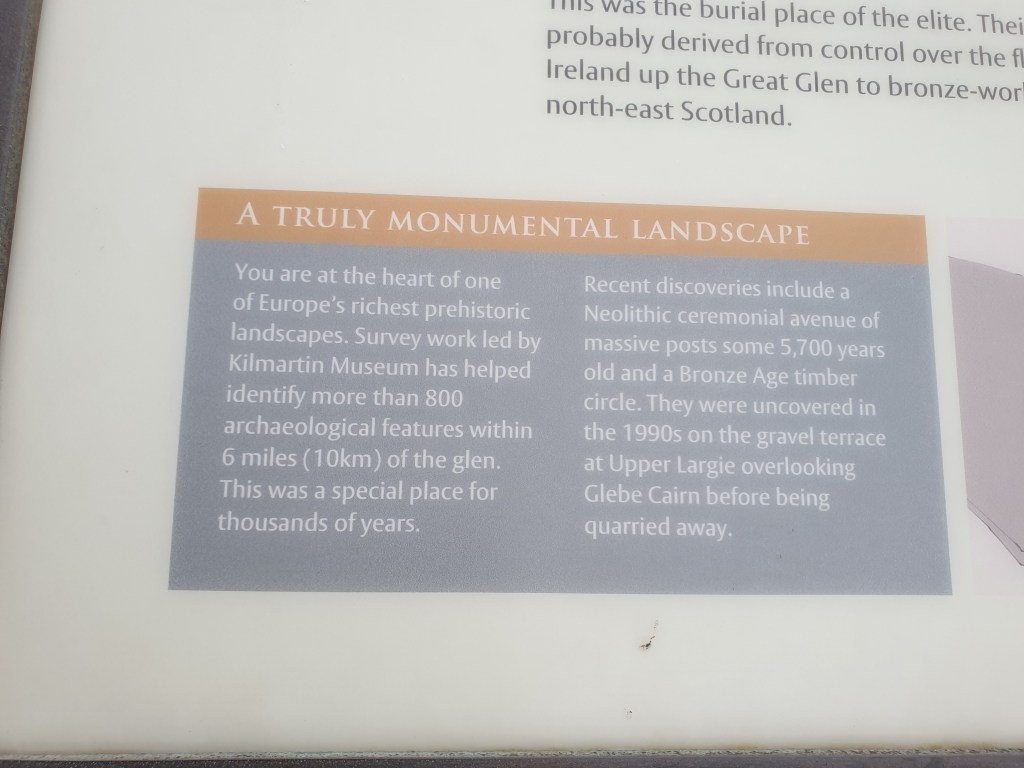
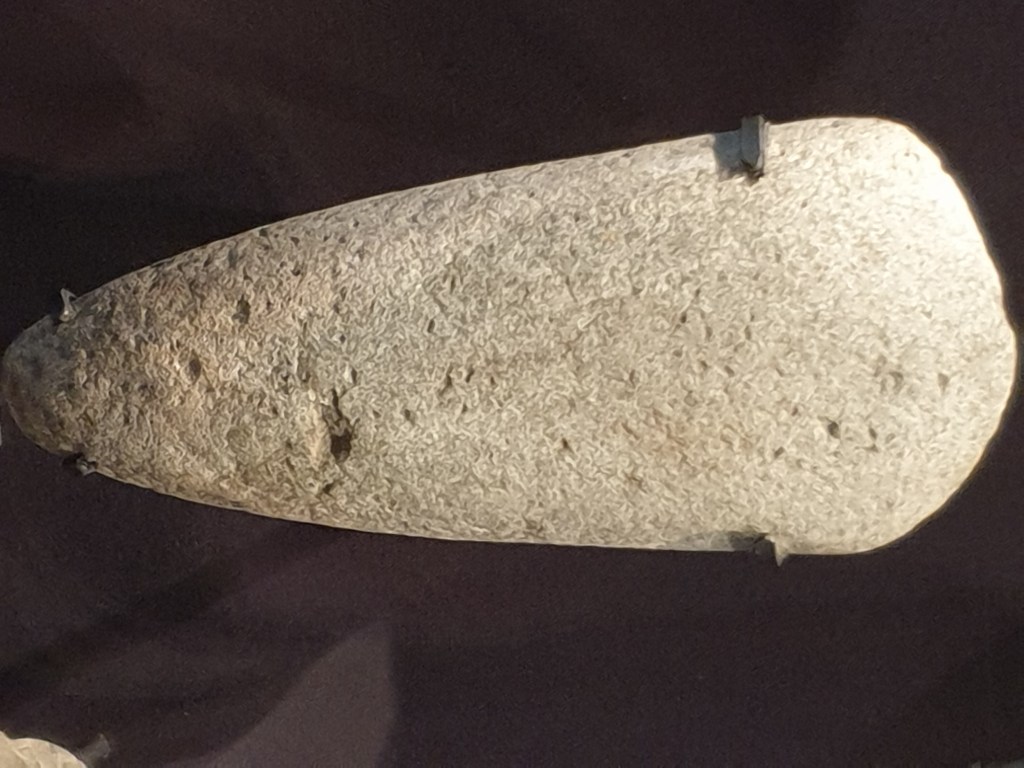
Note about post monuments; the sort of stone axe that might have been used to fell the trees.
The monuments also point to potentially high degrees of organisation in societies. It is difficult to see how the large amounts of timber, worked stone, or simply huge numbers of water-worn cobbles could otherwise have been brought together to make the various cairns, stone and wooden post circles.
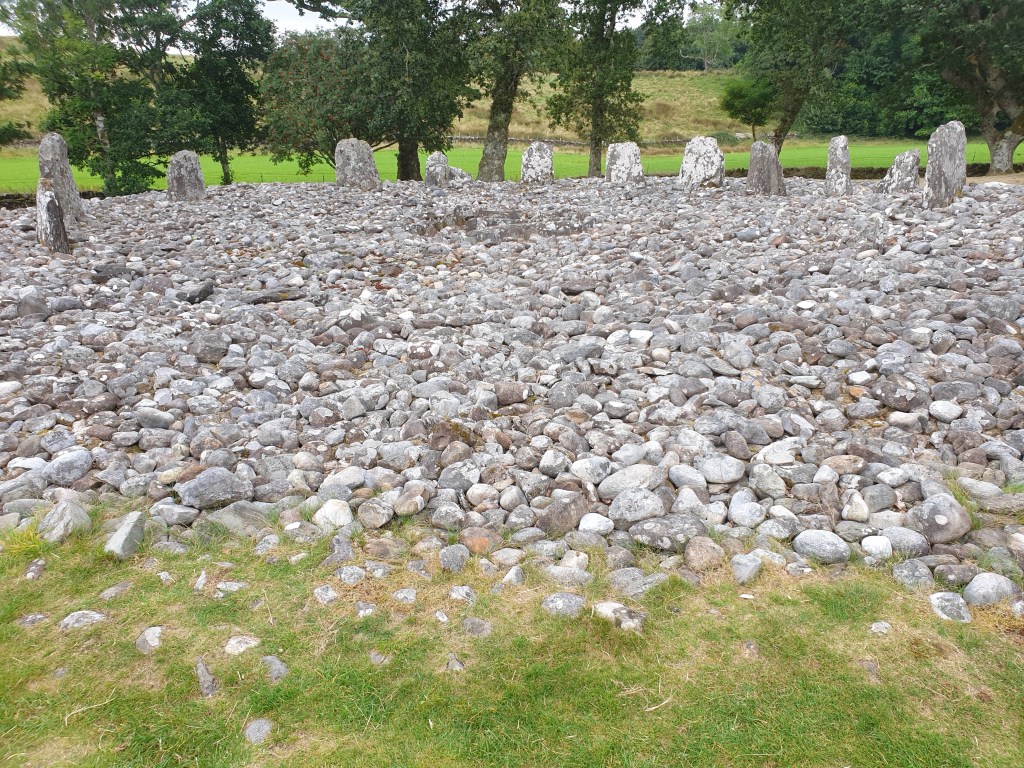
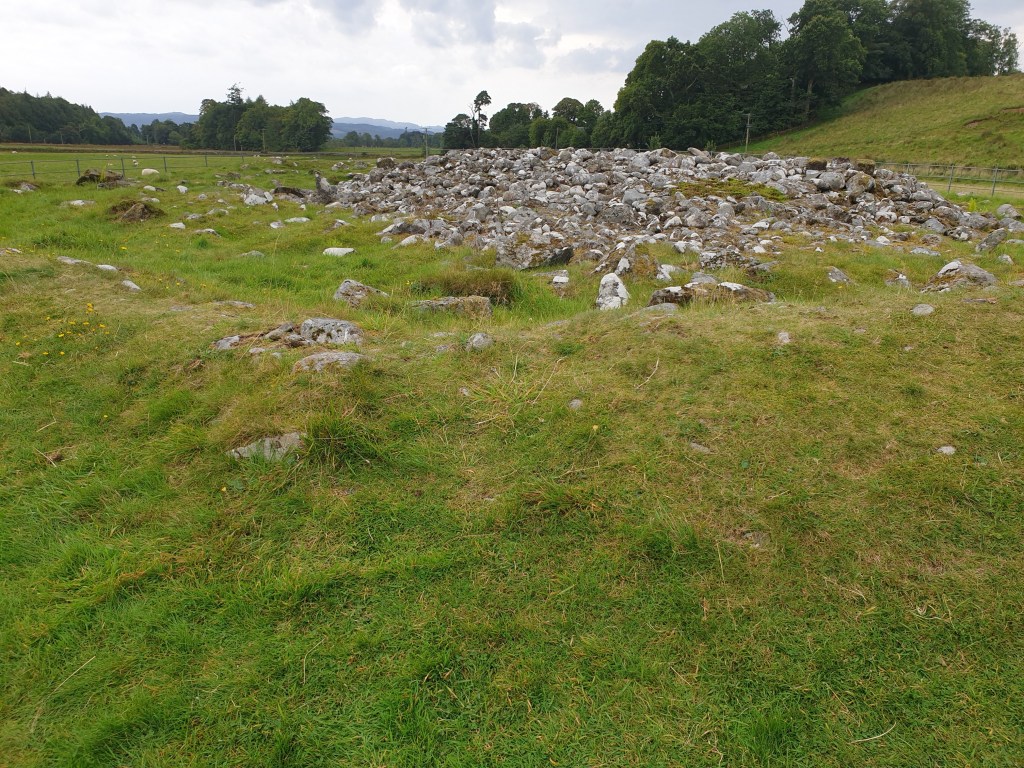
Two of the Kilmartin Cairns
As an extra treat I visited the nearby beaver release site at Knapdale one evening after dinner, and finally saw free-living beavers in the wild: one adult and what I think were a couple of kits.