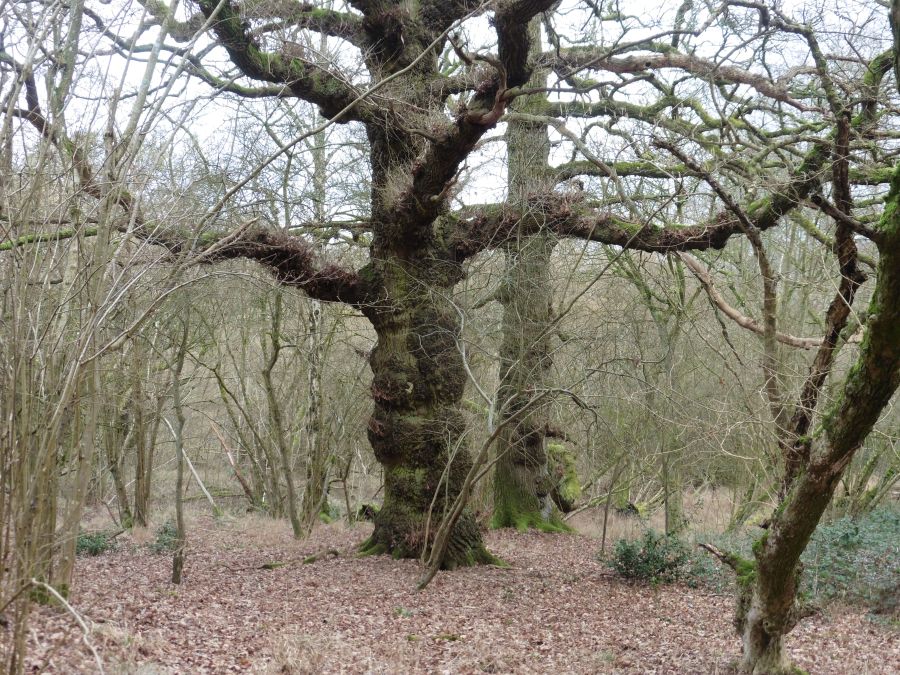
A belated December blog, as the Old Man got a bit overwhelmed by other jobs before and after Christmas. So, ‘another year over and what have you done’ sang Lennon. Well, the new book about the Wytham Estate and the research carried out there went through the final publication stages. All seemed under control, until we were told that the books could not be released from a warehouse in the USA because the American Inland Revenue Service needed a form to assure them that royalties paid to the University of Oxford were not going to some Venezuelan drug cartel (or something). Anyway the form was filled in and the books should be available in early February (see below for discounted offer).
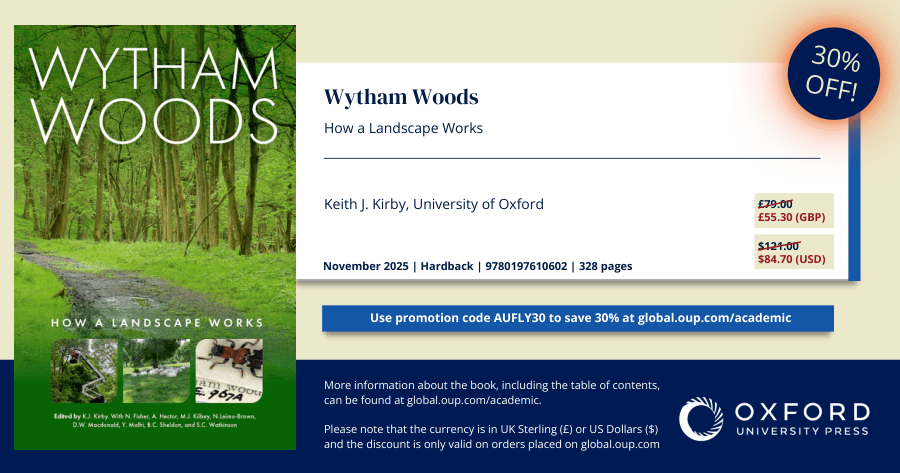
A shameless plug!
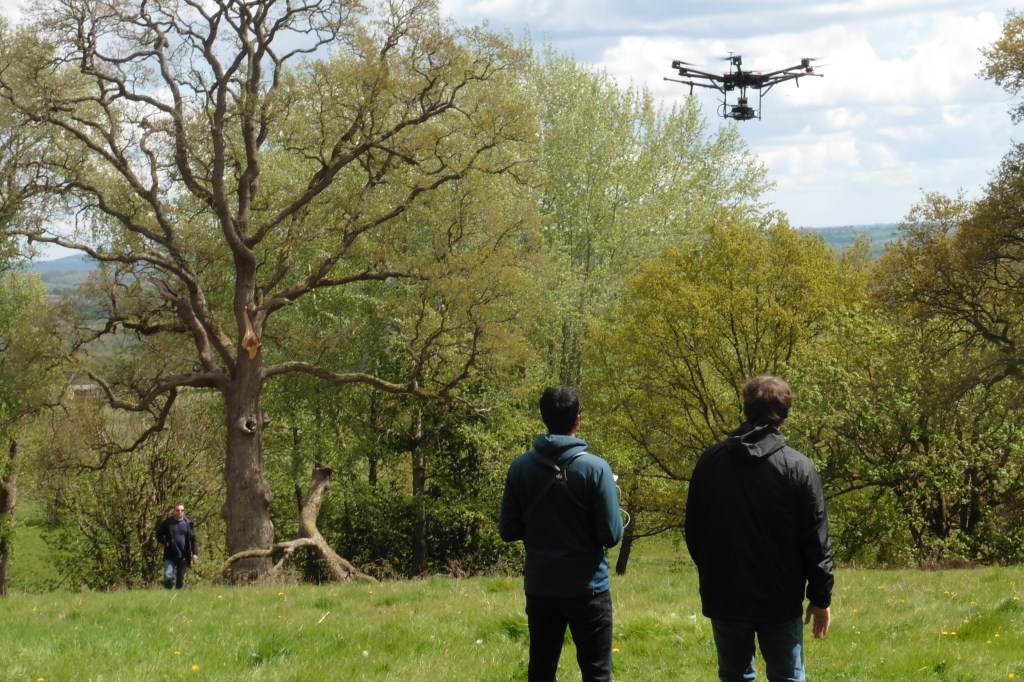
Looking back over the five years that book has been in gestation makes me realise how much research methods have been changing in the last few years. Drones have gone from an exciting innovation, to just part of normal survey procedures. Other forms of automatic recording are commonplace: from camera traps, audio recording above and below ground, ‘smart’ traps for small mammals that sense when an animal has been caught and send an alert to the researcher. Artificial intelligence is being used more and more, from the mundane (converting hand-written forms to Excel tables to reduce transcription time) to the construction of esoteric models of big data-sets.
While we were gathering material for the book we found some fantastic old studies from the Wytham Estate, but for the most part it would be impossible to repeat them because the sites and methods were not well-enough described, or the original data were not available. Journal requirements for data to be deposited in libraries or other long-term data stores should help to put an end to the shoe-boxes of records under the bed, that are thrown out when the researcher moves or dies.
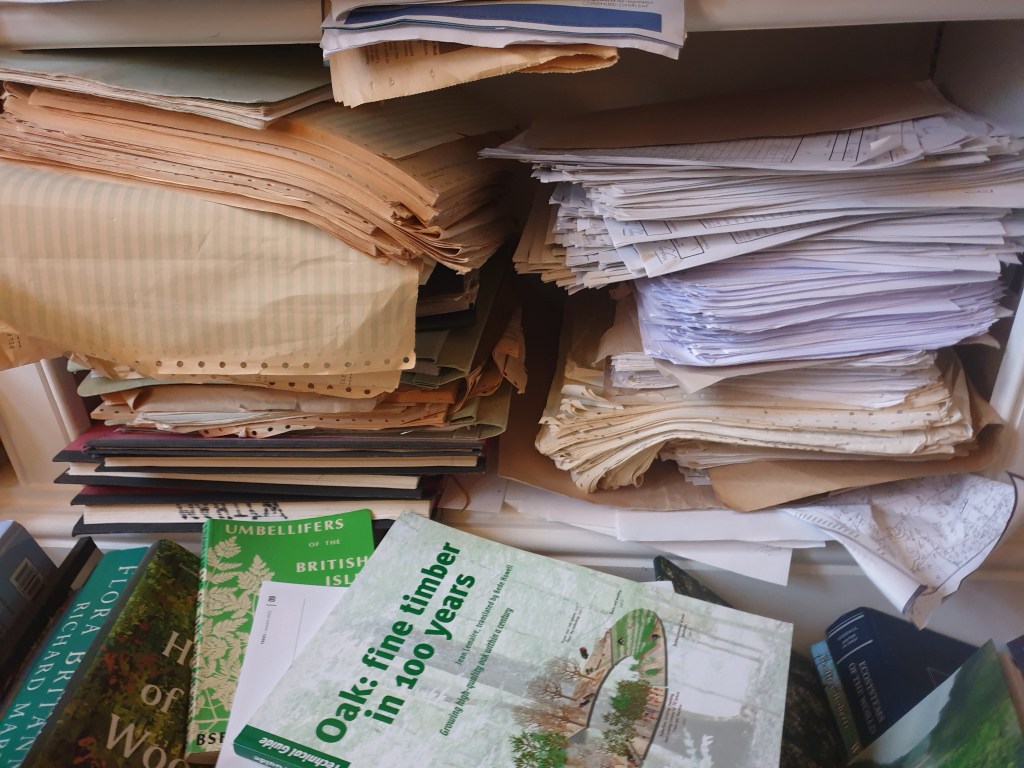
Fifty years worth of paper records for the Dawkins plots – currently in my study.
There are other shifts in the research focus. The Upper Seeds grassland restoration experiment started in the 1980s was closed down: the grazing in the plots could not keep up with the scrub encroachment. However a new grassland study has been started. The long-term study of the badger populations is currently paused, but small mammal recording revived. And the Old Man has got to find someone to take on the next recording of the Dawkins plots c.2028.
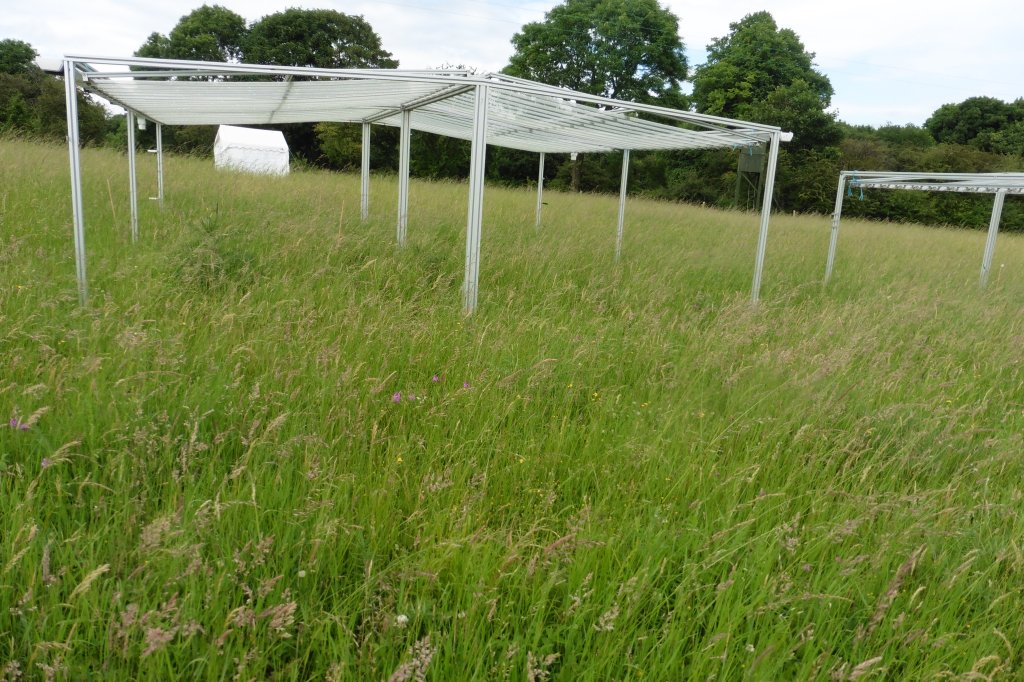
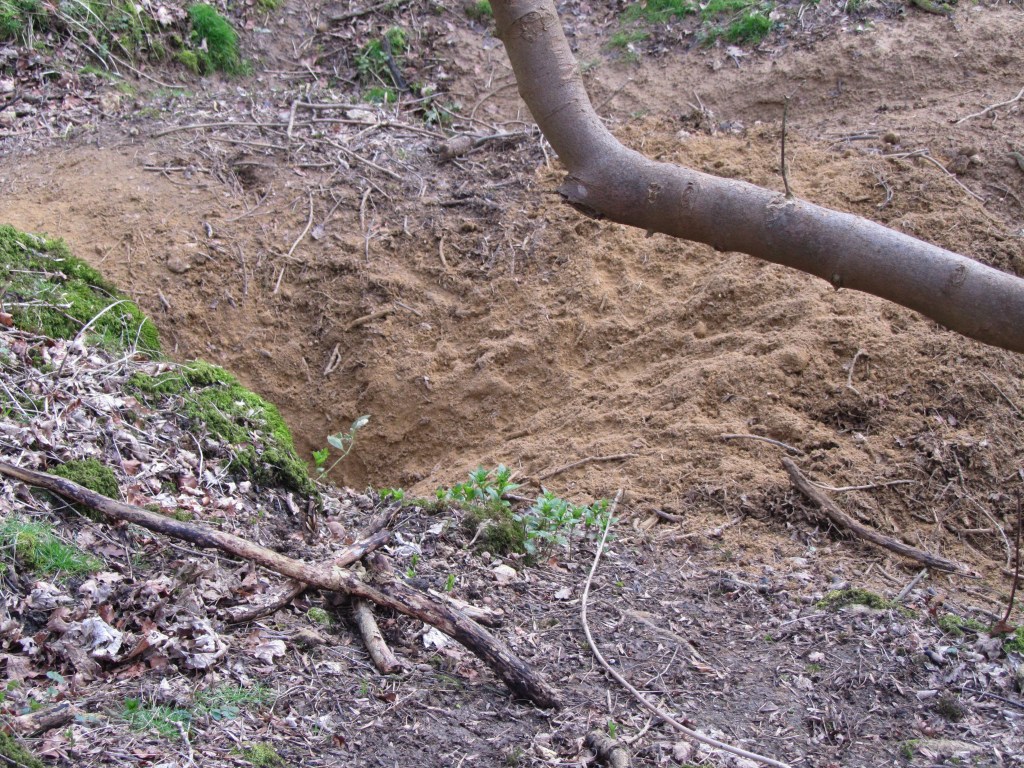
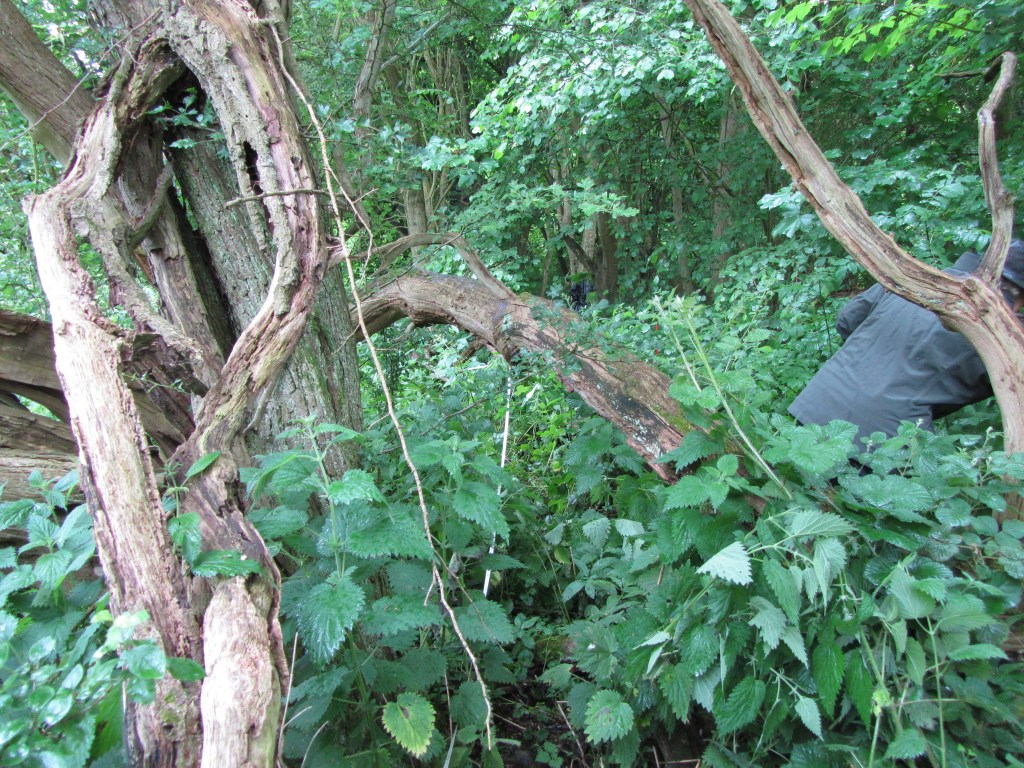
Badgers can rest in peace for a while; the new droughting experiment in Upper Seeds; slogging through nettles and brambles to record plots – what’s not to love?
The writing overlapped the 80th anniversary of the acquisition of the Wytham Estate by the University of Oxford, and, as it turned out, the brigading of Wytham and the other land holdings into the Oxford Green Estate. This should mean more integration of the management of the various, scattered university-woned properties. The tenancy of the old University Farm on the north-east of the Woods by the Food and Animal Initiative (FAI) is coming to an end, so that land may be held back in-hand. There is renewed interest in looking at the farmland and woods as a whole landscape.
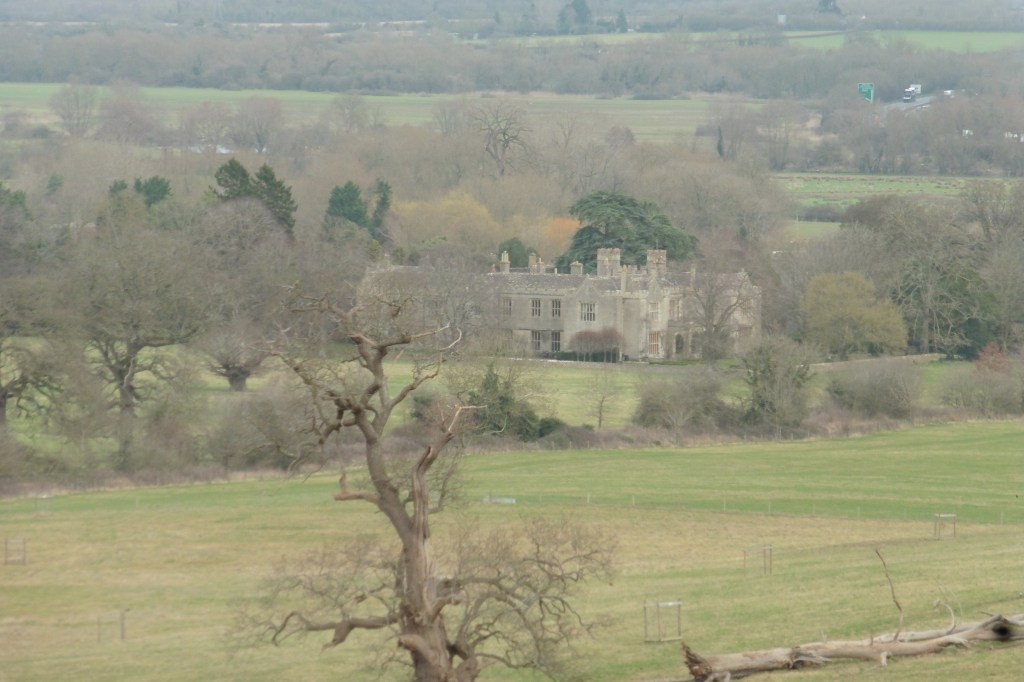
A more holistic view of the Estate in future in both management and research terms?
The covid pandemic and its aftershocks highlighted the value of having the Estate on Oxford’s doorstep for teaching from schools to the new biology undergraduate and master’s courses. The importance of the Estate as accessible green space (with a new regular bus service to Wytham) for people’s physical and mental well-being was brought to the fore.
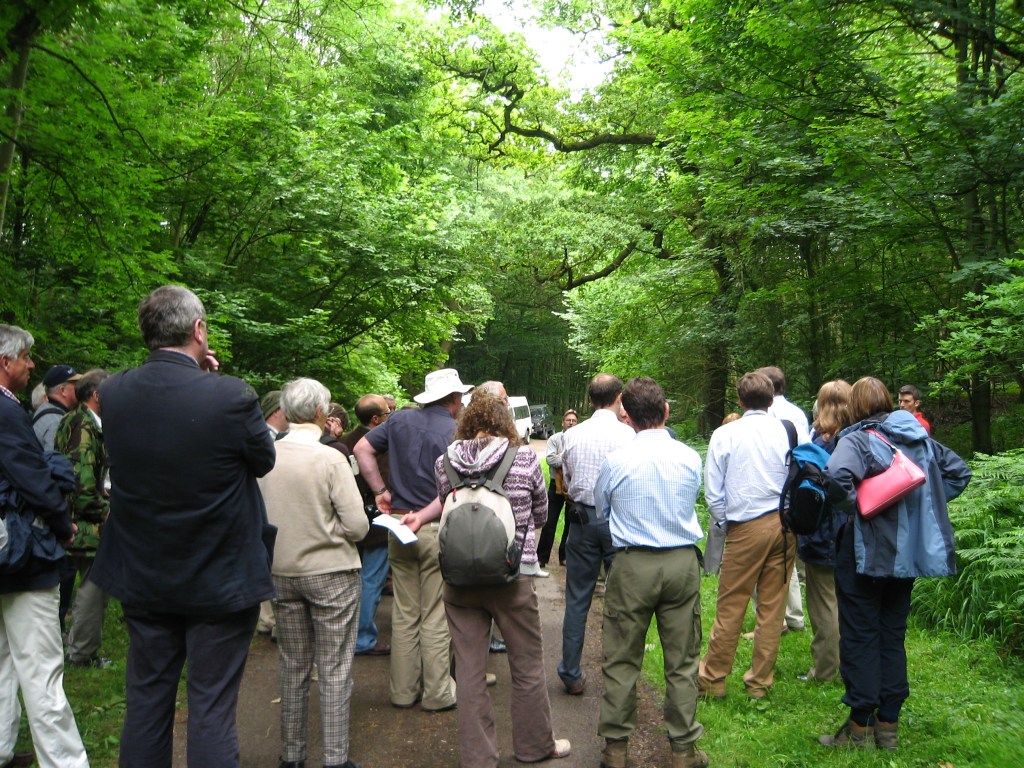
Changes in governments both in Britain and abroad have shaken my confidence that the world might be moving towards a more sustainable and wildlife rich future. There is an increasing need for research providing evidence to support conservation and wise use of land, which the Wytham Estate with its long history of study can provide.
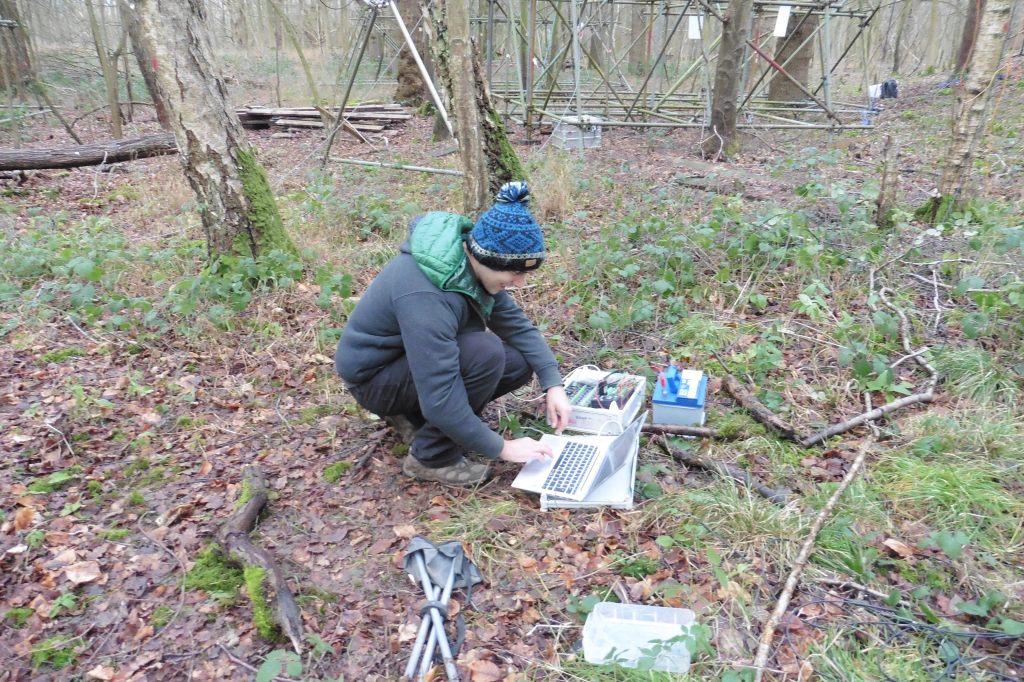
I don’t thing any of the above was particularly in our minds when we started pulling things together 4-5 years ago. But serendipitiously, the book is appearing just as we need a stock take of where we are and how we got here, as a basis for moving on into the brave new world.
Well good luck to the next generations of Wytham workers. The Old Man is finding it more and more difficult to keep up with all the changes. However, the spring is coming and I am not going to hang up my blog hat yet.
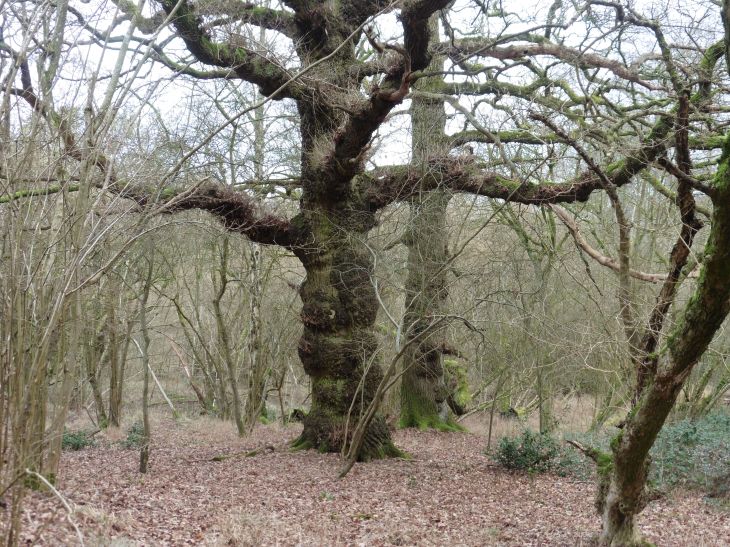

 The Old Man of Wytham
So pleased you are not hanging up your blog, or any other, hat just now
LikeLike