
At the British Ecological Society Annual Meeting in Liverpool (2024) there was a soundscape of tropical birds and mammals running in the lecture halls in the run-ups to the start of the talks. Back home I encountered something similar recently when I walked on to Port Meadow. It was still dark but there was a loud mixed chorus of gulls screaming, geese honking, ducks quacking and whistling from the flooded parts of the Meadow.

It made me think about everyday sounds, the gurgling of the radiators the creaks from expansion/contraction of old pieces of wooden furniture, the gentle hum of the fridge. Outside there is (unavoidably) the near-permanent low-level traffic noise from the Oxford Western By-pass, the regular jets on their landing approach to Brize Norton or the rattle of a train. Most of the time I take them for granted, until they stop – as the traffic did during the COVID pandemic. Similarly, an entomologist colleague in the 1990s was talking about the disappearance of what he called the ‘summer hum’, long before the current concerns about big declines in insects.
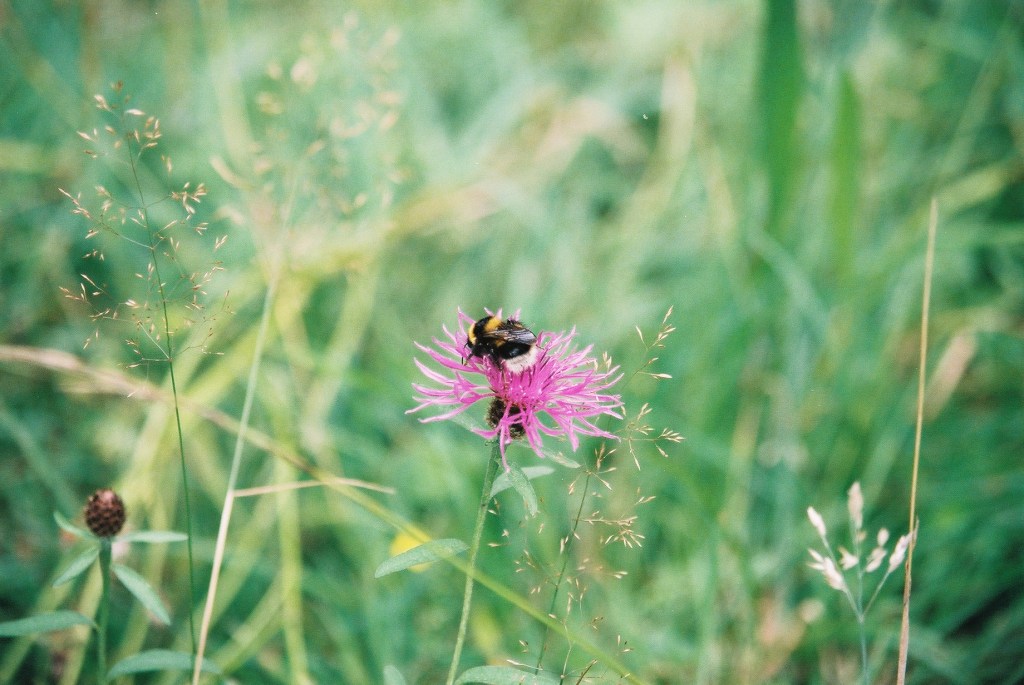
And when did you hear a meadow humming?
Developments in technology are opening up the world of sounds to a much wider range of ecologists (with apologies to ornithologists for whom it has always been a key part of their workings). Bat detectors have been around for some years, but now there are automatic recorders that can be used for passive monitoring of what species are visiting an area. A drawback is the data storage needed, so that you can then extract the signals of interest, but at least it is reasonable clear what the signals mean – a bat of a particular species was in the vicinity.
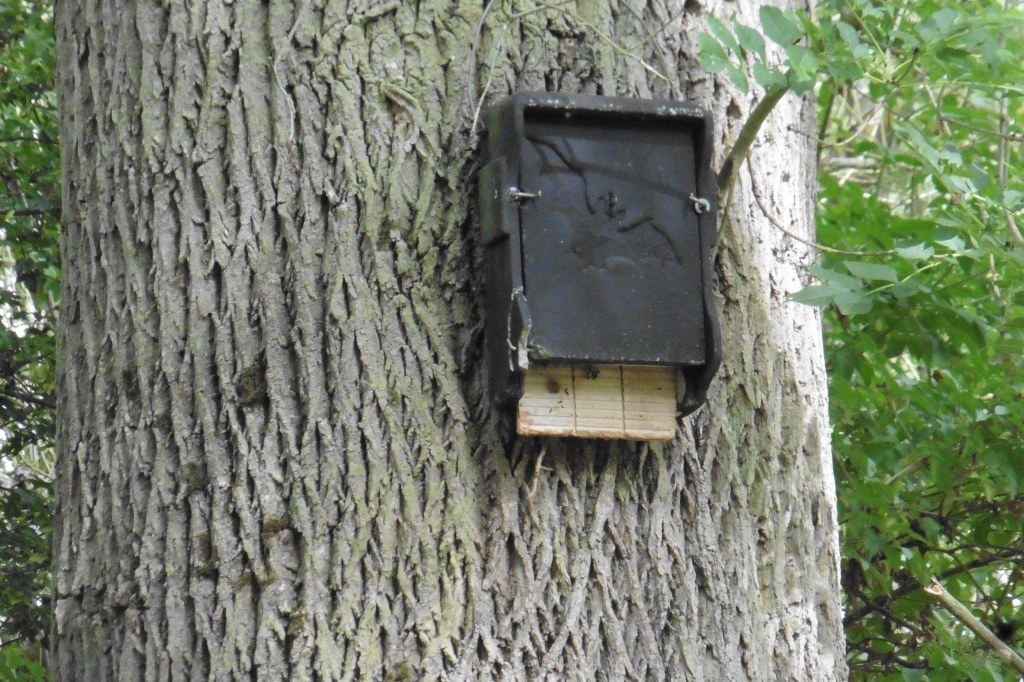
Where are the bats when they are not in their boxes?
A more intriguing approach is the analysis of sounds from the soil, e.g Robinson et al. (2023). Differences in sounds between recently cleared and young-mature woodland, or between grassland and forest can be shown but what do such differences mean in biodiversity terms. We know from traditional species recording that high species-richness or abundance may not always be a good biodiversity indicator – for example where disturbing an area of mature woodland allows the spread of lots of ruderal (weedy) plants. There will need to be a lot of calibration and validation of the different sound indices against other methods of investigating soil processes. However existing sampling techniques also have their limitations making it difficult to decide what should be the reference standard.

Will sound allow the separation of ‘good’ species (this Roman snail) from ‘bad’ ones?
This comparison issue arises whenever there is a step change in what we can record: do we stick with the old approach, or adopt new measures which may be more comprehensive but not then compatible with other records? Fungal surveys used to be largely confined to the species that produced fruiting bodies: eDNA analysis allows us to pick up very many more species in the soil, but this does not mean that the fungal assemblage has suddenly got richer than it was. Vascular plant lists are often used as one measure of woodland biodiversity, but these only consider the plants growing above-ground: species that might currently be present only in the soil seed bank might also be identifiable by eDNA. The current revisions of the Ancient Woodland Inventory in England are identifying more woods as ancient, because woods less than 2 ha can now be consistently recorded and the ready availability of historic maps online makes checking their history easier. The extent of known ancient woodland is going up, even though there are still bits of ancient woodland being cleared.

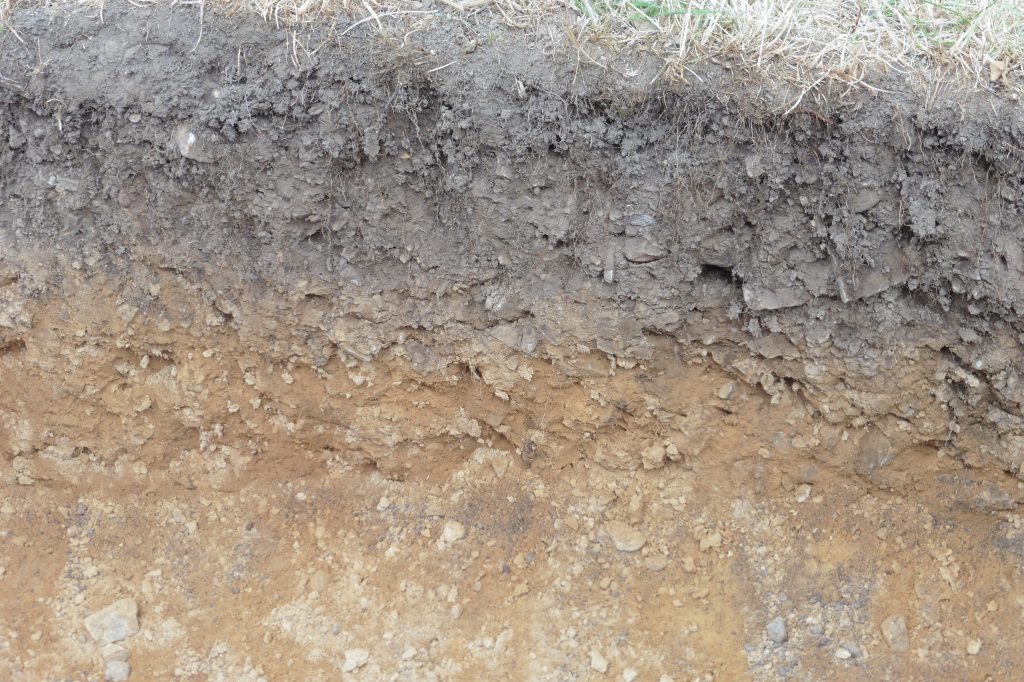
We see the above-ground species; what lurks beneath the surface.
We should bring in new techniques where we can, but there may need to be a period where new and old methods are run in parallel to allow cross-validation. Meanwhile I shall try to be more conscious of sounds as well as sights on my morning walks to get the papers.
ROBINSON, J. M., BREED, M. F. & ABRAHAMS, C. 2023. The sound of restored soil: using ecoacoustics to measure soil biodiversity in a temperate forest restoration context. Restoration Ecology, 31, e13934.
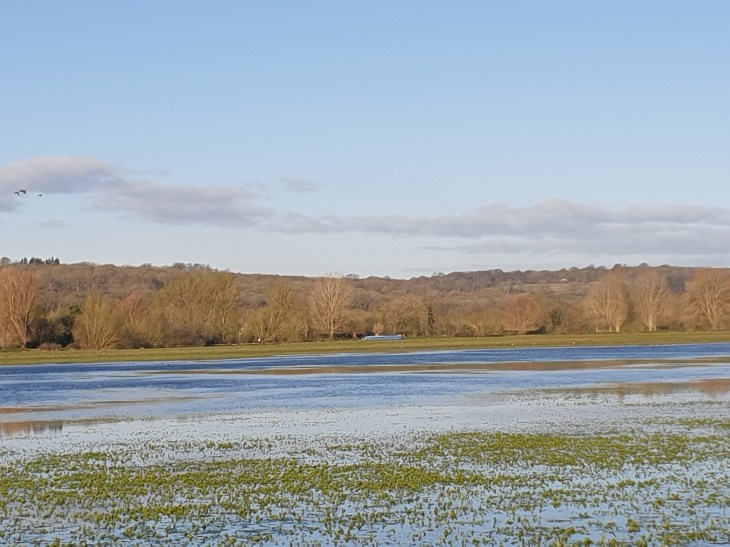

 The Old Man of Wytham
Cheers Keith, I’ve tended to be a bit sceptical of sounds survey because I’ve tended to assume that it only detects vertebrates (which aren’t very interesting!). I may be over-simplifying though. Another interesting paper at the BES conference discussed use of soundscapes from complex marine ecosystems to increase oyster recruitment to reef restorations:
“Across two of Australia’s largest reef restorations, speaker playback of these attractive soundscapes significantly increased oyster recruitment at 8 of 10 sites by on average 5 times (5,281 ± 1,384 more larvae m2). And after 5 months, reef boulders had 4.3 times more three-dimensional habitat growth than nonspeaker controls”.
I wonder if there might be useful terrestrial applications of soundscapes in habitat restoration too?
LikeLike
Intriguing. It reminds me of the old music hall song ‘what noise annoys an oyster’, except in reverse!
LikeLike
I was thinking of it as a potential recruiting mechanism for the walrus and the carpenter…
LikeLike
The first comment was me too by the way – before I’d worked out how to change my user name.
LikeLike