Waterways are still important lines of communication in parts of Britain: I see the boats going up and down the Thames and the Oxford Canal on my bike ride out to Wytham Woods. Rivers were probably even more convenient highways and transport routes for our ancestors before the development of major road networks, although we should not forget that they did used long-distance paths such as the various ‘Ridgeways’ and constructed wooden trackways across bogs as in the Somerset Levels or at Flag Fen in Cambridgeshire.


Information board from Flag Fen, Peterborough; part of the causeway showing oak posts and boards in situ (the water is to keep the timbers waterlogged to preserve them).
One simple form of river transport is the dug-out canoe, examples of which have been recovered from various archaeological sites across Britain and Ireland. Most that survive are made of oak (the durability of its timber may introduce a bias here) but other woods were used. Of the nine Bronze Age canoes found at Must Farm, near Peterborough, seven were made of oak, one from lime, another from alder. The canoes range from two to over eight metres long. They may be from longer tree trunks because they had transom boards at the stern, rather than being hollowed to the tree base. The trees from which they made seem to have been straight-trunked and hollowed out by axes, adzes and possibly fire.


Modern replica of one of the canoes; pieces of one of the smaller boats (dried out and stabilised).
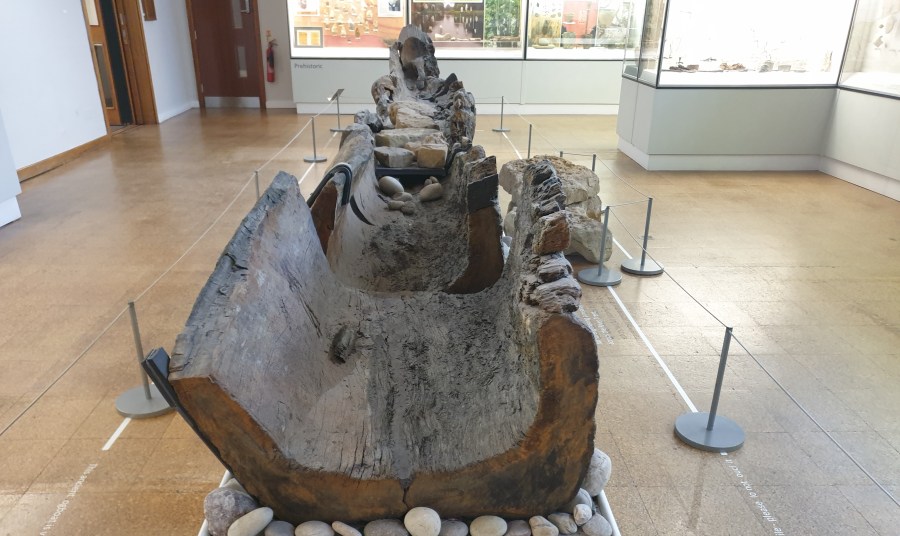
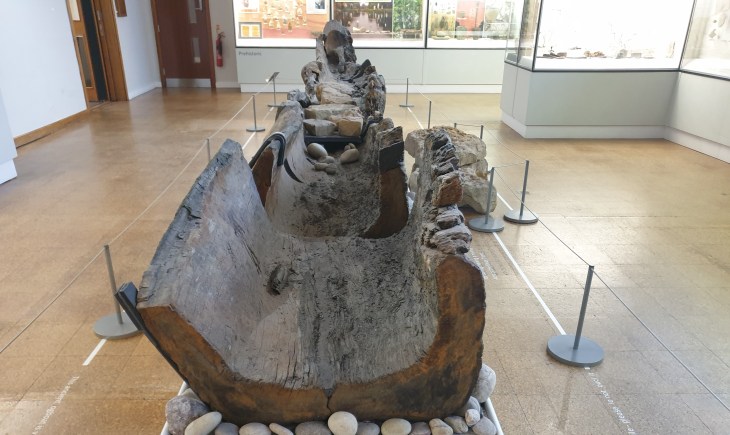
Longer canoes have been found. A 13 m example came from quarry workings at Shardlow in Derbyshire (a second was found there but left untouched as it was not threatened). The canoe seems to have been a working boat: a large lump of stone was found in it, which may have been its last cargo. A 15 m longer boat, albeit unfinished, is on display in the National Museum in Dublin. The trees from which these monsters were made are likely to have grown under closed canopy conditions.
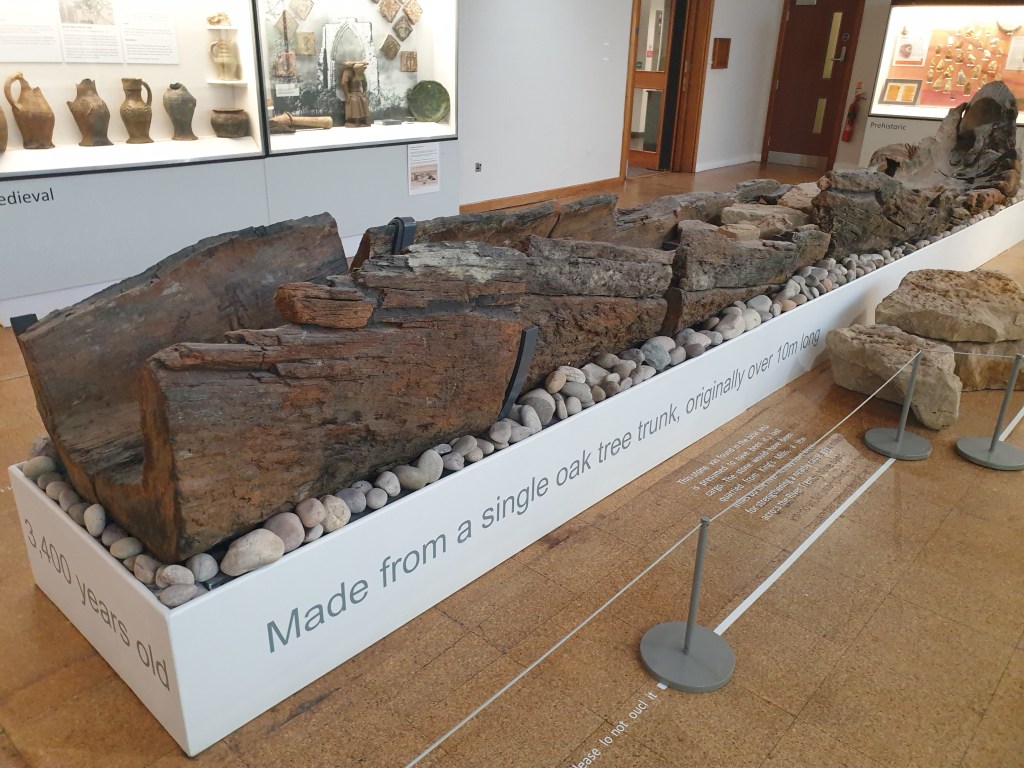

The Shardlow log boat; the canoe in Dublin museum.
We rightly celebrate the decayed splendour of ancient oaks in parkland but the canoes and other remains show that Britain was once home to stands of tall stately oaks, gun-barrel straight and more than a metre across near their base. Such timbers were being used in bridges and wharves into the early medieval period. And there are still oak trees like this in our woods. One in Windsor Forest was apparently left by Canadian lumberjacks cutting timber for the war effort in the 1940s, perhaps out of respect.
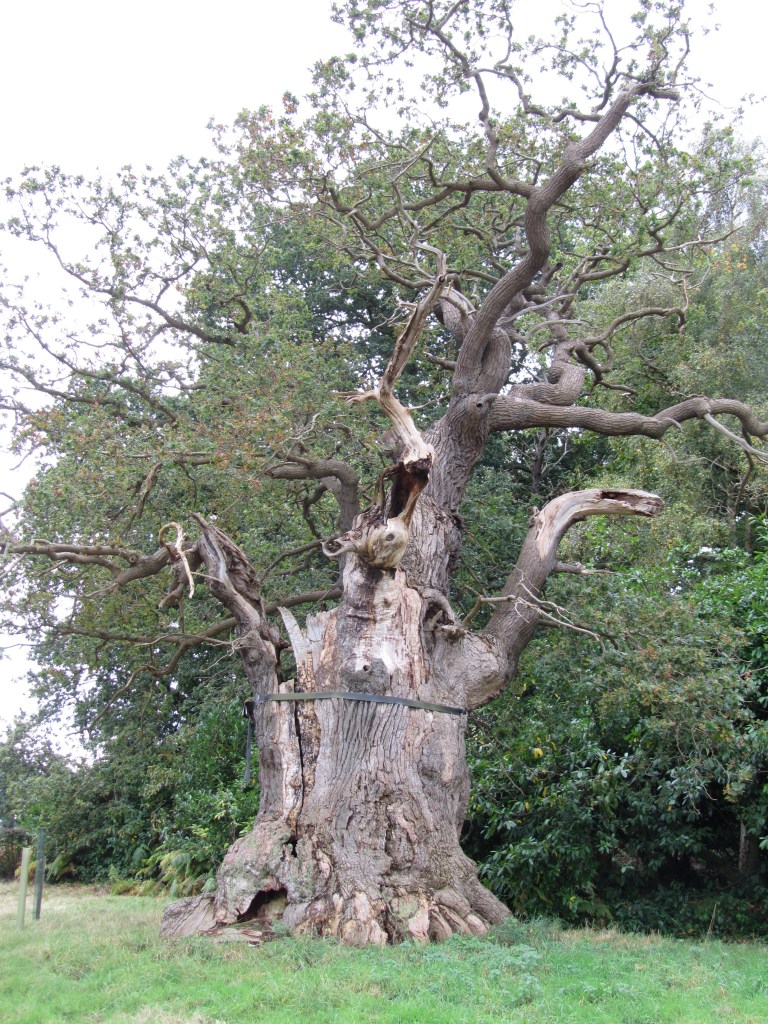

Oaks at Windsor: an ancient tree in the park; a forest-grown oak that survived war-time felling.
Across the country there are enthusiastic foresters who are trying to emulate the famous stands found in French and German forests. This is not an easy task for them: a difference to the situation on the Continent and to that in Britain in prehistory, is that we now have grey squirrels. These can bark strip or damage the lead shoot, undoing years of careful tending of potential final crop trees. We no longer need these tall straight oaks for canoes but it is worth remembering that they were once common enough to be used in this way. What would it be like to be in a stand of 200-300 yr-old oak columns?
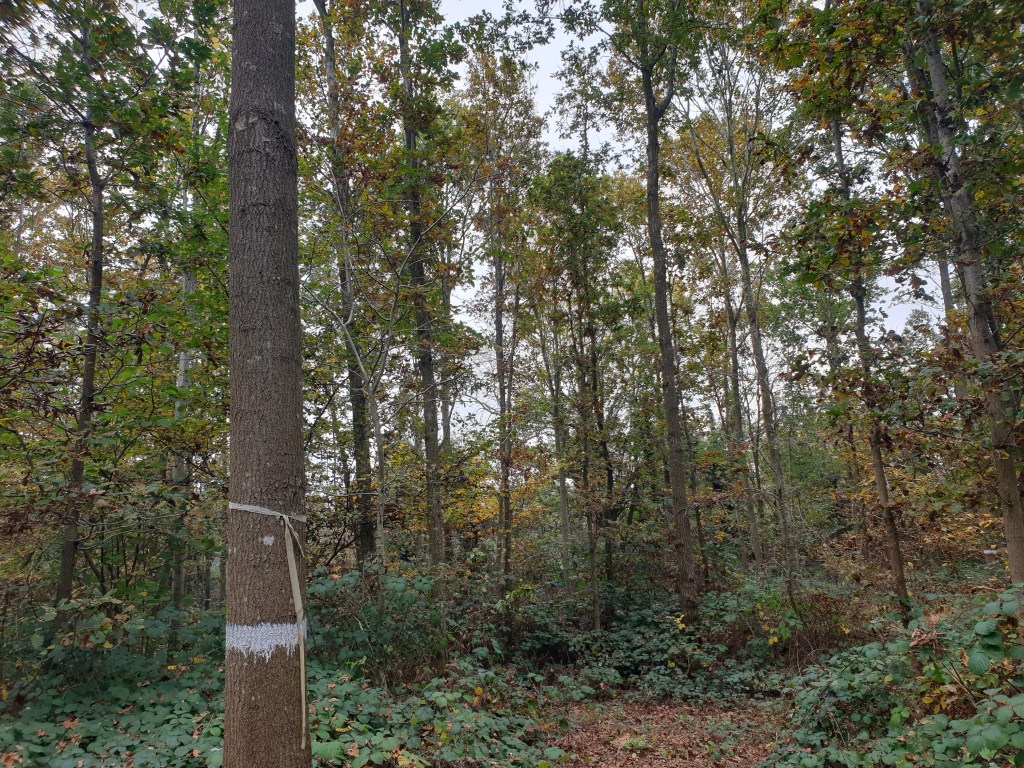
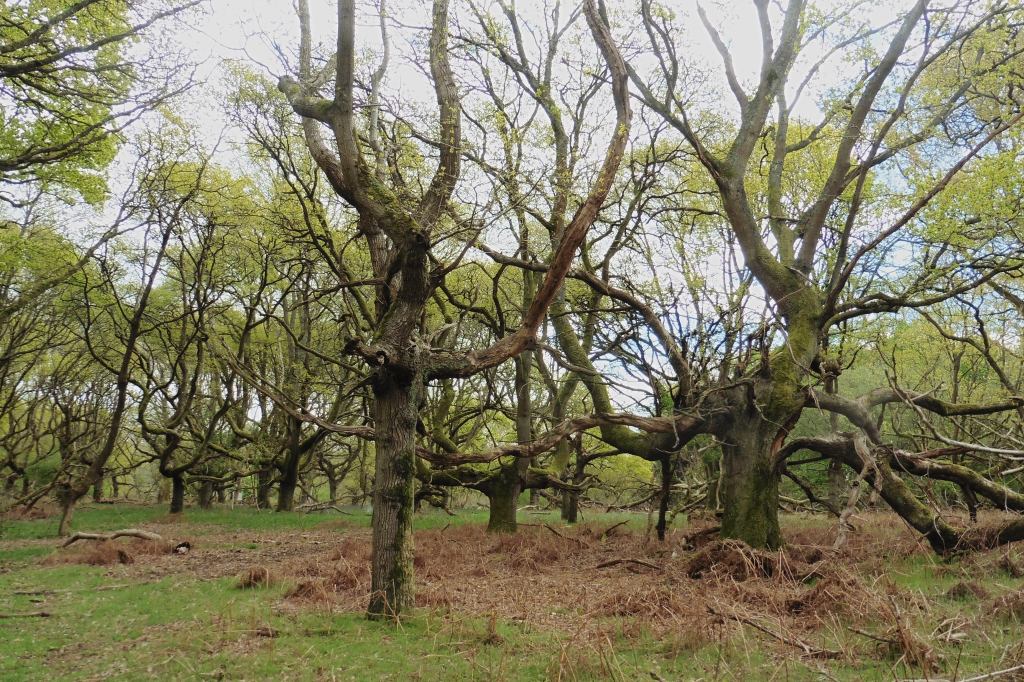
A future canoe tree or high-quality timber instead; grey squirrel pollards of little use to man though beasts may come to love them.

 The Old Man of Wytham
I read recently in Current Archaeology that it is suggested the the stern board was a security ‘key’. Its simple removal prevented the canoe from being used.
LikeLike
How intriguing: but it would need to be easily caulked when put back into place to make a good seal.
LikeLike
An interesting comparison with a kayak made of ash which features as one of the stunning pieces of ash craft work in the Ash Rise exhibition currently in Edinburgh but transferring to Dumfries in January and Inverness in late March
‘Ash Rise’: 20 Scottish designers explore the blighted wood | Wallpaper
LikeLike