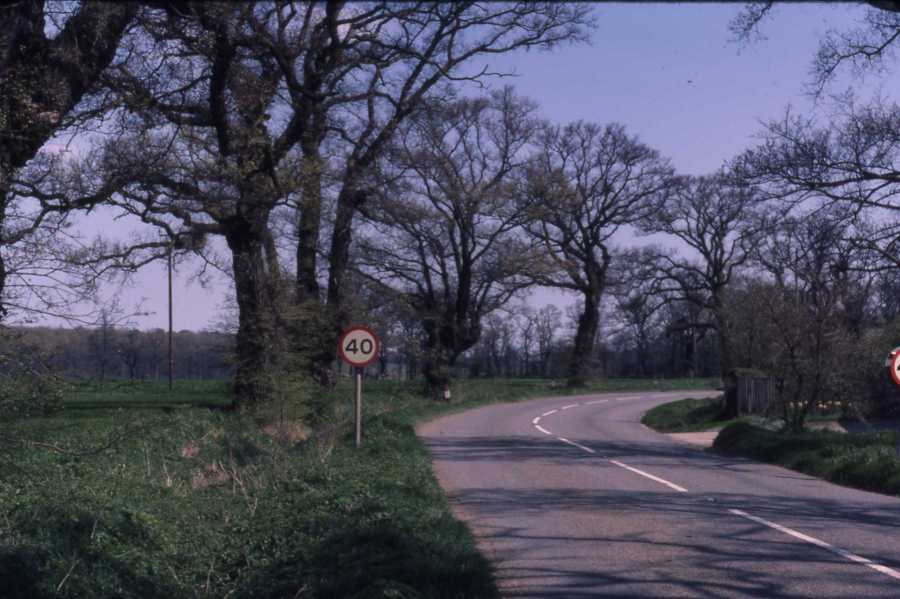
The past is a foreign country – we really did do things differently then; there were no mobile phones for a start. During much of the twentieth century there was massive planting of trees on peat and other soils with high organic matter, but prior to the 1960s there was not much concern about this from a nature conservation perspective. There were stronger objections from the landscape and countryside access community, as for example H.H. Symonds polemic on afforestation in the central Lake District (Symonds, 1936}.

The sort of view that enraged Symonds (upper part of the Duddon Valley, Cumbria).
During the 1960s and 1970s the nature conservation concerns built up and by the early 1980s there were highly-publicised arguments against the large-scale expansion of forestry, particularly in Scotland, culminating in the campaigns to save the Flow Country. Two land-mark reports were produced – Nature conservation and afforestation and Birds, bogs and forestry (NCC, 1986; Stroud, et al. 1986). In 1988 a change in taxation cut the economic underpinning for at least the more extreme planting proposals; forestry practices started to change and planting on peat and other highly organic soils has increasingly been discouraged. In some cases the plantations are now being removed.

Sutherland plantation, now being fellled.
I recently re-read those 1980s reports and, which may come as a surprise to some, climate change and the extra emissions that would come from the draining and oxidation of peat were not mentioned. That fits with my recollections: climate change was not then seen as an issue for the conservation sector.
By the early 1990s this was changing: climate change was a hot topic for academic research. The Environmental Change Network was established ECN https://ecn.ac.uk. At this series of sites across the UK including Wytham Woods, recording was started, using standardised protocols, to track not just climate change effects, but other factors such as pollution. As with many such initiatives, subsequent funding cuts meant that some of the recording has been scaled back, but the core programme continues.

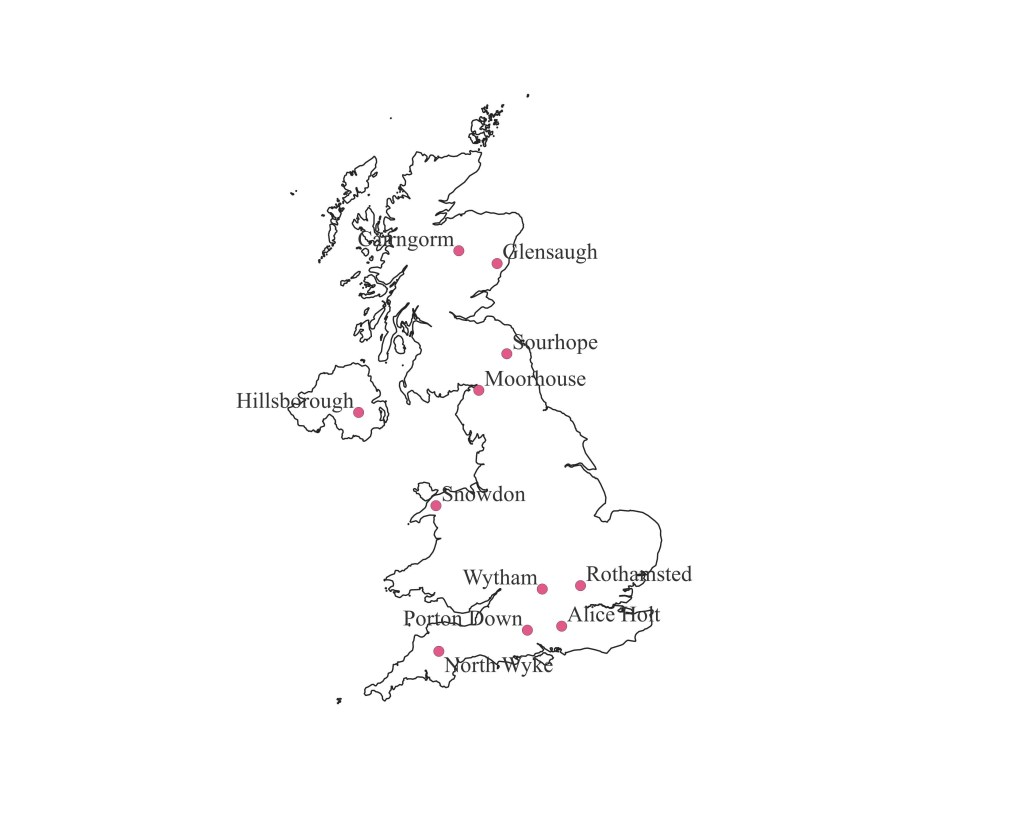
Location of Environmental Change Network sites.
While I could accept that climate change was important, I was initially sceptical as to whether it was going to make much difference to woods and woodland conservation in my lifetime. A talk in 1999 by Tim Sparks on phenology of woodland species, which included a graph of the change in oak leafing times (below) changed my mind – effects could already be seen now (Sparks 2000).
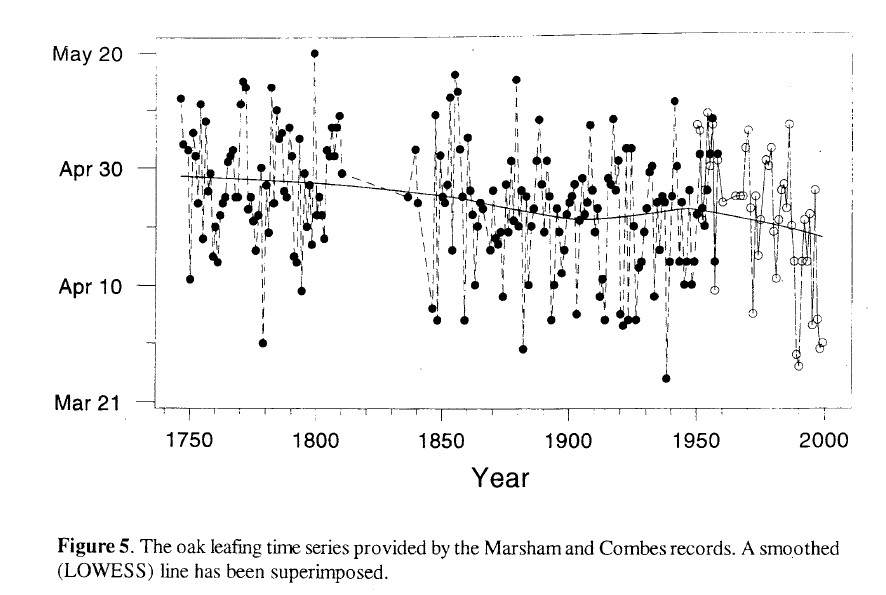
However, one problem with demonstrating climate change effects in woods is that the long-term trends are often much less than, for example the year-to-year variation in oak leafing; the effects on ground flora are, so far, small compared to the effects of changing deer levels or of felling a stand; possible increases in tree mortality are dwarfed by the impact of introduced diseases such as Ash Dieback. There is also the buffering effect of the tree canopy on the internal woodland environment: in effect climate change for primroses and bluebells in a wood effectively lags behind the changes happening in open grassland.
Even in woods the impacts are starting to become more apparent. We can perhaps adapt to relatively gradual, incremental shifts such as we have seen so far. What will be more of a challenge will be when systems reach a tipping point and woodland undergoes a fundamental, dramatic change, such as we are seeing, albeit from a difference cause, with the large-scale decline in ash.

We may see a major restructuring of our woods where ash dieback hits hard.
Tipping points and the changes that follow are difficult to predict and plan for. We must hope that there are not too many other, currently unknown, threats to our woods that will emerge in the next couple of decades, but climate-induced impacts (and mobile phones) are now part of our lives.
NCC 1986. Nature conservation and afforestation in Britain, Peterborough, Nature Conservancy Council.
SPARKS, T. H. 2000. The long-term phenology of woodland species in Britain. In: KIRBY, K. J. & MORECROFT, M. D. (eds.) Long-term studies in British woodland Peterborough: English Nature.
STROUD, D. & AL., E. 1986. Birds, bogs and forestry. Peterborough: Nature Conservancy Council.
SYMONDS, H. H. 1936. Afforestation in the Lake District, London, Dent & Sons.
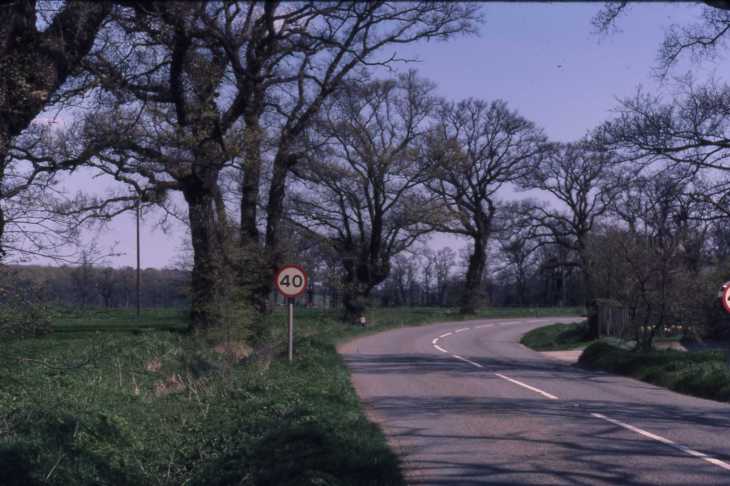

 The Old Man of Wytham
I too have seen all this during my time. Thank you for a most worrying summary!
LikeLike
I too have seen all this during my time. Thank you for a most worrying summary!
LikeLike