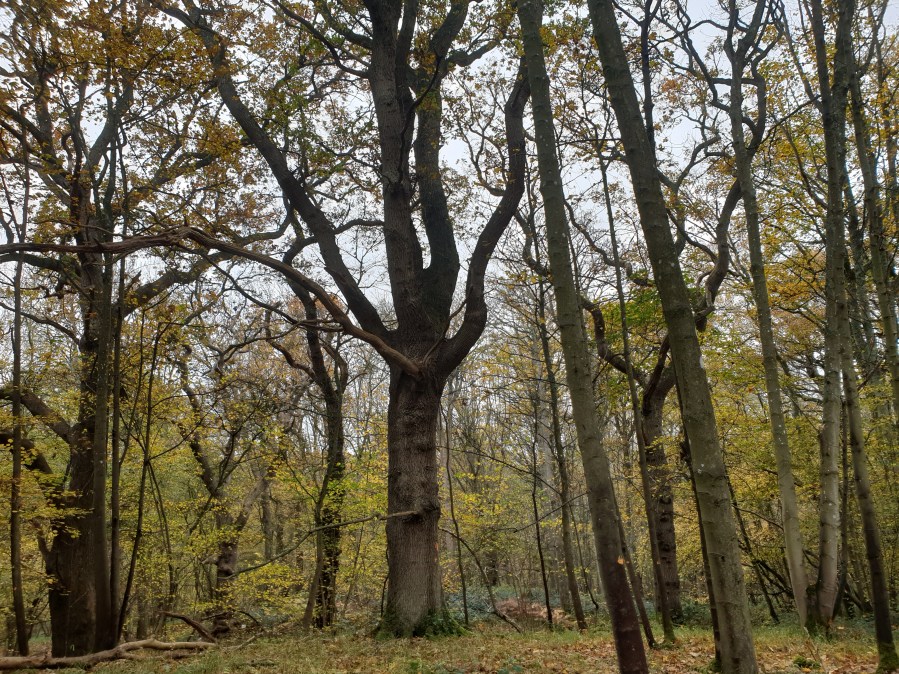
We mostly live in the space between the ground and the tree canopy and tend to focus on the plants and animals we can see or sense in this zone: the sight of butterflies flying off ahead of us, the scent of wild garlic, the sound of birdsong from the bushes, the taste of blackberries, the feel of oak bark. We experience little of the world beneath our feet, in the soil, other than the grip of the mud on my boots over this winter, yet that is as full of life in many weird and wonderful forms. Trying to find out what is going on in the canopy is a bit easier than assessing life in the soil but presents its own challenges.
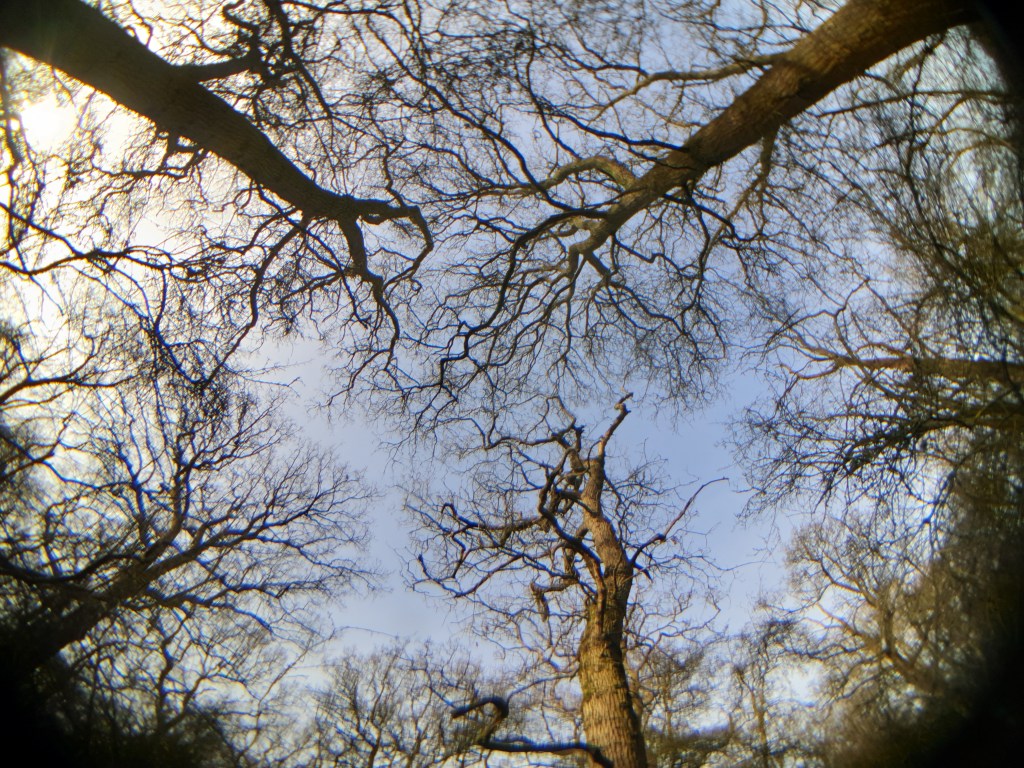
Looking up into an oak canopy
The canopy is where much of the activity in a wood is happening. The tree trunks are massive structures that draw our attention but over half the woody biomass is in the branches and twigs. Looking up we may just think of the canopy as a layer of randomly distributed twigs, but it is a much more complicated three-dimensional structure. Drones flying low over woods can now give us a vivid picture of the dips and hummocks in canopy layer. Lidar scans either from above or from terrestrial units provide detailed images of trees down to the finest twigs and even the interior hollows of ancient oaks.
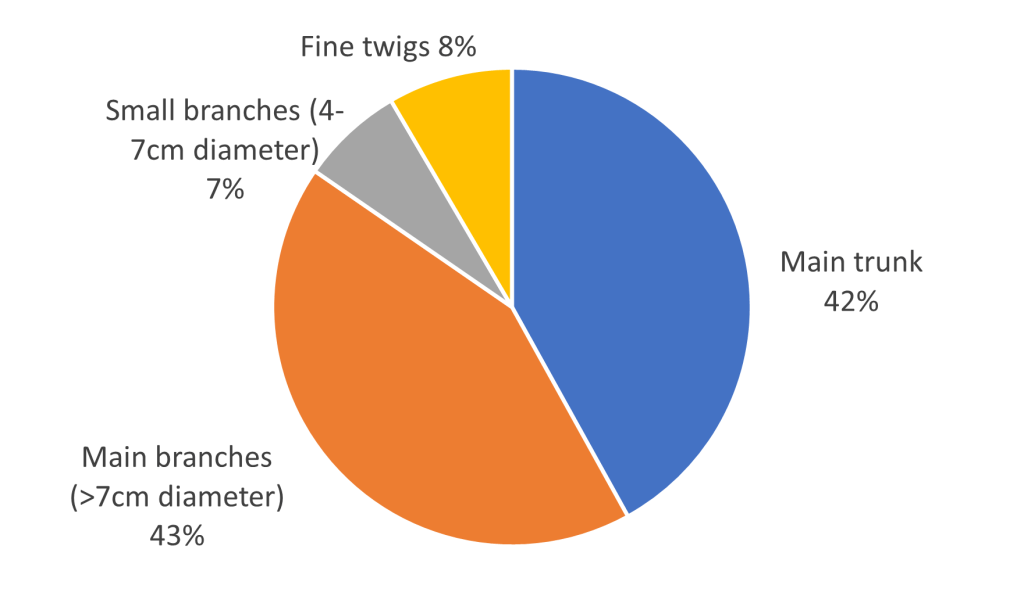
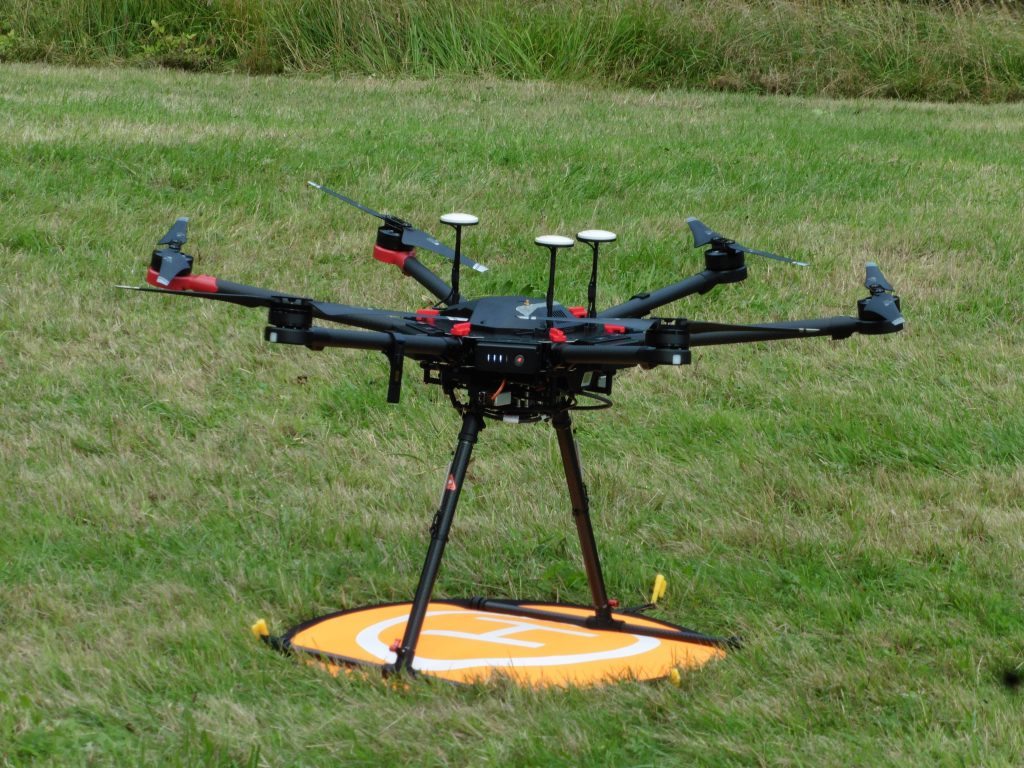
The distribution of mass in an oak tree (from the One Oak Project); waiting for take-off
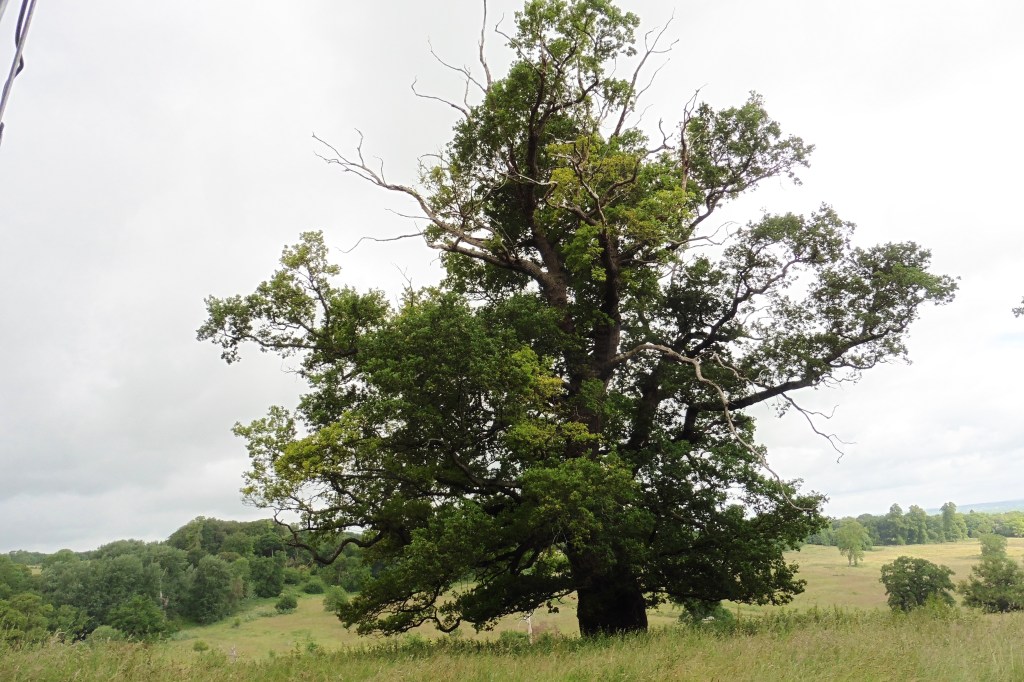
An oak with crown 20 m across may have 10,000 m2 of foliage which is the main source of energy that directly or indirectly drives the rest of the woodland system. The canopy is a major food source, particularly for invertebrates, but how to sample these? In a classic study of winter moths ground-based researchers sampled the caterpillars as they dropped down from the canopy and the flightless females as they marched back up the trunk after pupating in the soil. More aggressive ways of bringing invertebrates down to ground level include the technique of ‘fogging’ whereby insecticide is blown up into the canopy. Insects affected (mostly) fall off the leaves and can be collected on sheets spread out below. This is a a bit of a blunderbuss approach: and you cannot know what is being missed either because it isn’t killed or does not fall. The results may not be what was expected. In one study (Ozanne, 1999) a higher density (per square metre of collecting sheet) was found under conifers such as spruce than under oak, albeit mostly small organisms such as mites, thrips, book lice and true bugs.
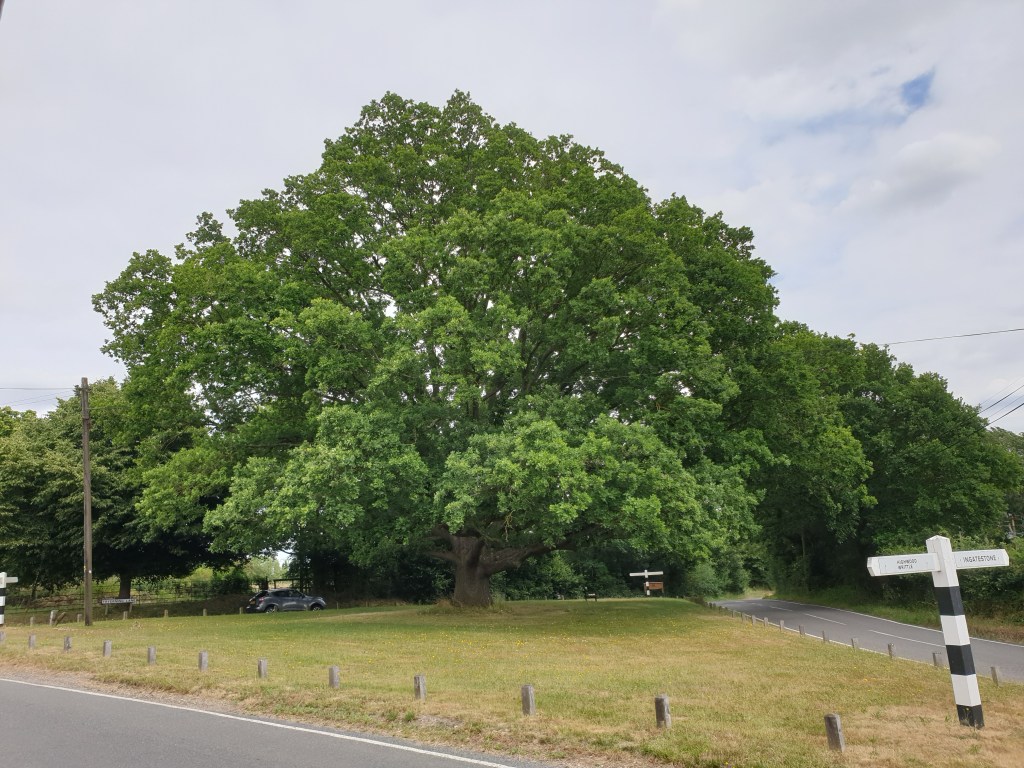
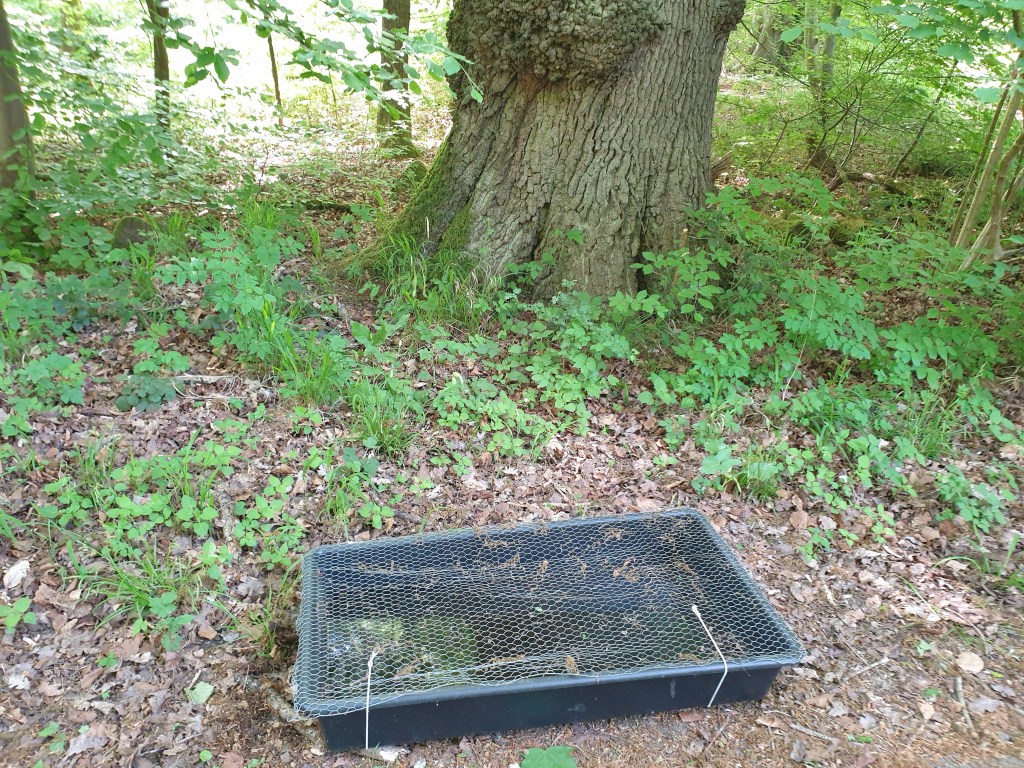
A mass of foliage; collecting winter moth caterpillars
The alternative sampling strategy is for the researcher to go up into the canopy. In the 1950s a student looking at spiders in oak canopies describes how this layer was. ‘sampled with a beating tray… [by] ….climbing high into the crown and balancing precariously on slender branches to reach peripheral foliage’ (Turnbull, 1960). I don’t know if there were departmental safety officers and compulsory risk assessments then, but I am pretty certain this approach would not now be allowed! More sophisticated (and safer) tree climbing gear is available, even allowing David Attenborough to go up into the canopy of a tropical forest giant. For the less agile of us, there are canopy walkways and MEWPs – mobile elevated working platforms.
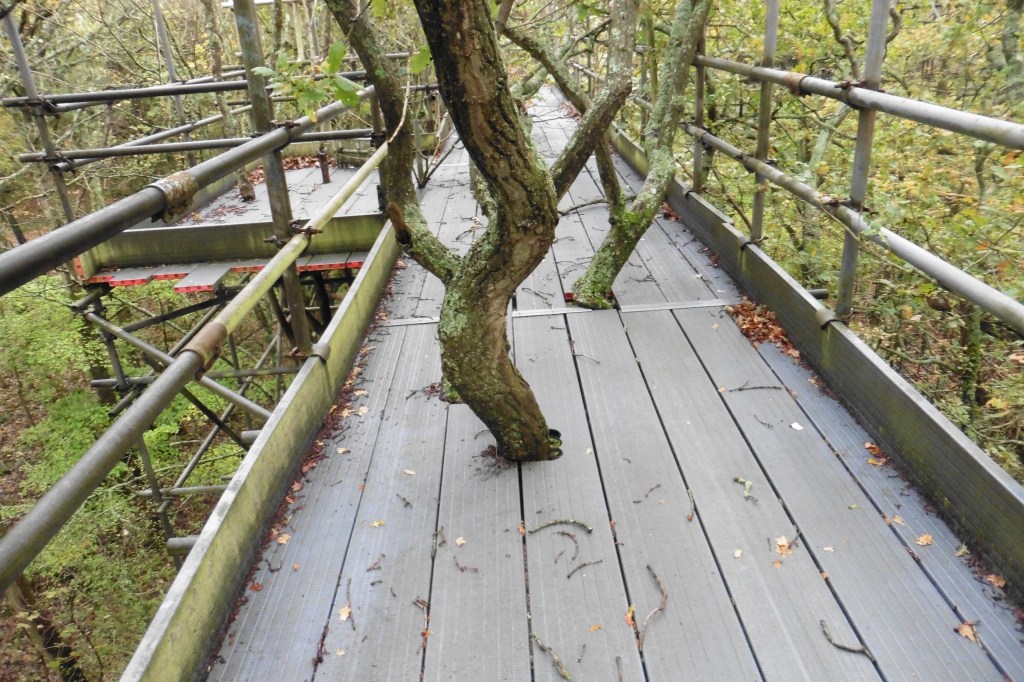
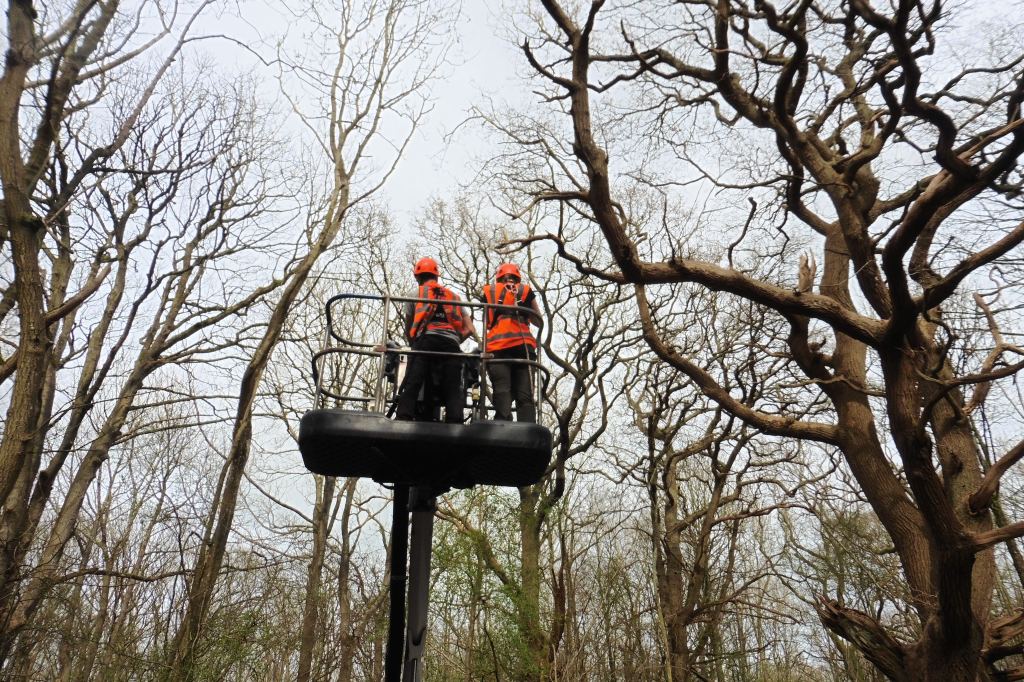
Canopy walkways and MEWPs
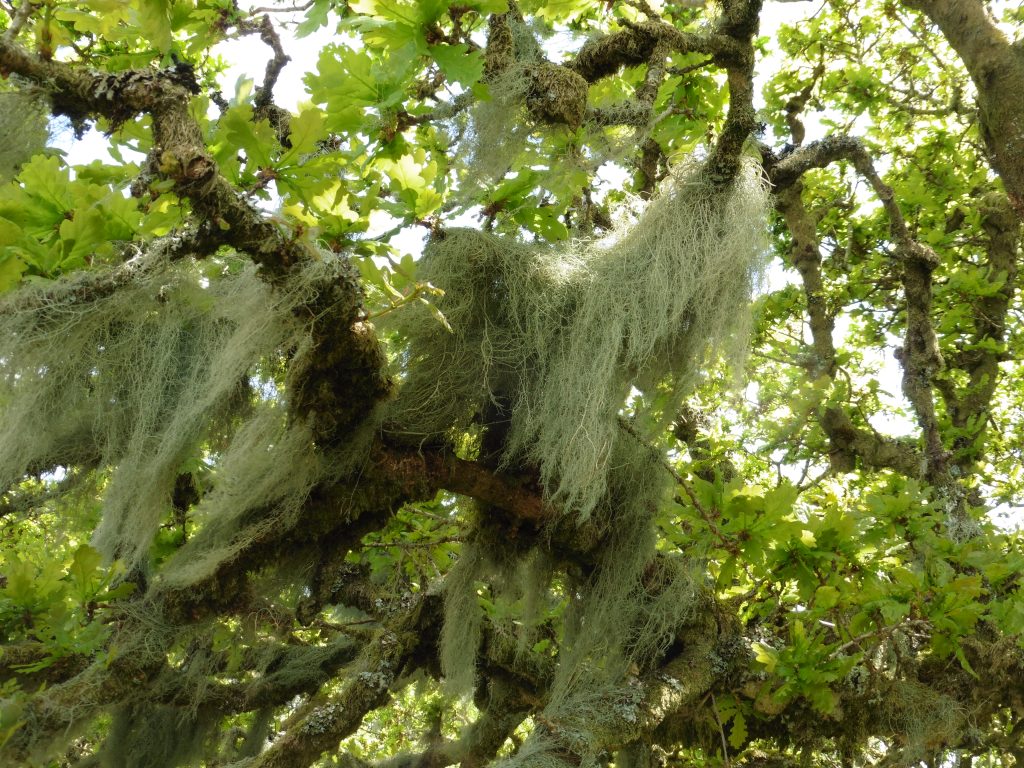
Being in the canopy gives a different perspective to what a tree-dwelling species must cope with. There is much more surface area of twigs and branches for lichens and other epiphytes; but it is more exposed and shorter-lived, favouring different species compared to those found on the lower trunk. Dead wood in the canopy is more likely to be exposed to strong sunlight and drying winds – a very contrasting environment to the humid conditions found in a hollowing tree trunk lower down. The effects of caterpillar feeding can be viewed directly as bites and holes in leaves, although the direct damage is only part of their effect. The trees respond physiologically to the damage, diverting some of the sugars formed in the leaves from growth to chemical defences. While at the moment the branches are still mainly bare it wont be long before the main focus for life in the woods moves upstairs.
OZANNE, C. M. P. 1999. A Comparison of the Canopy Arthropod Communities of Coniferous and Broad-leaved Trees in the United Kingdom. Selbyana, 20, 290–298.
TURNBULL, A. 1960. The Spider Population of a Stand of Oak (Quercus robur L.) in Wytham Wood, Berks., England. The Canadian Entomologist, 92, 110–124.
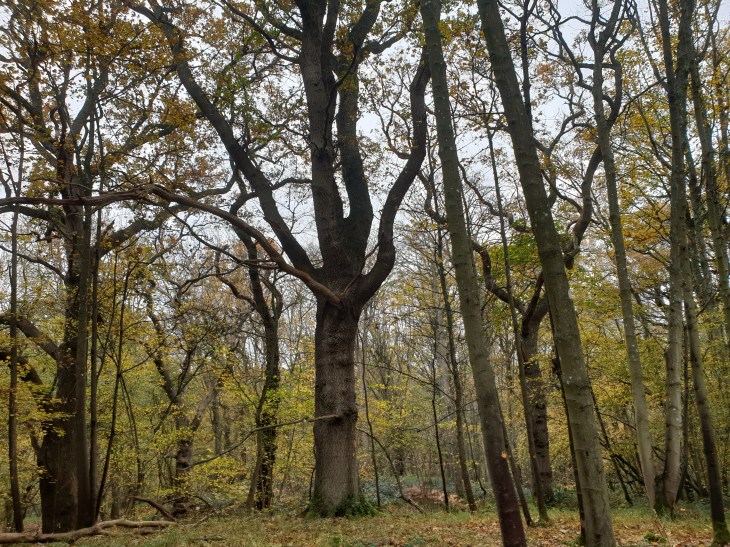

 The Old Man of Wytham