
The Old Man has been getting about a bit recently, in the last week looking at ancient trees and woods in Lincolnshire, Nottingham and Yorkshire, replanted ancient woodland in Shropshire and Somerset, and extensive new woodland in Hertfordshire. These were mostly fairly brief visits but each raised some interesting questions and challenges in terms of conservation management.
Starting in Sherwood Forest, the home of the Major Oak, but for how much longer? This iconic tree has not had a good summer. At Sherwood, there is a good populations of old oaks and younger ones coming along, such that we might hope that any species of beetle or lichen currently found in or on the Major Oak will also be present somewhere else on the site. The RSPB who now manage this part of the site are taking action and hopefully the Major will recover, but how officiously should we strive to keep just one tree going, compared to putting that effort into the general management of the oak population on the site?


The Major Oak in September 2013 and in October 2025
Not too far eastwards is the Bowthorpe Oak, thankfully apparently in good condition. There are strong cultural reasons (as for the Major Oak) in seeking to maintain this tree for as long as possible, but it is a relatively isolated old tree. Any specialist ancient-tree-associated species present are probably heading for extinction here when Bowthorpe eventually bows out.


The Bowthorpe Oak, October 2025
Across the Humber Bridge and north to Forge Valley. The valleysides include stands of beech and sycamore. In the past I would probably have encouraged a long term programme of replacement by elm, ash and oak, but now, given climate change we should perhaps be accepting beech as a future native on the more acidic soils: it is not that far outside its past native range. Sycamore, effectively naturalised in northern valley woods, may be a useful canopy replacement for elm and ash, both in decline from disease. Resources might be better put into diversifying stand structure rather than into changing stand composition.

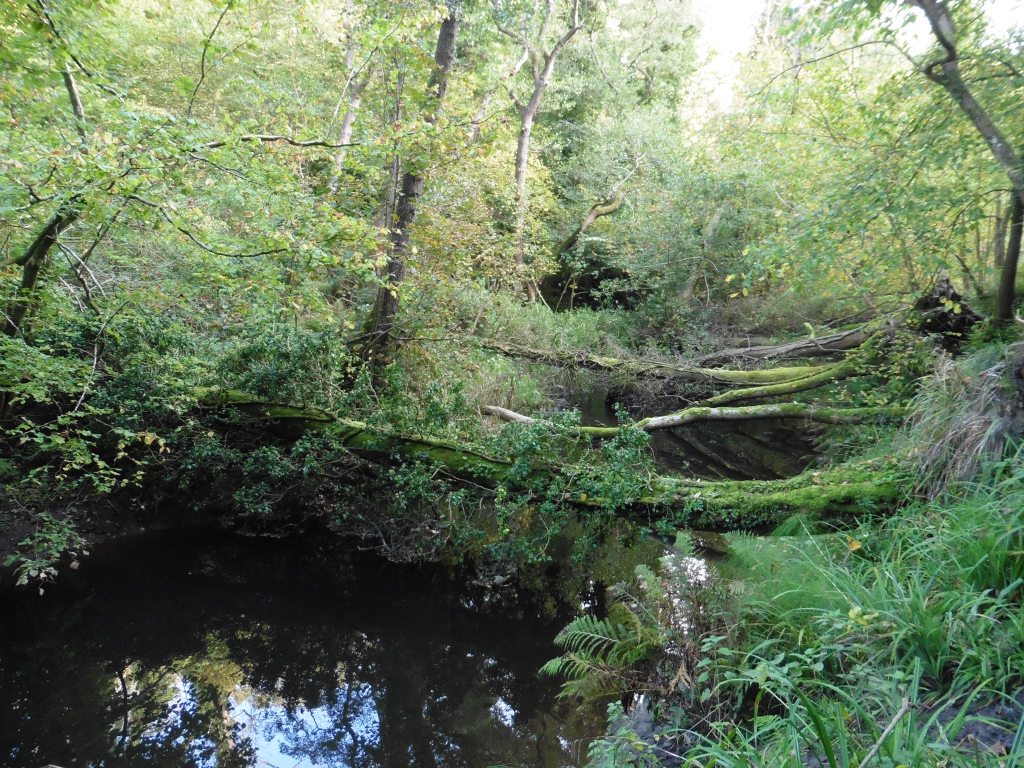
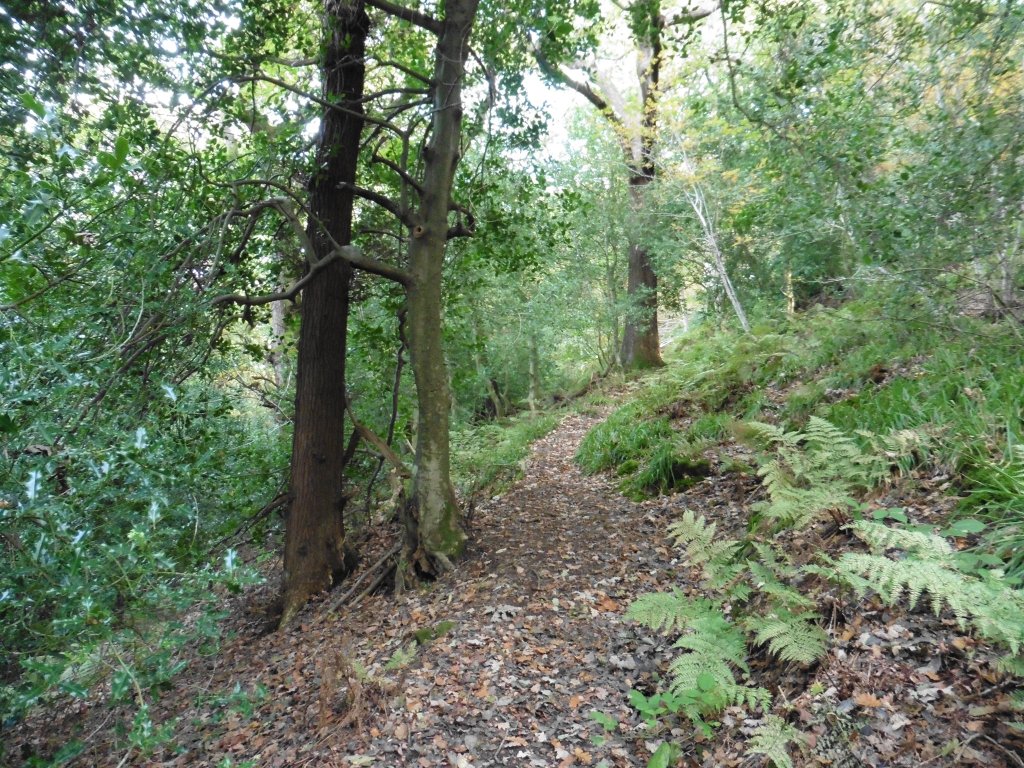
Forge Valley (October 2025): beech-sycamore plantation on slopes; collapsed ash across the stream in the valley bottom; oak on the acidic upper slopes.
Back to Shropshire, where the ancient wood under consideration is on the upper slopes of a valley; a mixture of 20th century stands of conifer (spruce, Douglas fir, some larch and pine) and broadleaved patches (mostly beech and sycamore). The steep lower slopes are mainly older oak, largely maiden stems. The 19th century 6-inch maps (1830-1880) show mixed conifer and broadleaved symbols across the whole site. So, are most of the oaks on the lower slopes and the occasional large pine, the survivors from a mid-19th century mixed replanting? We might argue for removal of the spruce and Douglas as having no ‘history’ on the site, and for getting rid of larch as at risk from Phytophthora, but accepting a proportion of Scots pine in the next generation might simply be continuing at least a 150 year-old tradition.


Twentieth-century planting as blocky mixtures of conifers and broadleaves; but did these oaks start as a 19th century mixed pine-oak stand?
Down to Somerset, where we were looking at a scatter of veteran/ancient oaks, many of them pollards among 20th century beech. There is a strong case here for gradually clearing around the old oaks, to reduce the competition from the younger (native) beech and a few western red cedar. There might be scope for linking the area up with nearby wood-pasture restoration projects and getting some grazing going to keep down future beech regeneration. There are a few middle-aged oaks along old boundary banks, which might help to tide over specialist lichens and invertebrates, but there also needs to promotion of a new generation of oak. Do we rely on the very limited (at present) natural regeneration, or go for some planting as well? Should any planting be solely from acorns collected on site or at least from the local area; or accept a wider genetic range?


Veteran oaks amongst native beech plantings
Finally, to the Woodland Trust’s Heartwood just outside St Albans, one of the largest new broadleaved woods (347 ha) in the country: half a million trees planted by volunteers since 2008. Meadows have also been sown on what was formerly arable farmland. Under the canopy there is often little to see other than leaf litter, but that is what would be expected in such a young wood. The new plantations are no use for the specialist species associated with the Major and Bowthorpe oaks but they are rich in wildlife compared to what was there before and will only get better. Moreover, they are attracting large numbers of visitors to go for walks and get the benefits of being in green space in a way that many richer, smaller or less accessible sites cannot.


All of the sites described are cultural landscapes: their composition and structure has been determined by past management decisions. The decisions we take now will similarly be based on balancing cultural values (for biodiversity, landscape, timber production) with the resources available. Those resources at site and country level are limited: spending on one set of actions, at one place, is likely to limit what can be done elsewhere. Along with climate change and new diseases, this means that woodland biodiversity in Britain is going to change, in composition and location. We will lose some of the old, but hopefully gain much more of the new.


 The Old Man of Wytham