In 2003 an unusual note appeared on my desk from English Nature’s office in Lewes (Sussex) about a local local landowner who wanted to let his farm run wild. It sounded interesting but it was not clear what the biodiversity benefits would be, how it could fit with the English Nature’s priorities for improving the state of Sites of Special Scientific Interest and the populations of key species. English Nature’s budget for general farmland conservation was extremely limited (agri-environment schemes were then run by a separate body). Still, we did manage to find a bit of funding to help set-up what has since become one of the flagship projects for the rewilding movement in England (Tree, 2018).
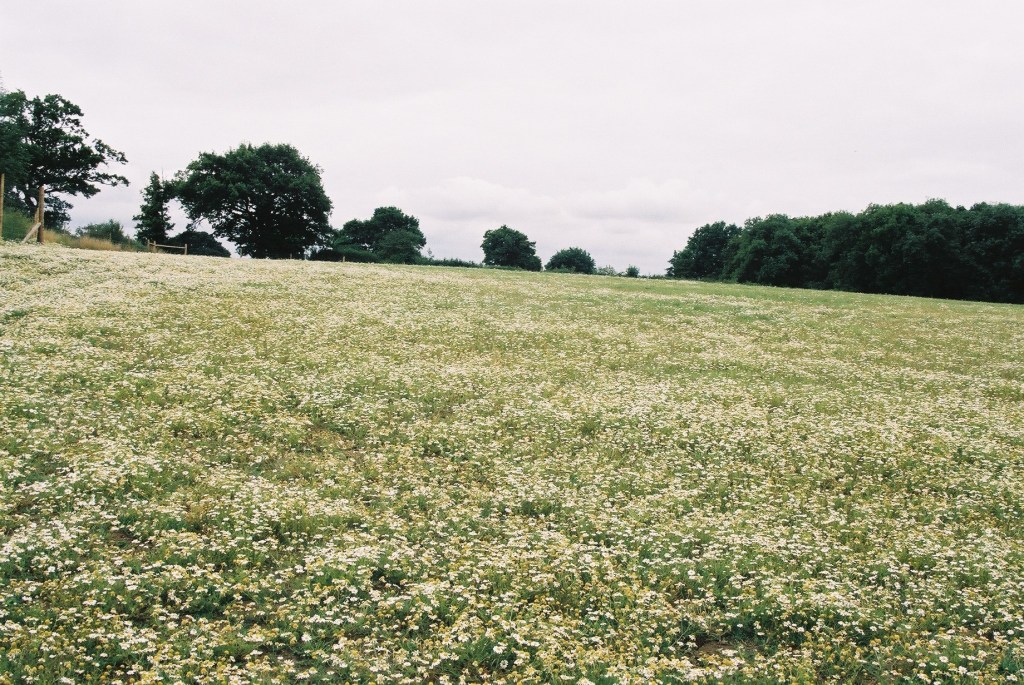
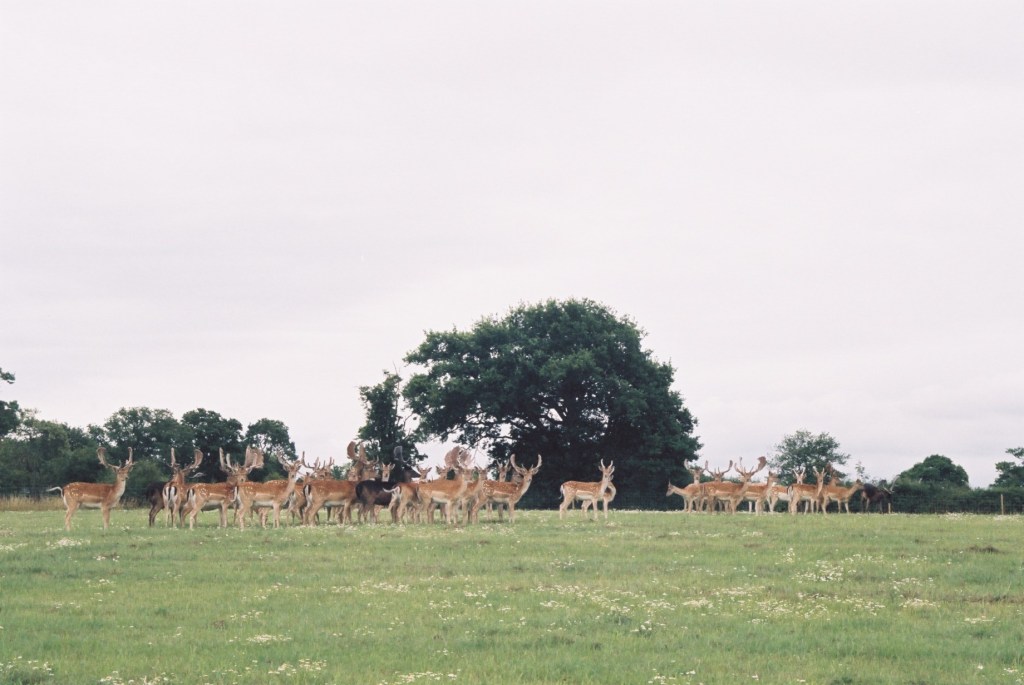
Fields in 2005
Off and on, I have been back to the Knepp Estate, sometimes with visiting groups, sometimes just for a walk round; and then in 2019 for a few days to look at regeneration patterns across the three sections of the Estate (Kirby, 2020). In August this year I was visiting Sussex for another purpose and took the opportunity to see how things had changed over the last six years. I tried to relocate the sampling positions used in 2019 and took a photograph of the general area at the thirteen sampling blocks of the Southern Block plots, five (out of thirteen) in the Middle Block and six (out of thirteen) in the Northern Block. The plots visited in the Middle and Northern Block were a biased sample: they were those that it was convenient for me to get to on my walk back to Southwater to catch the bus to Horsham.

While the pictures from 2025 were taken from more or less the same point (according to my phone GPS) they were not always taken in the same direction. Moreover the 2019 ones tend to be looking down on the plot, whereas in 2025 I was trying to get more of a view of the overall landscape at that point. General impressions were that the grass looked taller and greener in July 2019, but that is not surprising given the 2025 drought conditions. The southern block seemed a bit more ‘closed’ by scrub and and tree cover; sallows and thorns were more apparent than oak. Some of the grassland fields seemed a bit ‘rougher’ with more ragwort and thistles (but these species were not uncommon in 2019). Oak seedlings were not that obvious amongst the grass, but I did not actually search for them so they may still be there. Anthills seemed more common in the grassland. However, overall there did not appear to be much change in the broad pattern of the vegetation in the fields surveyed in 2019, once allowance was made for differences in the view direction/angle etc.

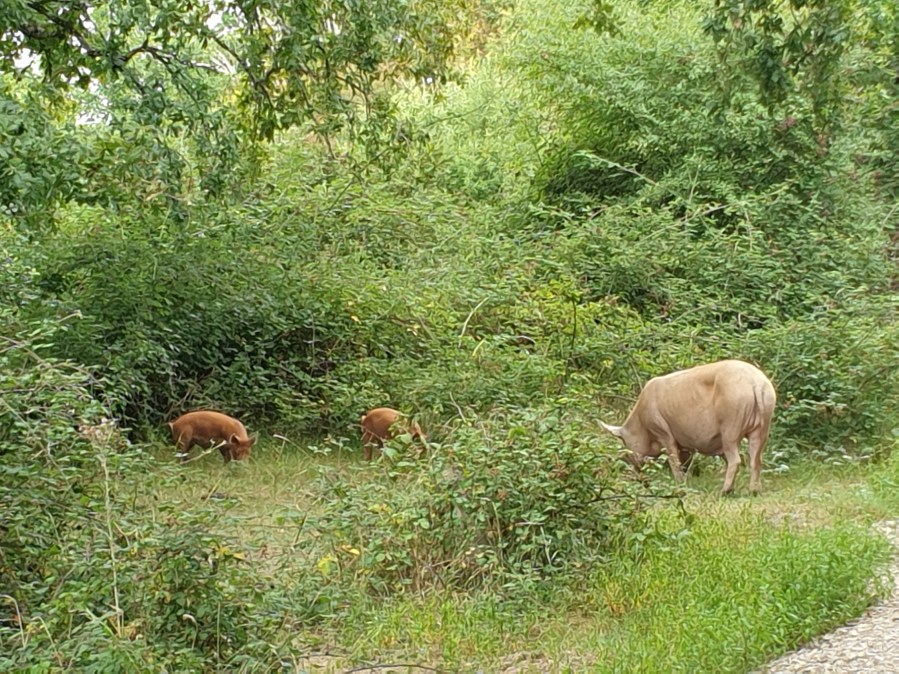
Beavers have been introduced since 2019. The area within the enclosure has become a mixture of ponds, wetland edge and willow scrub. Some had got into the Hammer Pond where they have built a small dam across the spillway. The pigs were more in evidence than on previous visits with signs of extensive rootling in various fields. One field has been fenced off from grazing with the pigs put in from time to time to break up the thatch. Scattered oaks were growing through the tall grass there. The cattle and ponies were less apparent but that is probably just an accident of where I happened to be walking; browse lines on areas of young oak were evidence of their effects. Fallow deer were seen on several occasions and the occasional roe.
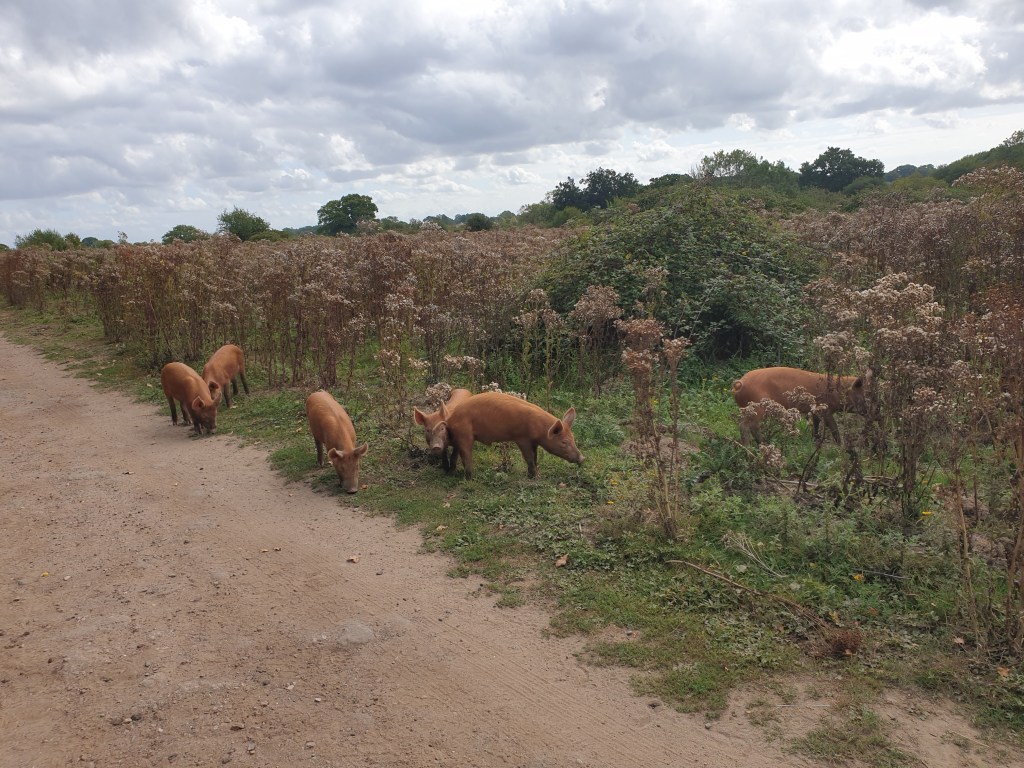
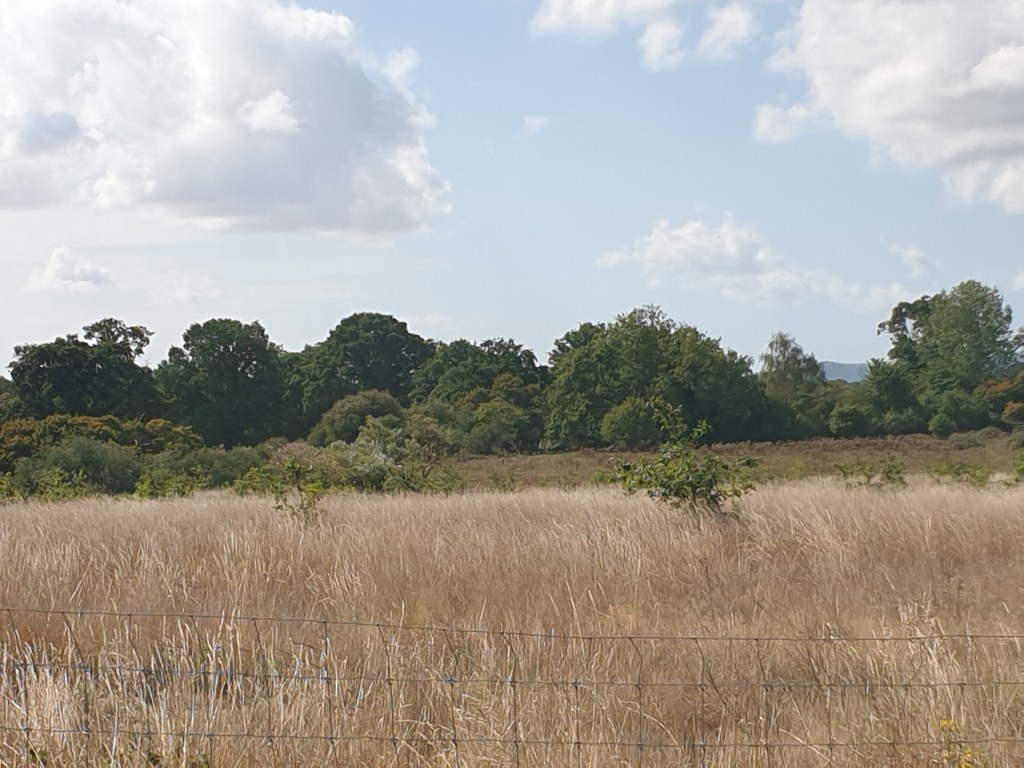
The Southern Block changed rapidly in appearance and diversity in the first two decades after the start of the rewilding process. My impression is that the rate of change may be starting to slow, but sallow and thorn patches are expanding, with dense bramble in between. Oak that established in the early stages are scattered through, but conditions for further recruitment do not look good over most of the Block. The fields in the south-east corner remain fairly tightly grazed grass. I was expecting there would be more tree and scrub development on them by now; perhaps the animals tend to congregate on these at some times? The Middle and Northern Blocks remain (based on a much more superficial look) predominantly grassland. There were occasional thorn and bramble clumps but over most of the area they do not appear to reached the tipping point where spread becomes rapid.
There were more casual visitors than I have seen on previous visits with colour-coded trails in the Southern block. The fame of Knepp is spreading: people I talked to after my walk (elsewhere in Sussex and here in Oxford) had generally heard of the Estate, even if only vaguely, through the book and film.
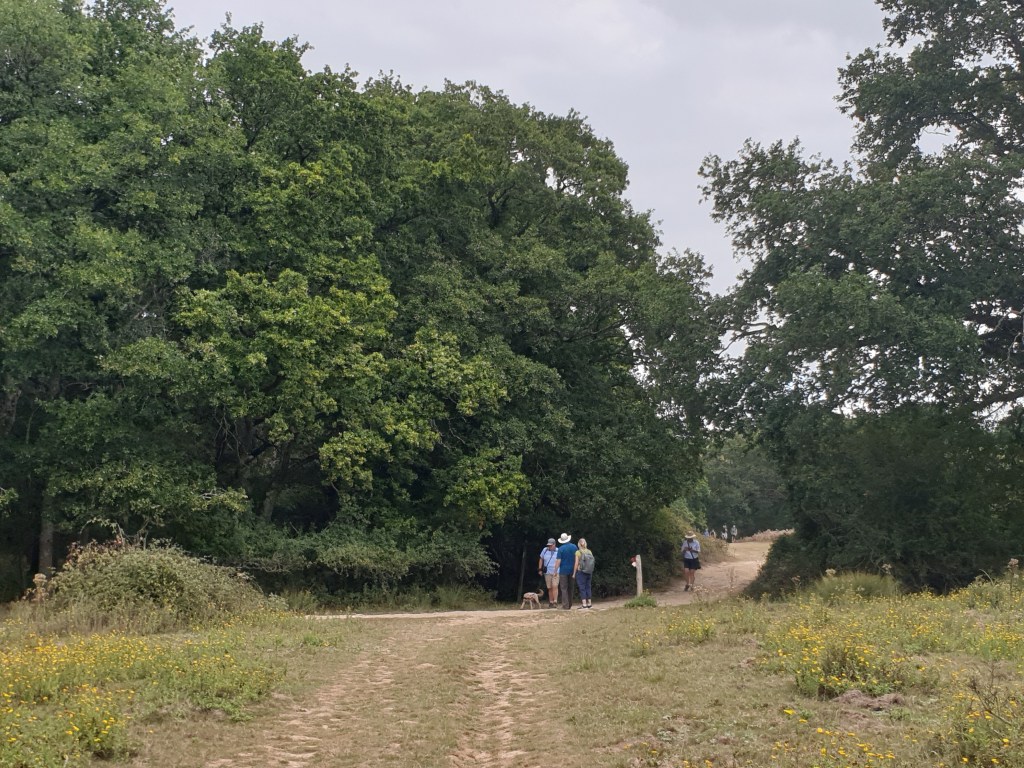
There was some scepticism twenty years ago amongst conservation colleagues as to whether rewilding would prove worthwhile in biodiversity terms. At Knepp it has been a great success, both in itself and as a catalyst/model for other projects. At the time, it was also sometimes suggested it would be a ‘test’ of Frans Vera’s ideas of what the natural landscape would have been like – half-open wood-pasture driven by grazing. My feeling is that it has provided insights into landscape development under a mixed grazing regime, but that it is still a (new) form of cultural landscape, albeit one which is managed only lightly through the manipulation of the cattle, pony and deer numbers. It is not clear what the overall tree and shrub cover will be, but I will certainly be trying to revisit at least every five years.
KIRBY, K. J. 2020. Tree and shrub regeneration across the Knepp Estate in Sussex, Southern England. Quarterly Journal of Forestry, 114, 230–236.
TREE, I. 2018. Wilding: The Return of Nature to a British Farm, Pan Macmillan.


 The Old Man of Wytham
Thank you!
I wonder if the change has also been slow because of the heavy nature of the soil? I recollect that had been an issue when the land had been arable.
At my second invited visit about 20 years ago, livestock stocking in the ancient woodland areas had been high with much of the ground flora severely damaged. Thankfully, this mistake was subsequently rectified.
An excellent learning locale.
LikeLike
Thanks. There are still some places where there is a distinct difference in the woodland flora either side of the boundary fence, particularly in terms of bluebell flowering. But yes a great place for challenging assumptions and tradition.
LikeLike