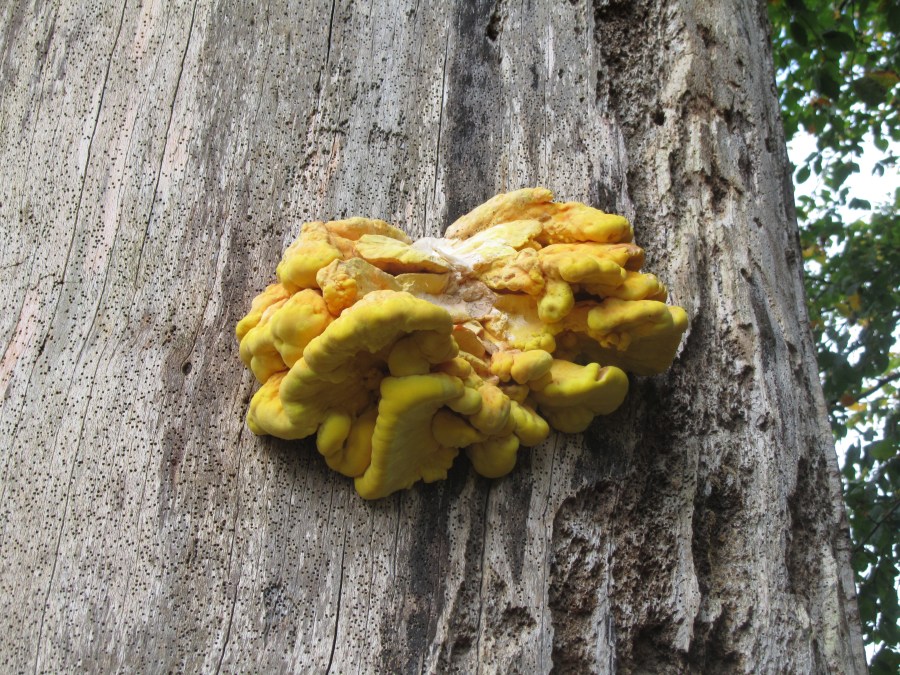
So much for hopes of an Indian Summer, with, instead, nearly a month’s worth of rain over the course of a weekend: on my morning walk I paddled through water, when yesterday the level had been about 15 cm below the path. In woodland the extra weight of the wet leaves and the soaking of the soil will leave the trees vulnerable to windblow as happened in October 1987 in south-east England. Some trees and large branches are bound to go, even if we do not get the scale of blowdowns that happened in ‘87. But what happens to the wood once large branches or whole trees hit the floor?


Aftermath of the 1987 storm in Kent; a one-off major branch drop in Wytham.
Wood is pretty tough stuff which is why it is used in buildings. The principal components of woody tissue, the cellulose and lignin, are difficult for most organisms to break down and the heartwood of oak is amongst the most resistant of broadleaved trees. However clearly decay happens, or we would not be able to move for fallen logs. Step forward to save us and recycle the carbon and nutrients in the wood, the fungi, bacteria and other members of the soil microbial world – even termites rely on microbes in their gut to break-down wood.
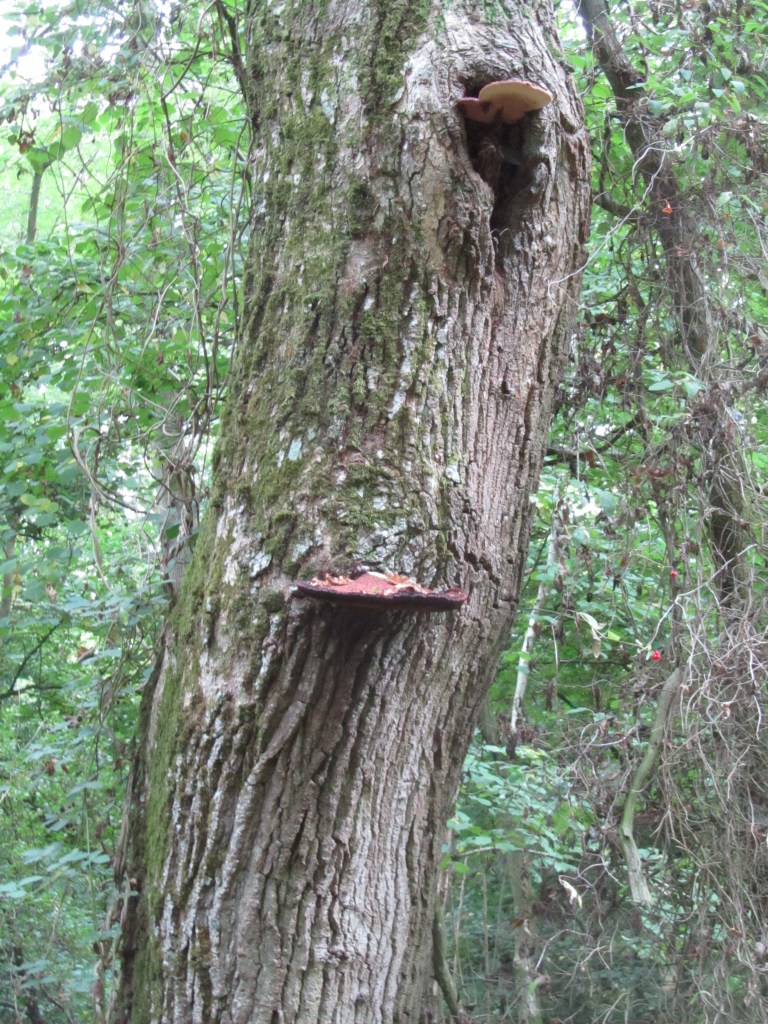

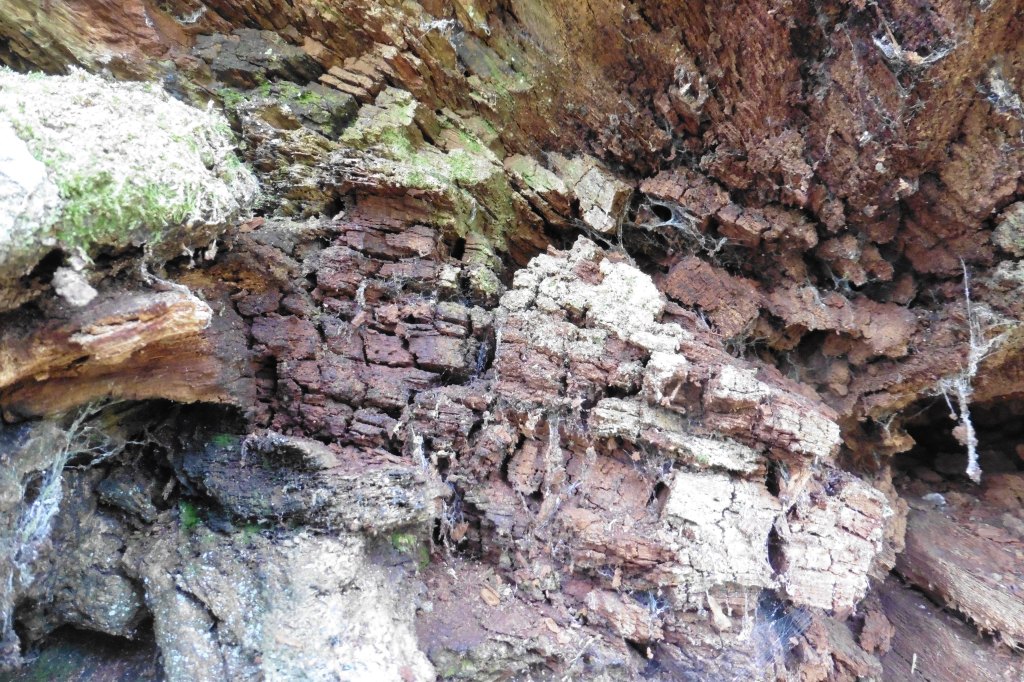
Two groups of fungi are key to wood decomposition. The ‘brown rots’ breakdown the cellulose but leave the lignin largely untouched: the wood retains some of its obvious structure but is cracked into often roughly cubical red-brown blocks. The ‘white rots’ have enzymes that can attack both cellulose and lignin such that the wood may become a pale, stringy mess (Spooner and Roberts, 2005). Wood decay processes are more complicated than this binary division implies but it is a convenient first approach.
The first fungi to appear on fallen logs were probably already living (perhaps in a dormant state) in the living trunk: they are known as ‘endophytes’ and in the initial phases the species identity of the tree can be important in directing the nature of the decomposition. As decay progresses and the wood remains are changed both physically and chemically, so a broader range of rotters may get involved. The actions of the soil macrofauna such as beetle larvae become important in helping to break up the wood physically, so exposing new surfaces to potential attack by the fungi. In some cases beetles may also inadvertently aid the dispersal of fungal spores to new trees on their heads or the wing-cases.
The common thread-like hyphae that make up the mass of the fungus in the soil can come together to form more substantial structures. The fruiting bodies – the toadstools – that appear in the autumn are one example of this aggregation, but some species also produce boot-lace-like cords that extend across the mineral soil and through the litter. The outer hyphae form a waterproof layer, protecting the whole structure, while the inner hyphae lose cross-walls which makes it easier for material to flow through them. Mass flow through the cord can move sugars, amino acids and oxygen around the fungal network much quicker than by simple diffusion processes. Cords of the fungus Megacollybia platyphylla a common fungus feeding on dead wood were tracked over 300 m across the floor of a Warwickshire woodland (Monk and Hemery, 2013).
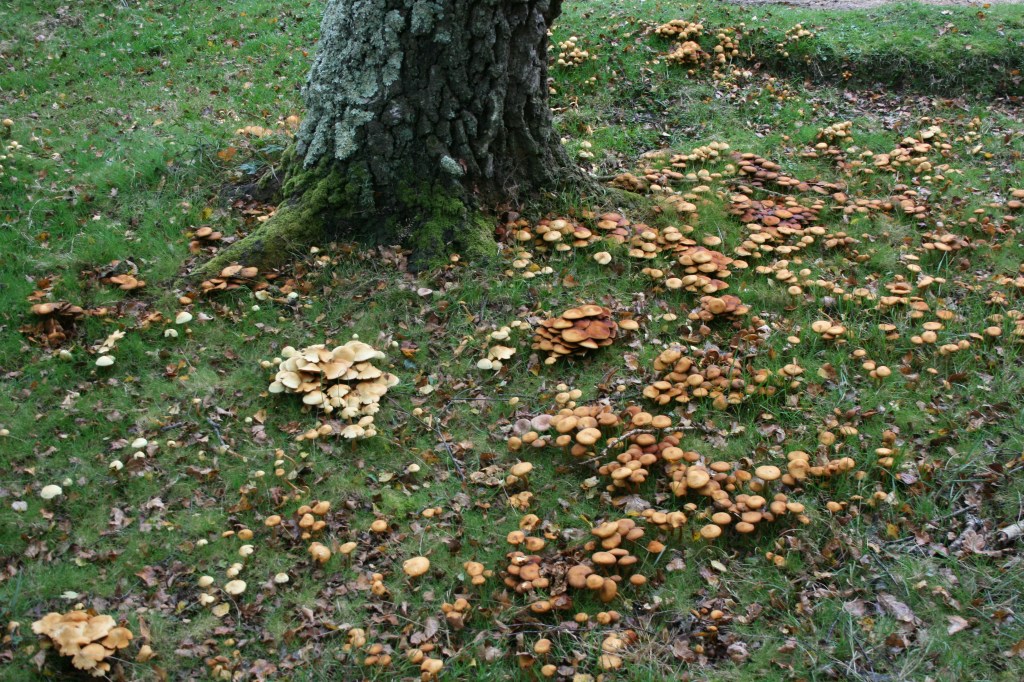
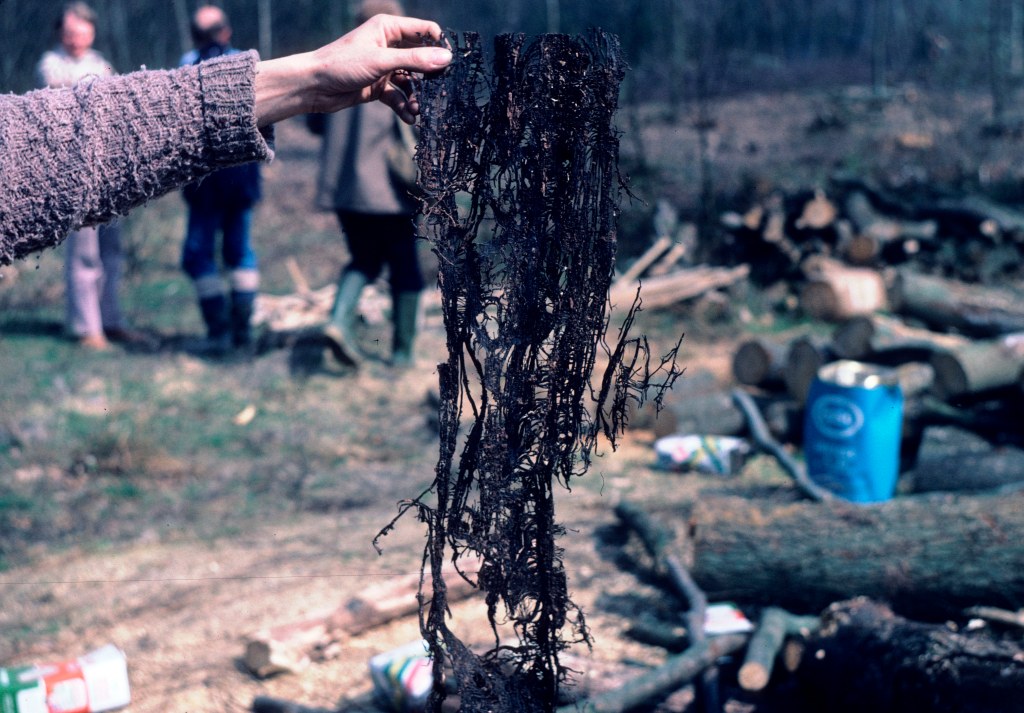
Honey fungus rhizomorphs – a form of cord
The cords allow the fungus to ‘forage’ for food. Some forms of honey fungus Armillaria mellea live on deadwood such as old trunks and large branches, but the cords running off from these may colonise and feed on nearby living trees. This can cause tree death, usually where the tree is already weakened by drought or some other pest or disease.
As with other parts of the woodland system fungi are being affected by climate change. Species that produce their fruiting bodies early in the season are tending to do so earlier, while some of the late-season species are fruiting later in the autumn (Gange et al., 2007). In the 1950s the fungus season lasted about 31-35 days in the autumn whereas in the 2000s it was about 66-82 days. Many fungi that used to fruit only in the autumn now also produce toadstools in the spring and the spring-fruiting season is tending to start earlier. Both increases in summer temperatures the previous year, which may be associated with more resources being available for the mycelium, and warmer winters that allow more time for early growth may be driving these changes (Kauserud et al., 2010).
So as you kick your way through the autumn leaves and hop over yet another fallen log, spare a thought for the activity going on beneath your sole.

GANGE, A., GANGE, E., SPARKS, T. & BODDY, L. 2007. Rapid and recent changes in fungal fruiting patterns. Science, 316, 71-71.
KAUSERUD, H., HEEGAARD, E., SEMENOV, M. A., BODDY, L., HALVORSEN, R., STIGE, L. C., SPARKS, T. H., GANGE, A. C. & STENSETH, N. C. 2010. Climate change and spring-fruiting fungi.
MONK, K. & HEMERY, G. E. 2013. Cord-forming fungi in British woodlands: what they are and what they do. Quarterly Journal of Forestry, 107, 197-202.
SPOONER, B. & ROBERTS, P. 2005. Fungi, New Naturalist 96. Collins.
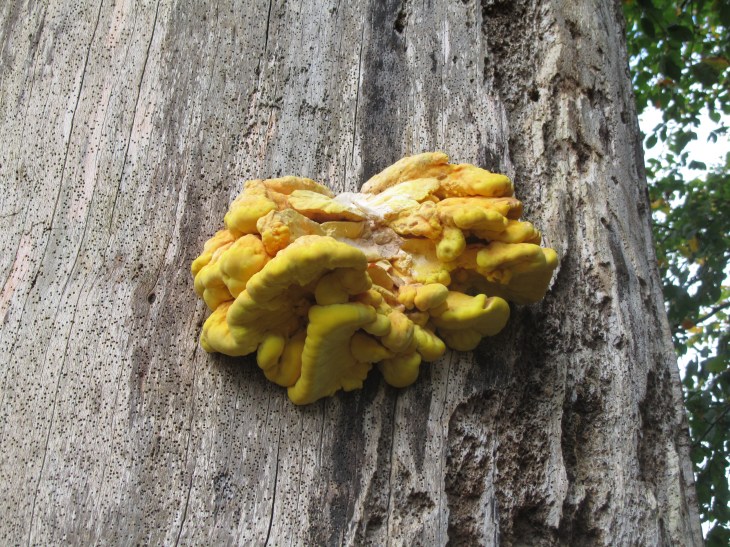

 The Old Man of Wytham