
At the end of April I had a week in Scotland to re-visit some contrasting Scottish oakwoods: Loch a Mhuillin, just south of Scourie, Drummondreach on the Black Isle and Ariundle Reserve on Loch Sunart.

Loch a Mhuillin (NC1639) is billed as the most northerly oakwood in Britain: oak trees are found further north, albeit now often planted. It is perhaps a bit of a misnomer as on the 19th C. county series O.S the wood overlooks Loch an Coille, with Loch a’Mhuillin being the loch to the south. This name is transferred to the woodland water body on a later map. Either way the main block is clearly shown more-or-less as now although there may have been some recent spread around the edges.

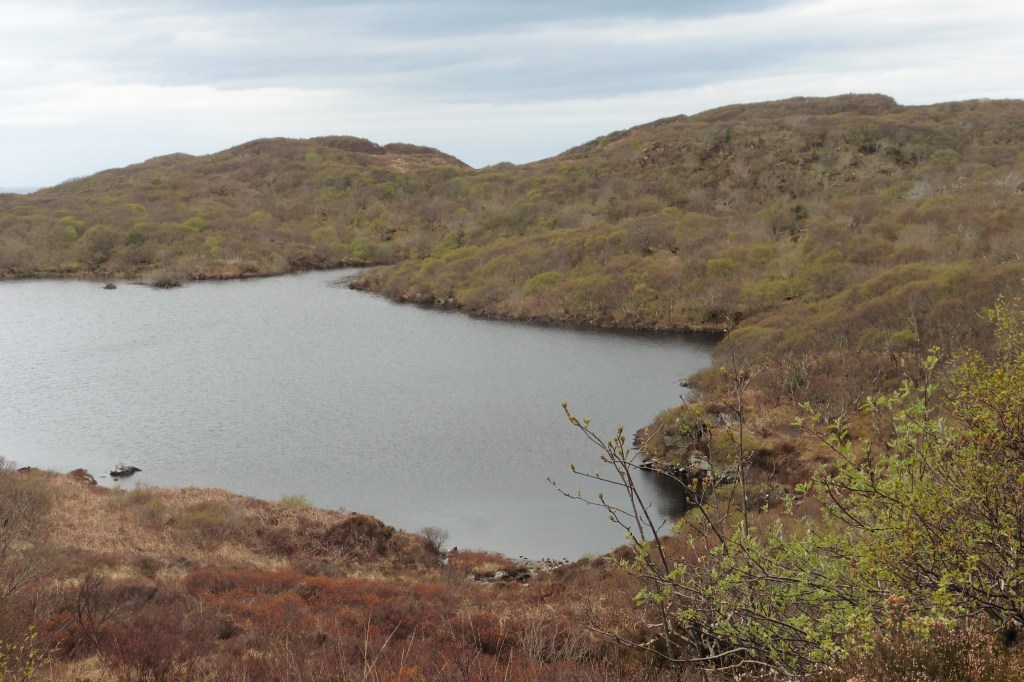
The wood lies on a series of small hills with boggy hollows between, some of which are open or just birch and Myrica. The northern half of the wood was not seen but in the area visited oak was quite scarce, with birch, hazel and rowan abundant. The oaks seen were up to 50cm dbh, single stemmed with wind-pruned tops. The birch tended to be smaller and multi-stemmed. The hazel also often has a coppice form although whether this is from deliberate cutting or regrowth from grazing is unclear.


Deer tracks were seen, which explains why there were some young trees/saplings in tubes and small wire cages. I could not tell if this was protection of natural regeneration or deliberate planting, possibly both. They seemed to be growing well. Two exclosures had the usual dense rowan regeneration. I did not go into them, so don’t know if there is oak regeneration as well, although they may be too shaded. On my previous visit in 1981 I recorded ‘creeping’ oak amongst the heather, but I did not see that this time – perhaps I was in the wrong area. It would be interesting to know how the wood was managed in the past; is the oak an accidental component or was it formerly encouraged?


Loch a Mhuillin is described on the SSSI citation as an upland oak wood (Ok it is goes down to sea-level but you know what is meant); by contrast Drummondreach (NH58 57) on the other side of the country sits in a lowland arable landscape and would not be out of place if dropped into the Welsh Marches. The oaks were much bigger and evidence of past interventions included some large beech perhaps 150-200 yrs old and now falling apart. The beech were presumably planted, but did that extend to some of the oaks as well, albeit many had a ‘wild’ look?


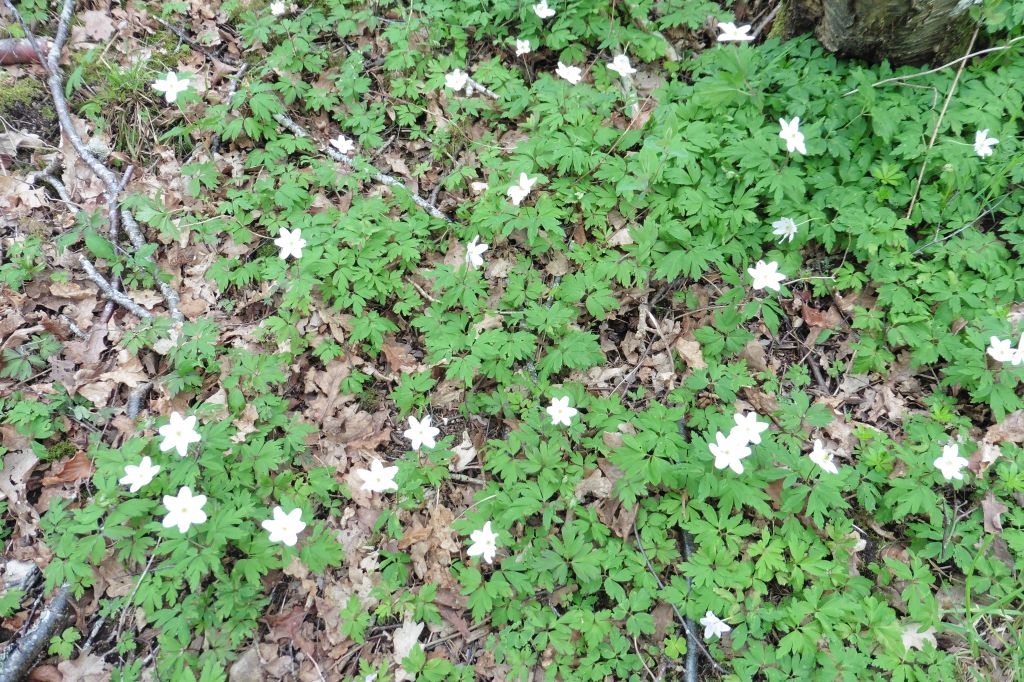
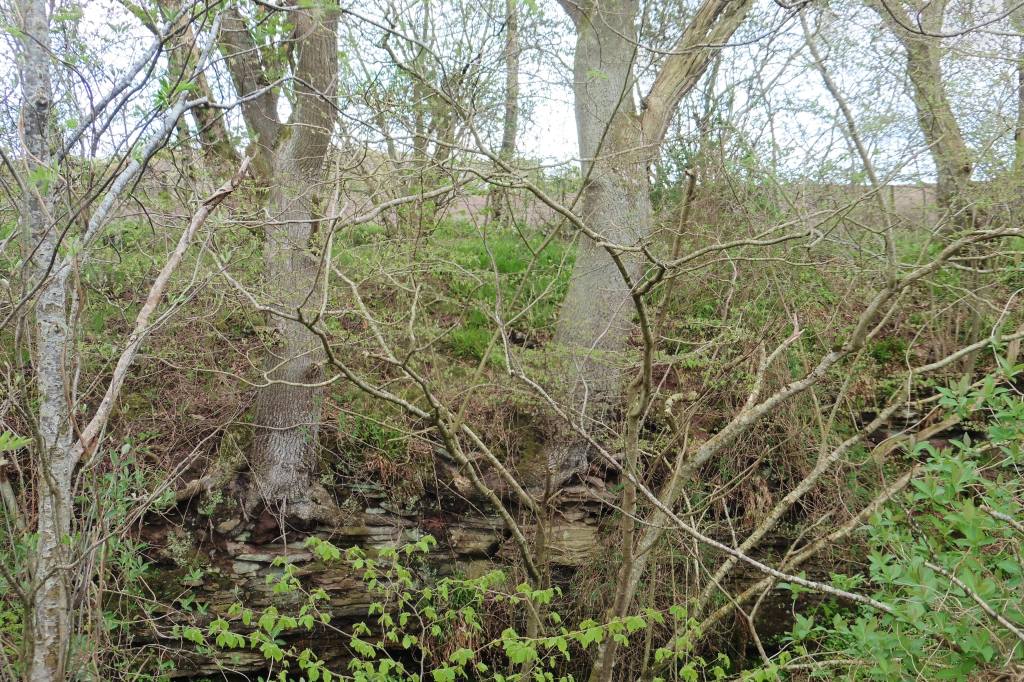
It was just the right time for the anemones and violets. The kites overhead made me feel at home – I had forgotten that there had been a Scottish re-introduction as well as that in the Chilterns. Drummondreach has another special feature though in the form of a delightful little gorge.
Back across to the west coast for the third oakwood – Ariundle National Nature Reserve (NM8464) part of the Loch Sunart Oakwoods SAC. Like the other two sites I had visited it in the 1980s but my memories of that visit were rather hazy. However I seem to remember walking along a track to reach the reserve with a rather forbidding stand of conifer to my right. Much of the surrounding land was Forestry Commission and wood production was a priority here. Now the stand has been cleared and the focus is on the reserve, its biodiversity and history.

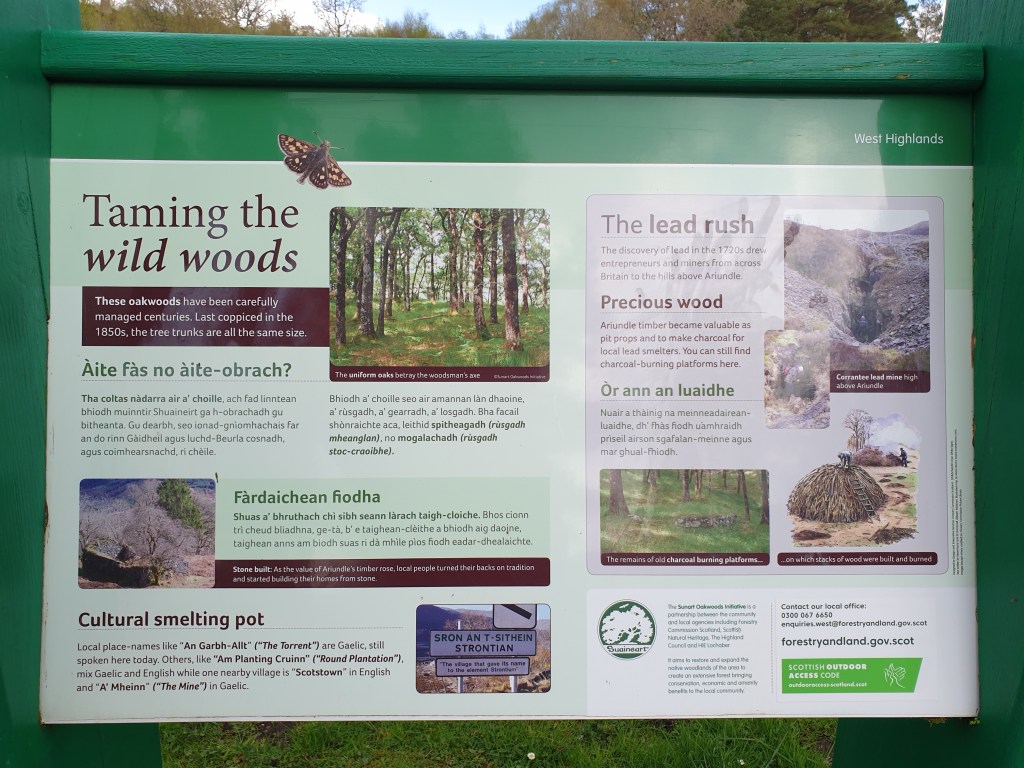
It is a fine example of upland oakwood and had been managed by coppicing; there was a lead mining boom in the 18th century and I walked up beyond the reserve to a former mine site. However coppicing stopped in the mid-19th century and the main block was transformed to high forest, probably involving some planting. This may also explain the scatter of old pine which are not thought to be locally native but it would interesting to see whether they might regenerate as well as the oak in parts of the glen to form an oak-pine mosaic.


A worthwhile and intriguing trip.

 The Old Man of Wytham