Earlier this month I spent some time looking at Oliver Rackham’s notebooks in Corpus Christi College (Cambridge). I had seen copies of his field notes previously when Paula Keen organised some re-surveys of woods in South Wales to go with the posthumous publication of Rackham’s researches there (Rackham and Keen, 2022). So I was interested to see what he had recorded from his visit to Wytham Woods in 2014. Dr Genny Sylvanus, the College Archivist, kindly brought down the ‘red’ and ‘blue’ notebooks covering the end of 2013 and the beginning of 2014 and I started to browse through them. The first thing that struck me was the way that just reading them made me feel I was listening to him talking. The small red paperback notebooks are in effect diaries as well as field records. The field entries tend to be much abbreviated, written as he was going along. The notes were interspersed by small drawings. While most field records were for vascular plants, bryophytes and lichens (the occasional fungus) were sometimes listed. Hand-drawn or stuck in maps were annotated by letters, linking back to the notes.
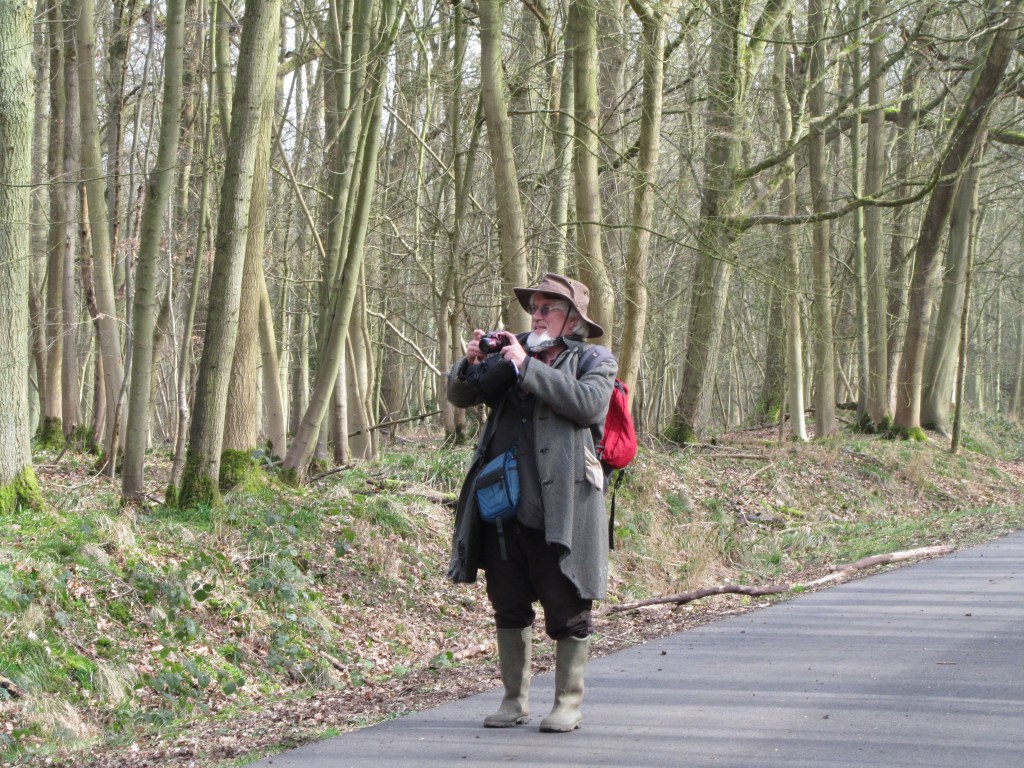
Oliver Rackham in Wytham Woods
This brought home one of Oliver’s strengths, his emphasis on the importance of looking at what was actually happening on a particular site. Of course, we also need to try to generalise, to express what are the common patterns in (say) the composition of woods in an area, how they have been managed, or how they function. However, when making such generalisations we must never forget that there will always be exceptions, and that these may be what make that site different or special.
Also, this month I had four days looking at woodland in the north of the Lake District. Now if I were to generalise about its woods I might say that the semi-natural stands had a predominance of oak, often coppiced in the past for bark and charcoal production, and that regeneration of oak within such stands was quite unusual. So, was that what I actually saw? Keskadale Oaks does seem to fit this generalised woodland picture. On a previous visit the farmer told us he could remember logs being cut from the wood and simply rolled down the slope to the road. You can see through much of the woodland as there is a distinct lack of understorey or regeneration and virtually every tree is an oak.
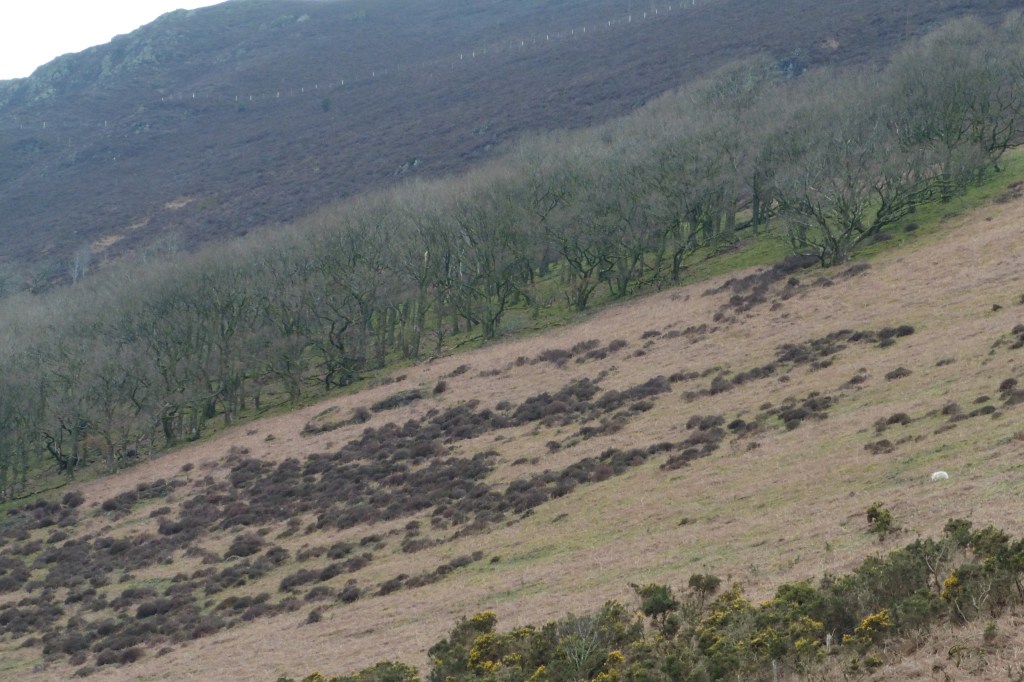
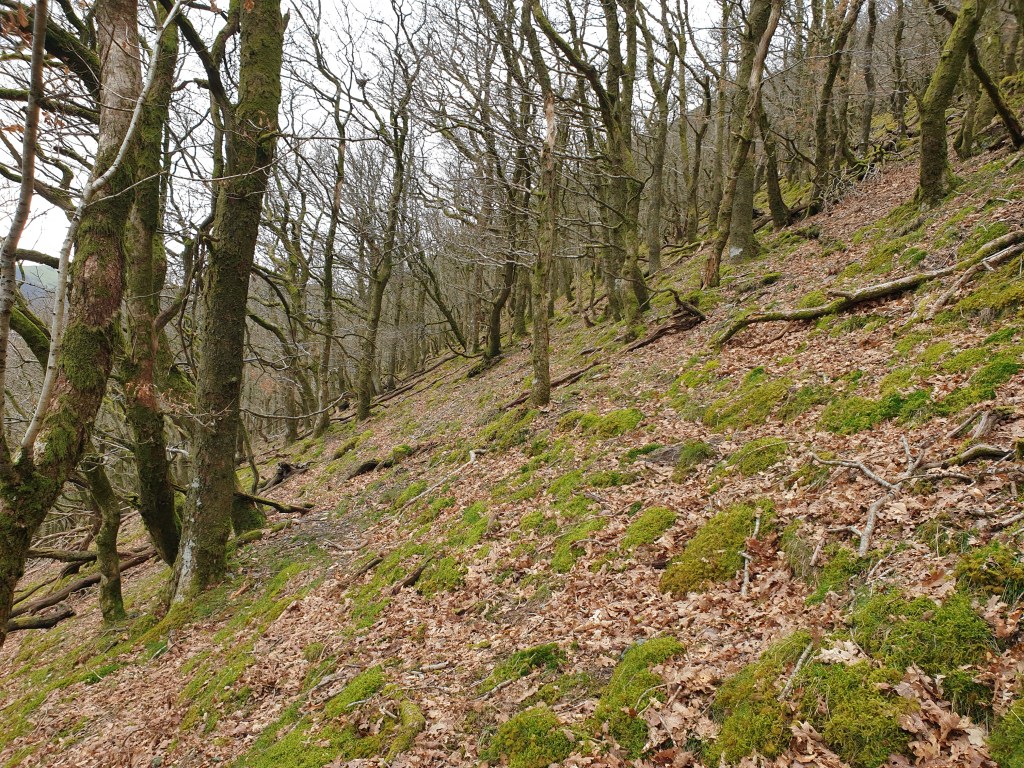
(a) looking up to the Keskadale Oaks; (b) interior view.
However, at Naddle Low Forest by Haweswater and Low Wood, Brotherswater overlooking Ullswater, much of the lower ground was composed of birch and hazel with scattered ash and alder in the flush zones and I began to despair of seeing any oak at all!
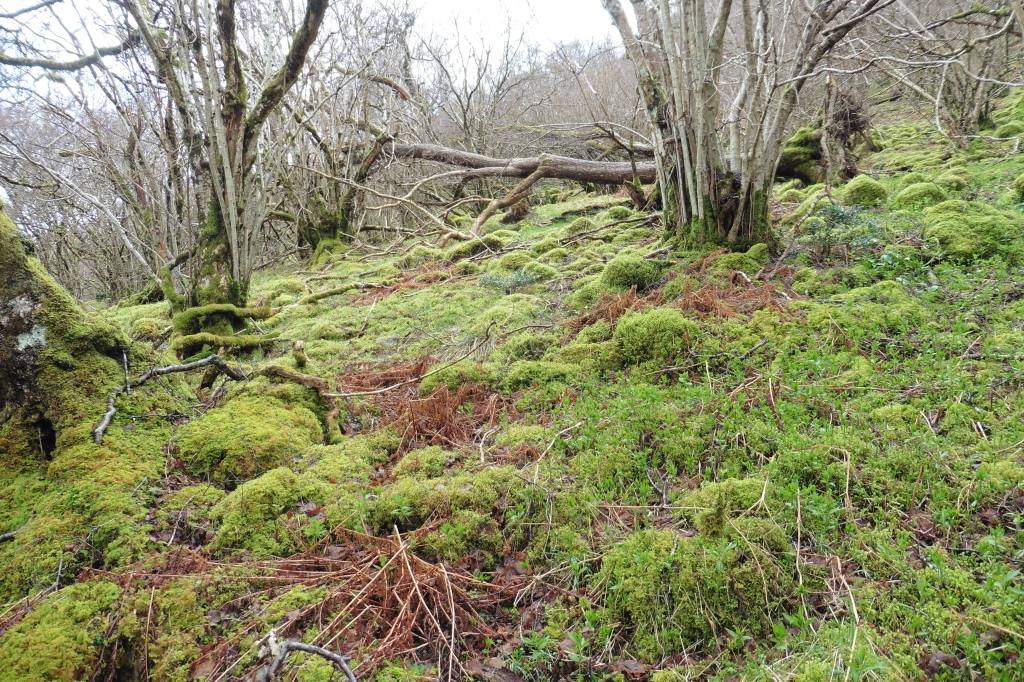

(a) Dense hazel and birch above Haweswater; (b) birch with some alder and ash in Low Wood, Brotherswater.
When I did find extensive oak stands in these two sites they had mature trees (100-150 years probably) with a high forest structure – not obviously derived from coppice. Indeed, I would not be surprised if at least some of them were originally planted.
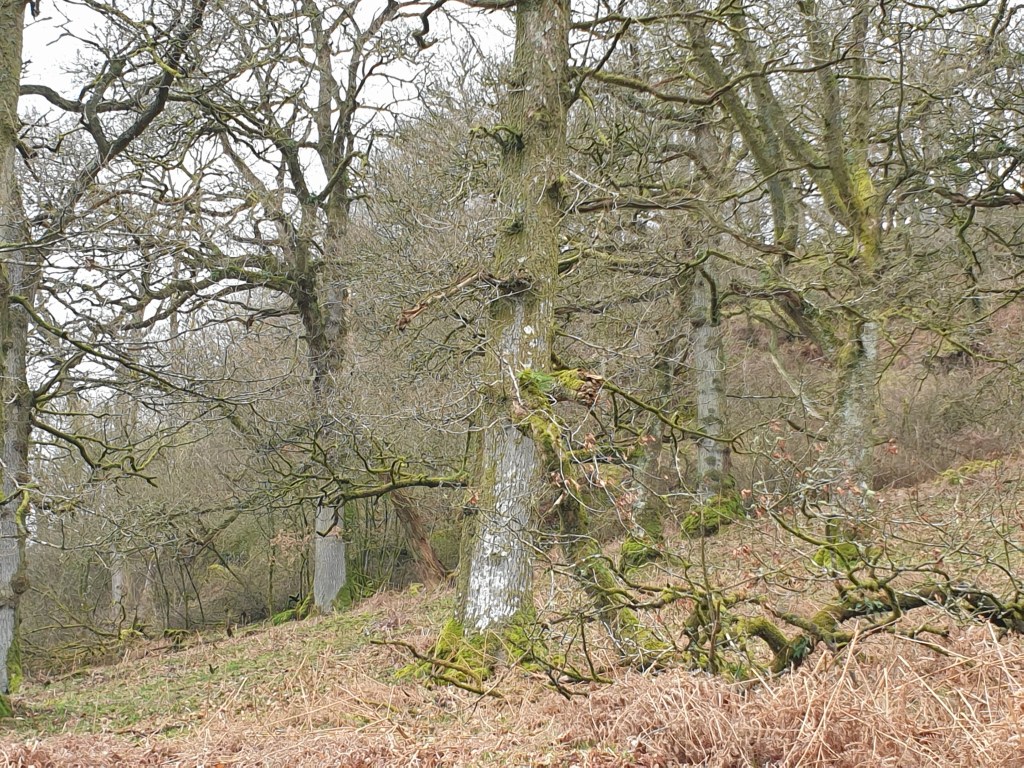
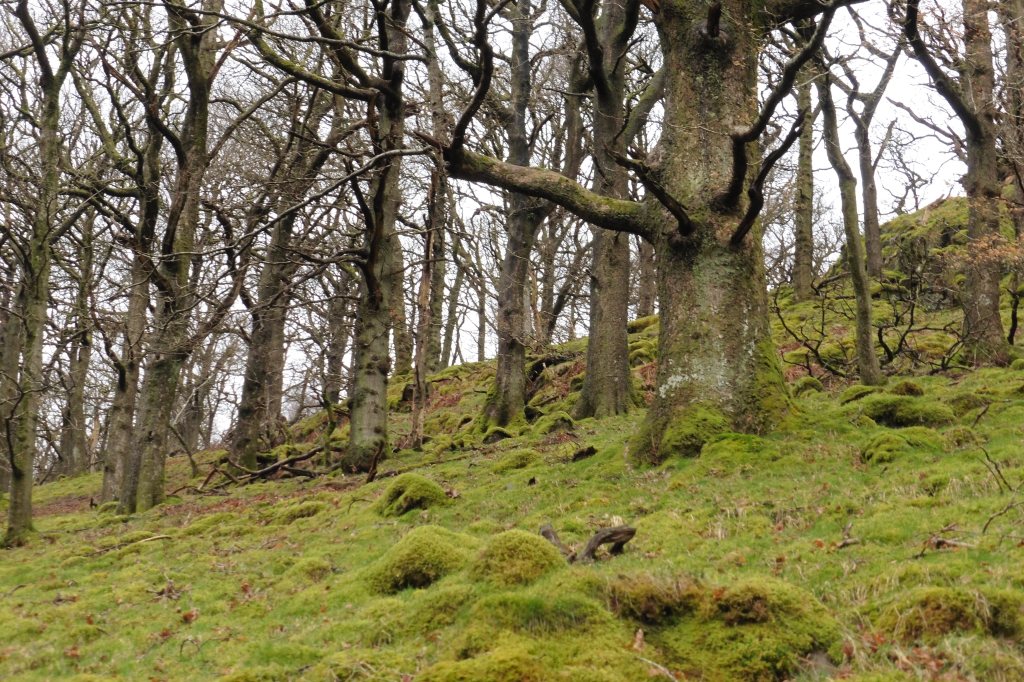
Mature oak stands in Low Wood Brotherwater and Naddle Low Forest – probably planted?
And, after slogging up the hillside to the east end of Birkrigg Oaks, there under an oak canopy were oak saplings 40-50 cm high about every 5-10 m. Most still had the remains of last year’s foliage suggesting they had not been browsed even though the wood is open to grazing from the surrounding fells. Moreover, some of the young trees were 2-3 m high.
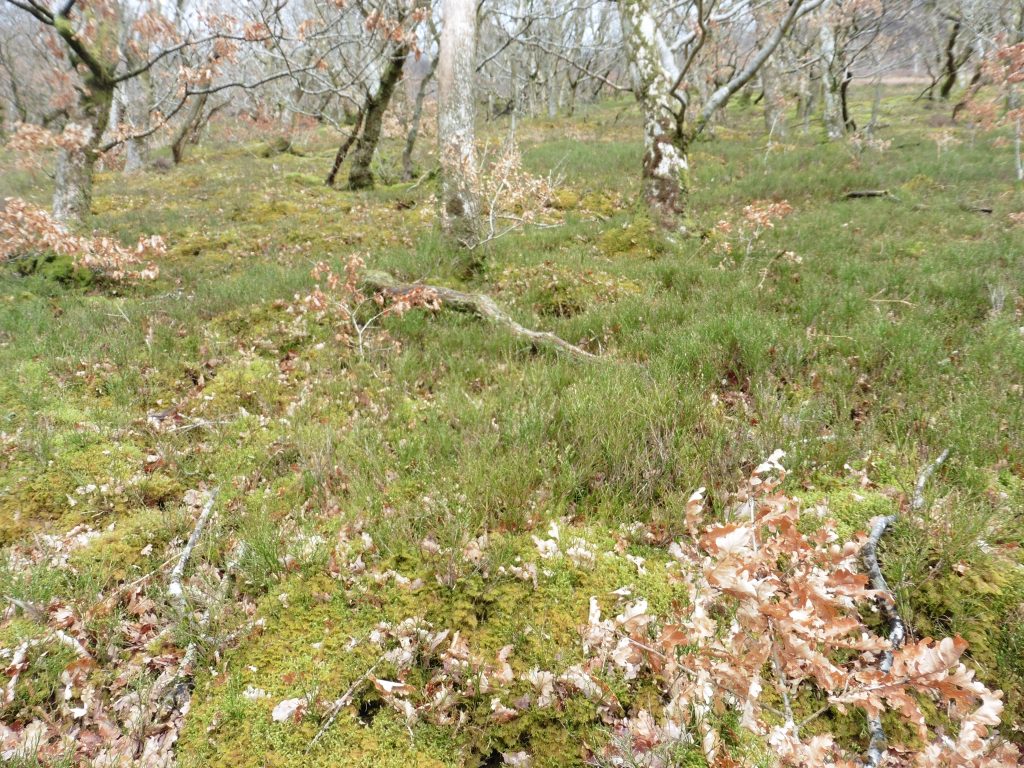
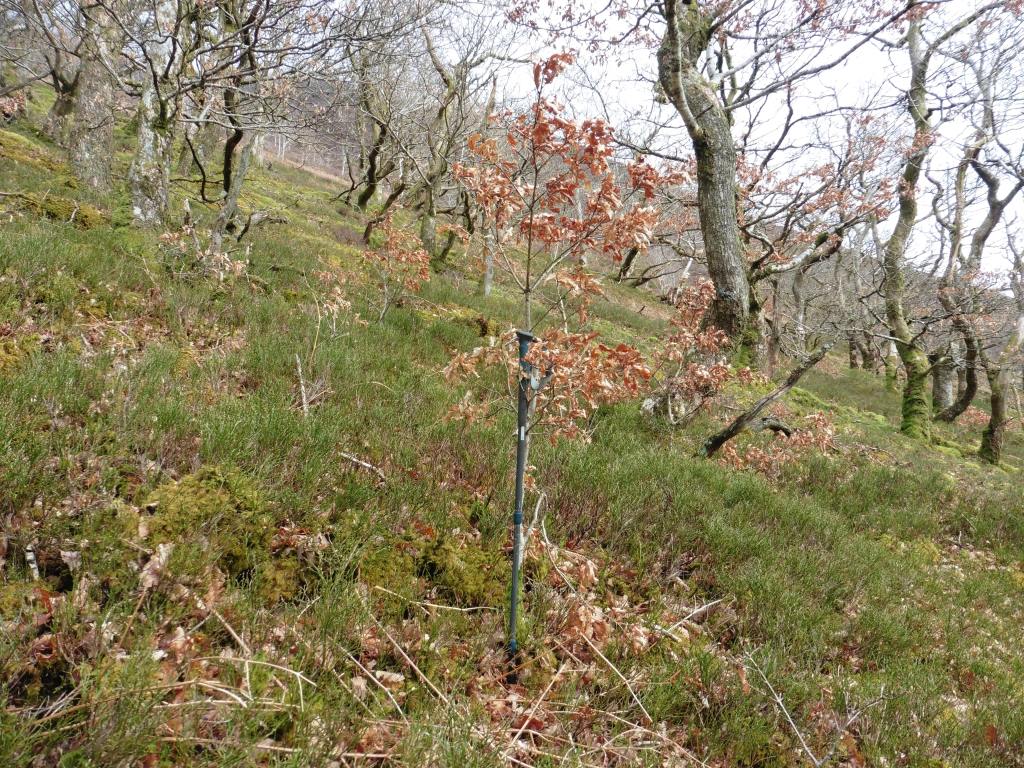
Scattered regeneration in Birkrigg Oaks: (a) saplings 40-50 cm about every 5-10m; (b) 2 m + young tree (the walking pole is 1m).
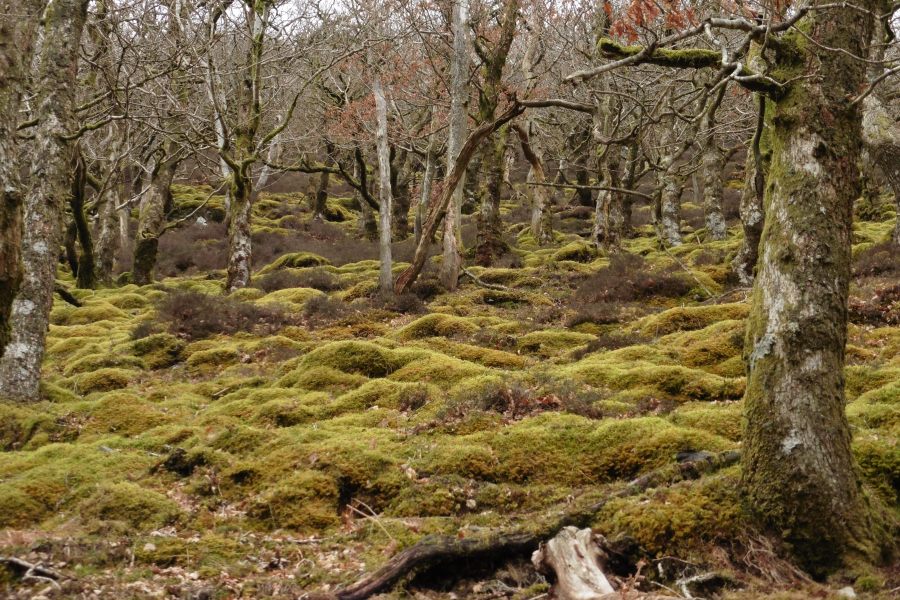
Young Wood, near Mungrisdale (Shrubsole, 2022) is different again: a high-altitude wood, similar to the ‘underground oaks’ at Blaenrhondda (Rackham and Keen, 2022), with trees only 1-2 m high. Since about 2008 the around it has been fenced and oaks seem to be spreading at least downslope.
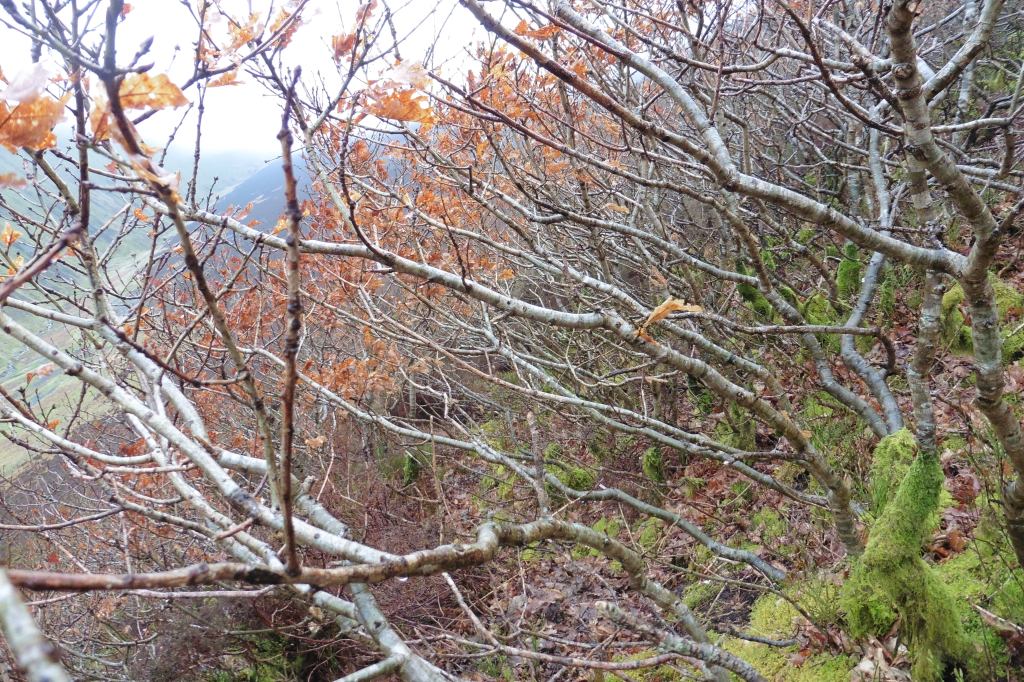
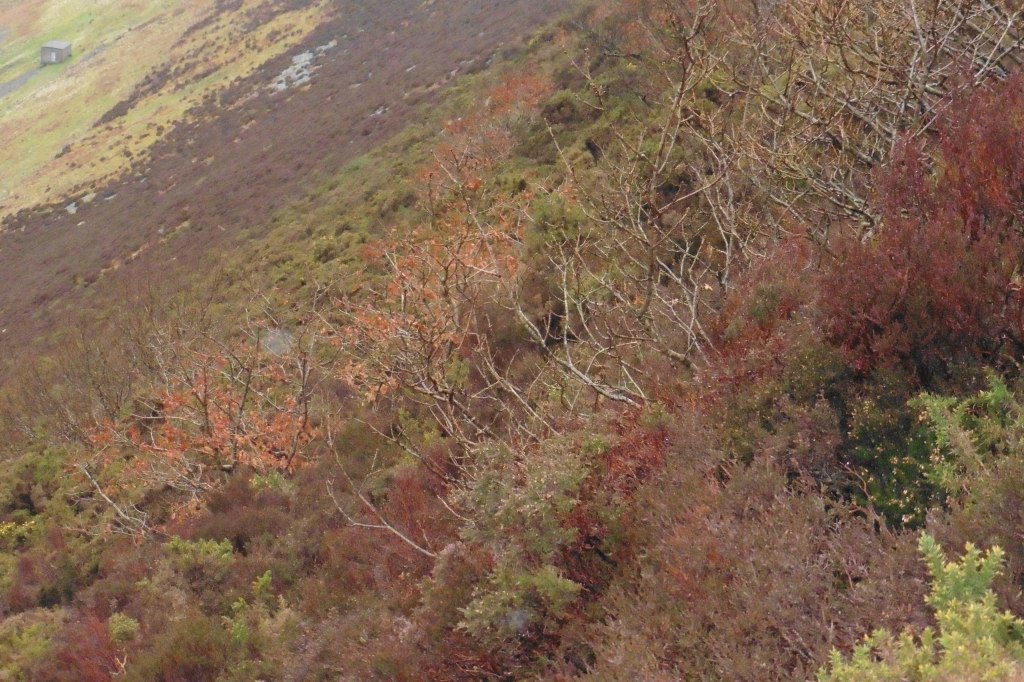
Young Wood, Mungrisdale: (a) 1-2 m high oaks apparently benefitting from sheep now being excluded; (b) apparent spread of oaks at lower edge of wood among heather and gorse.
In ecology and conservation research there is strong pressure to come up with general conclusions rather than simply saying this is what happened at this site, at this time. This makes for a more marketable paper,. However, a woodland owner or manager is usually less concerned with what the ‘general answer’ is; what they want to know is what is appropriate for their site – the particular genius loci.
If the regeneration seen at the east end of Birkrigg reflects what is happening in the rest of the wood, then this high altitude fragment would seem to be in robust health. In Naddle and Haweswater, on the basis of the areas seen, there seems to be no reason to propose (re-)introducing ‘traditional management’ such as coppicing of the oak, or to over-emphasis the oak component when describing their composition. Young Wood should just be left alone.
So don’t just look before you leap, but look also before you fence, cut, or decide to plant trees.
RACKHAM, O. & KEEN, P. E. 2022. The ancient woods of South-East Wales, Ford, Dorset, Little Toller.
SHRUBSOLE, G. 2022. The lost rainforests of Britain, London, HarperCollins.
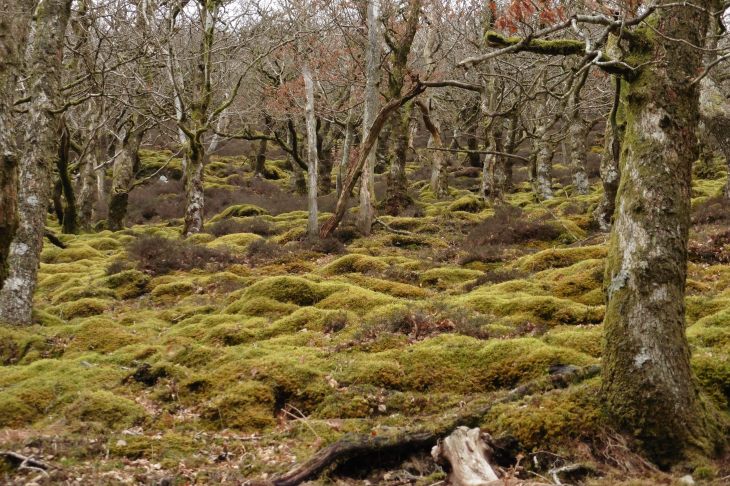

 The Old Man of Wytham