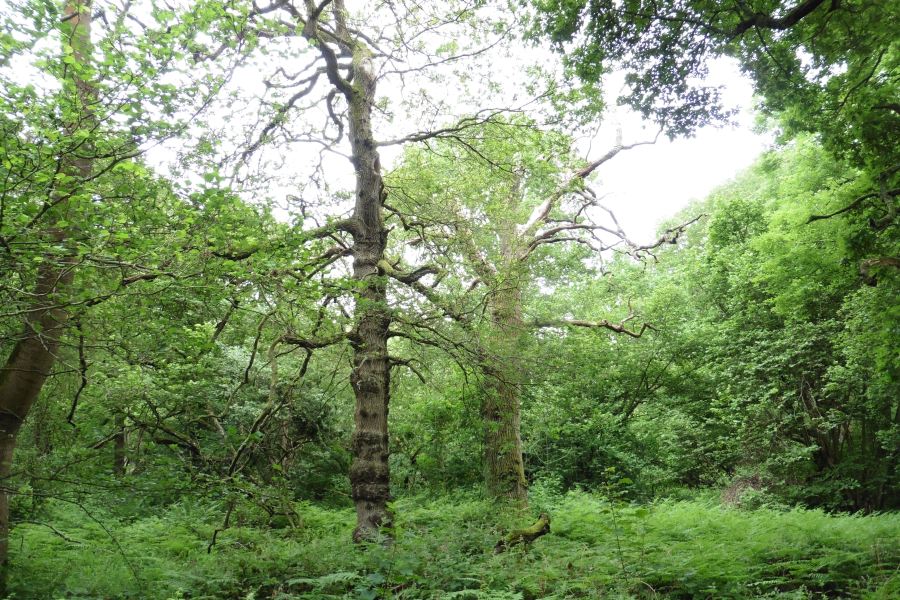
Much of my field work these days is in Wytham Woods where oak trees grow quite tall, with straight single trunks, on fertile soils, in a benign climate. However, a lot of other trees can grow well in such conditions and oaks may find themselves being overtopped by beech, ash or elm. It tends therefore to be in the less favourable conditions for other trees that oaks become the main canopy tree in woods, because they are tolerant of soils and climate. So let us take a tour of oakwoods at their extremes in Britain.
In the late 1970s I did some surveys in the woods along Loch Sunart (I hope to revisit them this summer, but that is a different story). What amused me on that first occasion was ticking the Animals Seen box on the woodland recording form and writing in ‘Grey seal’! It was hauled up on a rock well under the canopy of the oaks, as they hung out over the waters of the sea-loch. Sea-bordering oakwoods are also a feature of the rias, the drowned Cornish valleys along the Helford and Fal rivers. Their lower branches extend out barely above the water at high tide.
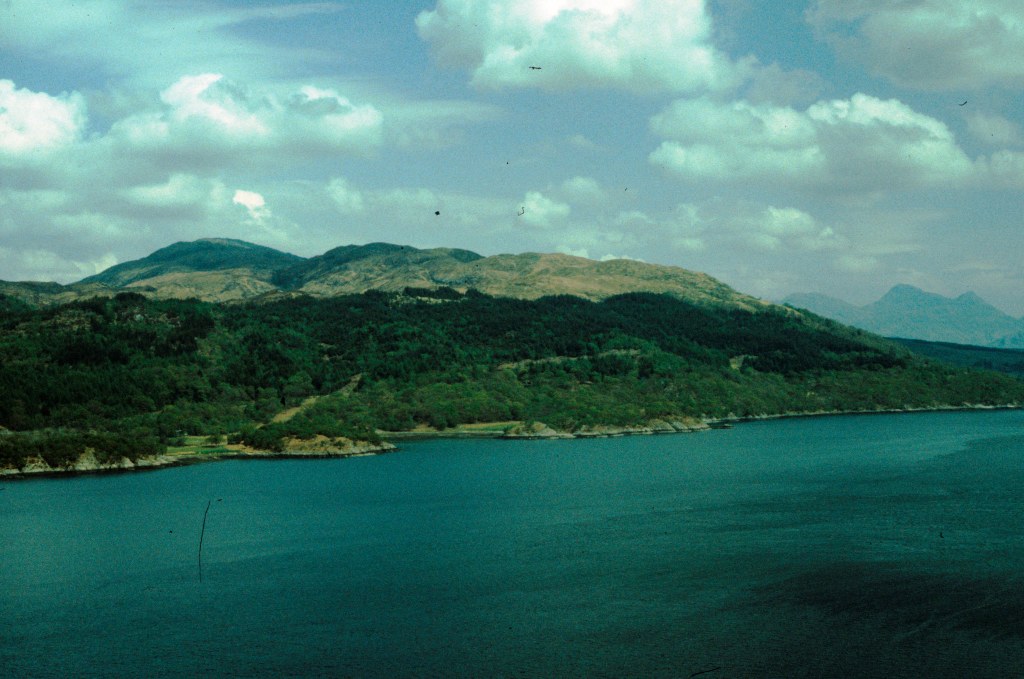

(a) View of Loch Sunart and (b) the Fal oakwoods lining a drowned valley.
On the north Cornish coast there are ultra-wind pruned oakwoods on exposed slopes such as the Dizzard. The trees range from some, barely above knee height and forming a canopy with the heather, to others about 5m high, higher up the slope. They also have to cope with the slumping of the soil and scree around their roots as the base of the cliff erodes.


The Dizzard, on the north Cornish coast
Ravenshall Wood in Galloway is in a similar position. Peter Rhind (2015) describes other coastal oakwoods from Wales, albeit one of the most extensive patches, around Aberglaslyn, is now cut off from the sea by estuarine reclamation.
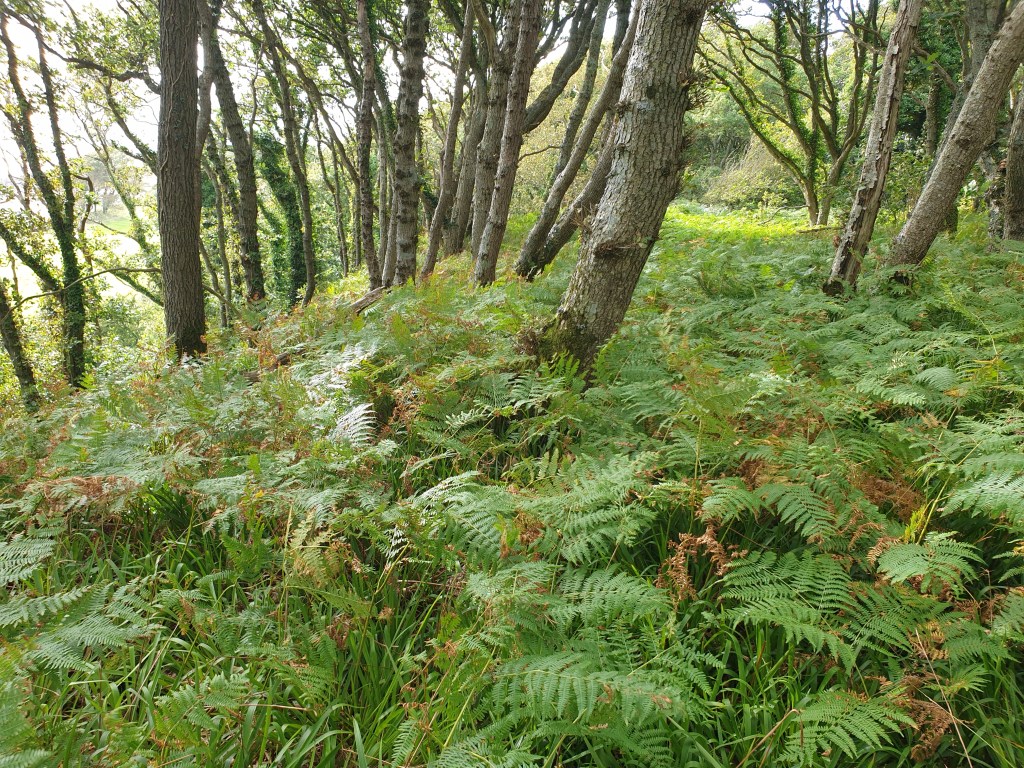
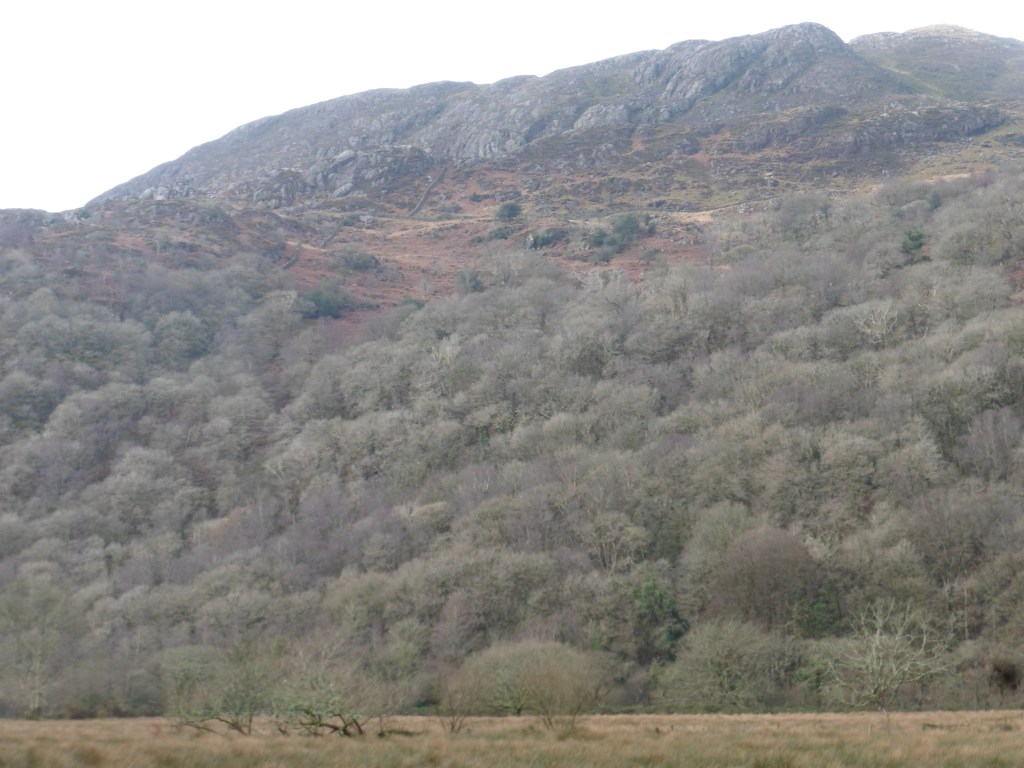
(a) Ravenshall Wood in Galloway at the top of the slope; (b) Aberglaslyn above the former estuary in Gwynedd.
From sea-level to near the tree-line, I am not sure where the highest oak tree is but high-level oakwoods (around a 1000 ft, 350 m) in England include Wistman’s Wood and Black Tor Copse on Dartmoor and the high-level woods in Cumbria (including the famous Keskadale oaks) described in the 1950s by W.B. Yapp (1953a, b).

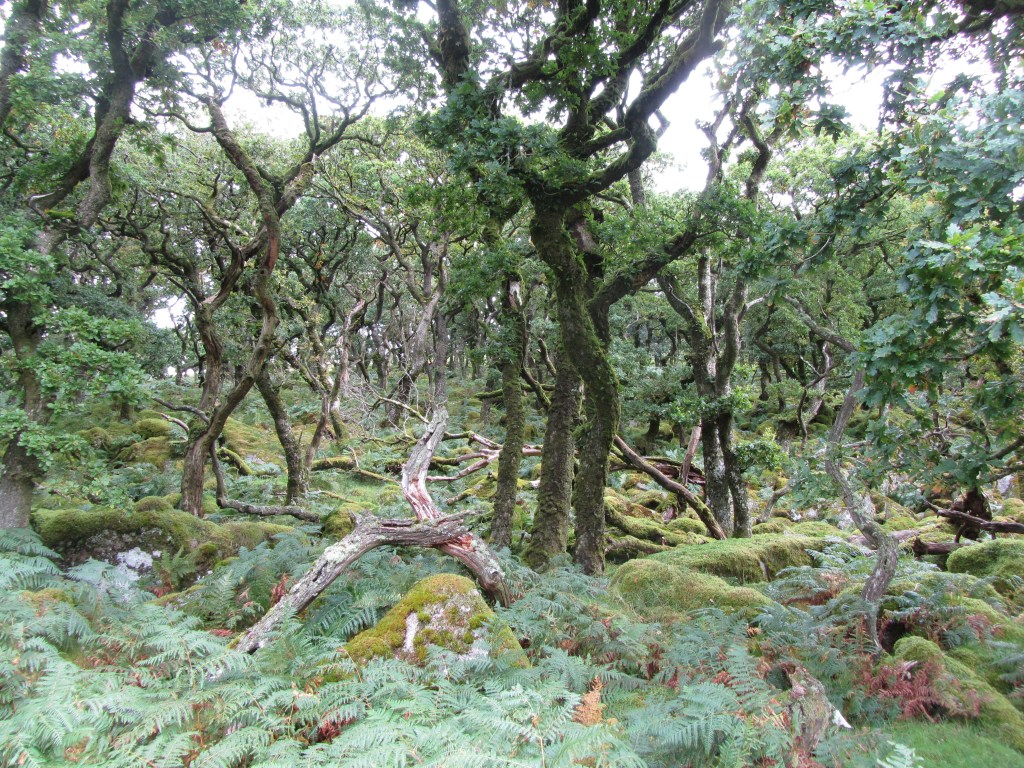
Dartmoor Woods (a) Wistman’s Wood and (b) Black Tor Copse
In Wales the highest oakwood is probably that near Abertillary, described by Rackham and Keen (2022), but they also note the strange ‘ground oaks’ growing high above the Rhondda valley. They are certainly exposed and my recent visit unfortunately coincided with a snowstorm.

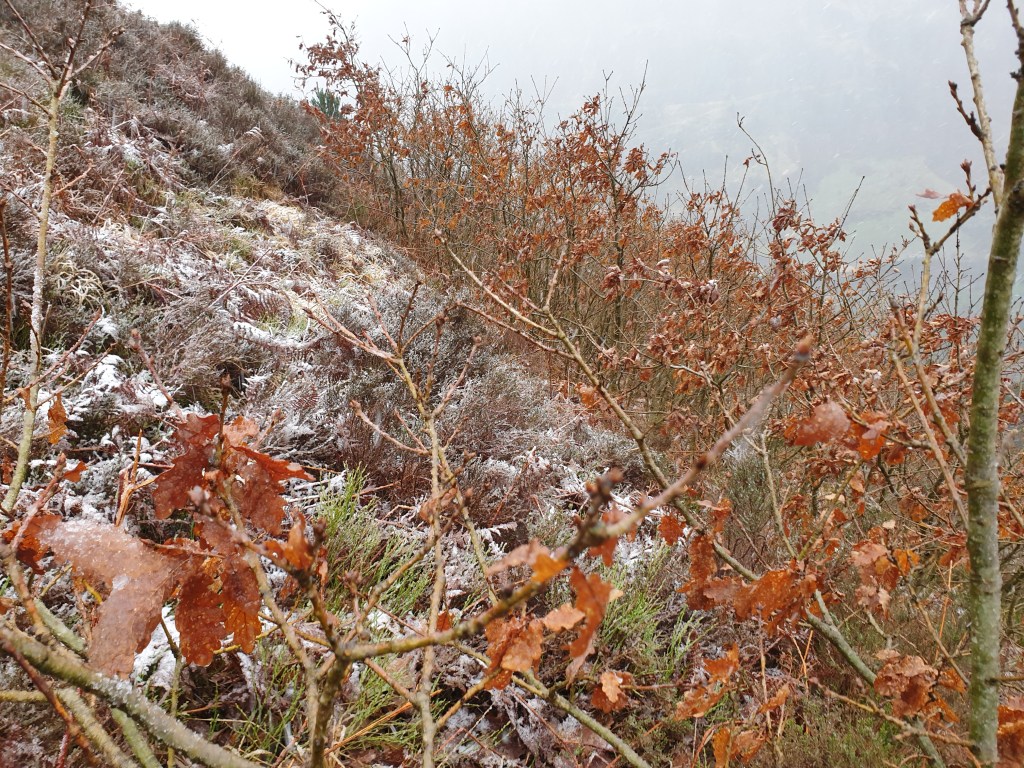
(a) The upper edge of Cwmtileri oakwood; (b) clonal patches of oak about a metre-high above Blaenrhondda
In north Scotland we would expect the altitudinal limit for oak woodland to be less, because of the harsher climate and what is usually taken as the northermost oakwood is not much above sea level at Loch a Mhuillin about 30 km south of Cape Wrath (in a straight line, not road distance!).
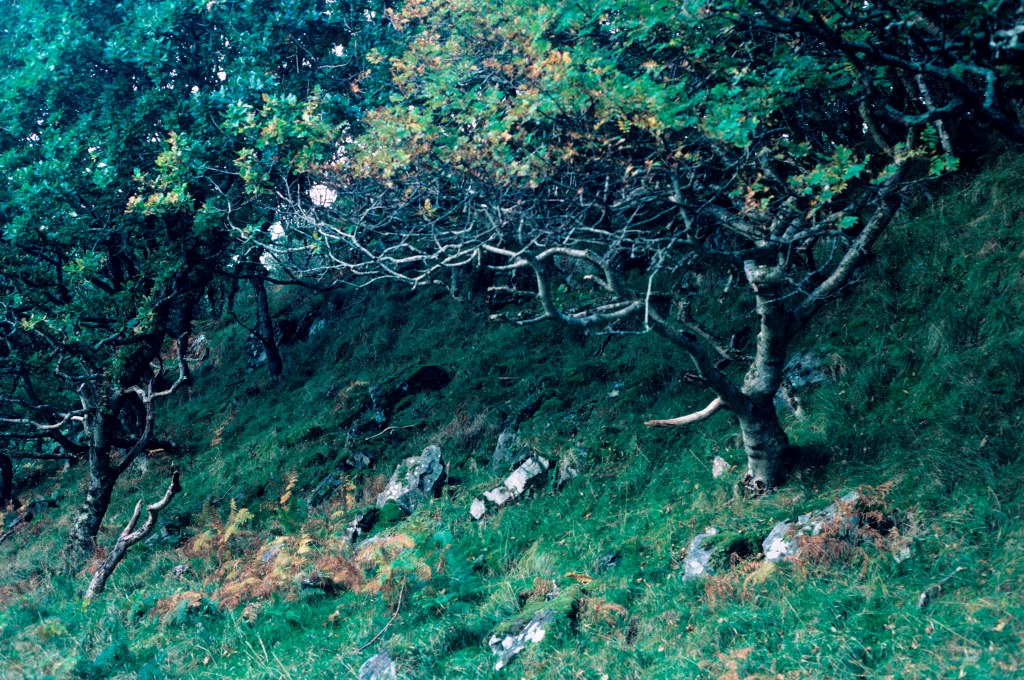

Views of Loch a’Mhuillin oakwood from the 1980s.
Altitude and latitude are not the only gradients in oakwoods that we could pick up. The western temperate rainforests have received a lot of attention recently (Shrubsole, 2022), but they are only one end of the rainfall gradient. At a similar latitude to Ty Canol in Pembrokeshire with its moss-covered rocky slopes and formerly-coppiced twisty stems, are a handful of oakwoods in Suffolk and Norfolk on wind-blown sands and less than a fifth of the rainfall.
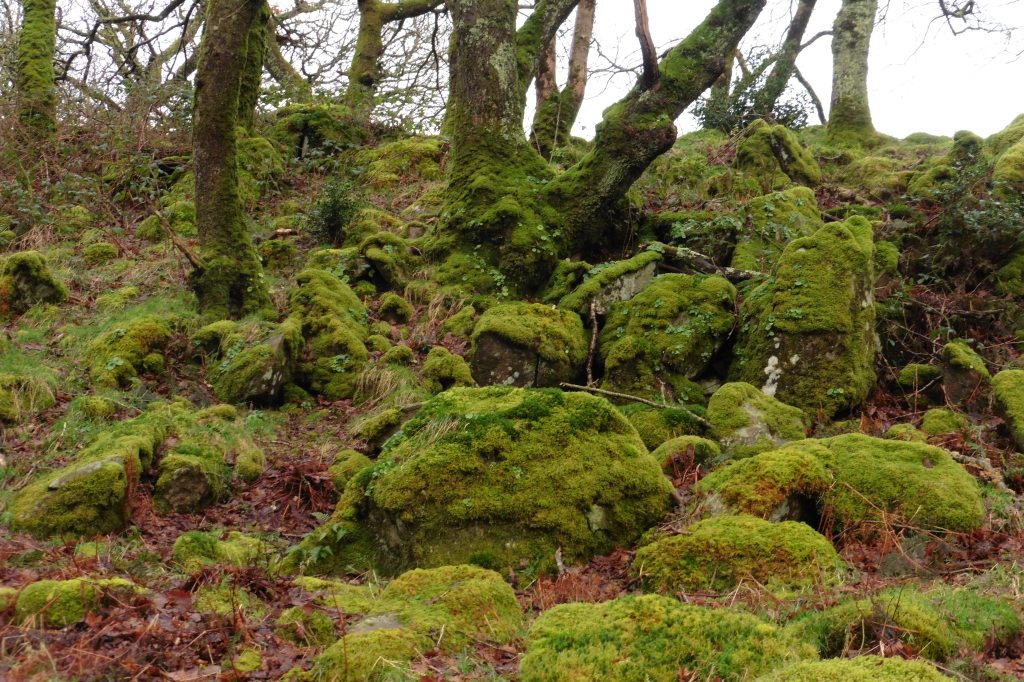
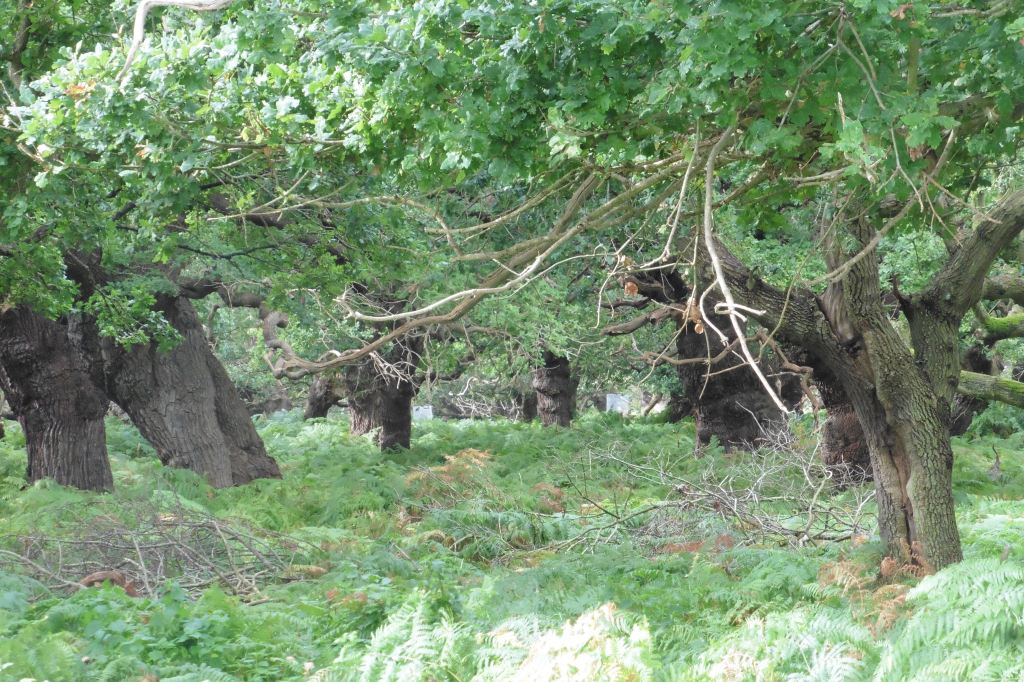
Views of (a) Ty Canol – oak on shallow rocky slopes in the temperate rainforest zone of Pembrokeshire; Staverton Park in Suffolk with oaks on wind-blown sand, in a semi-arid environment.
This wide ecological tolerance means that oak can survive even in landscapes where other tree species are favoured over much of the ground; and once it is established its potential to grow for several hundred years or more mean that it can then hang on for a long time, even though conditions for regeneration may be very limited in most years.
RACKHAM, O. & KEEN, P. E. 2022. The ancient woods of South-East Wales, Ford, Dorset, Little Toller.
RHIND, P. M. 2015. Conservation and management of coastal slope woodlands with particular reference to Wales. Journal of Coastal Conservation, 19, 861-873.
SHRUBSOLE, G. 2022. The lost rainforests of Britain, London, HarperCollins.
YAPP, W. B. 1953a. The high level woodlands of the English Lake District. North Western Naturalist (ns), 1, 190-207.
YAPP, W. B. 1953b. The high level woodlands of the English Lake District (II). North Western Naturalist (ns), 1, 370-383.


 The Old Man of Wytham
That’s interesting – I hadn’t realised that the highest oakwood in Wales is at Abertillary. When we were doing the NVC surveys in the late 1980’s I surveyed a wood further up the valley at Blaentillary. From memory I seem to recall making the rash statement in the write up that this might be the highest native beech wood in Wales; I’d need to check the report to be sure though!
LikeLike
You might well have been right. There are some beech amongst the oak and a more abundant stand of beech at the nearby Punchbowl which Rackham says are the highest.
LikeLike