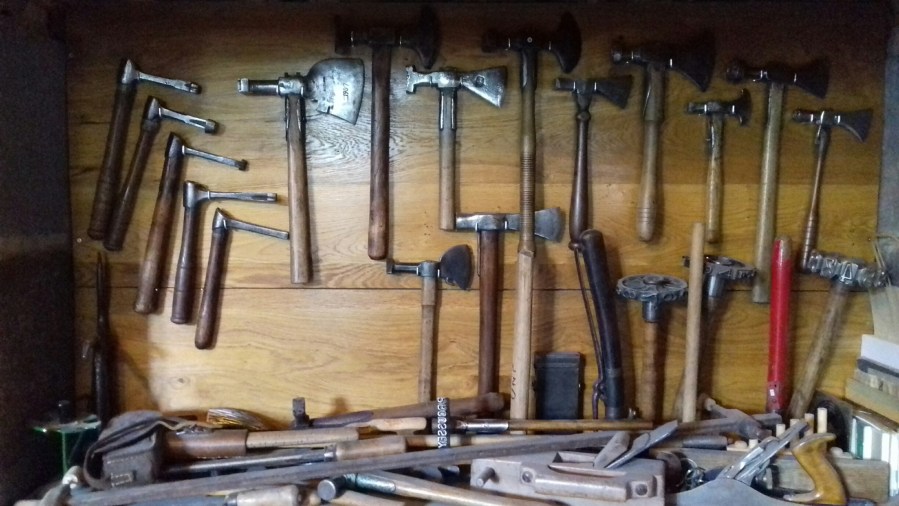
We refer to parts of our prehistoric past as the stone ages but people depended more on wood, for fuel, for tools and weapons, as building materials. Along with and sometimes predating the iconic stone monuments were wooden circles and avenues, revealed through the surviving post holes (Noble, 2017).
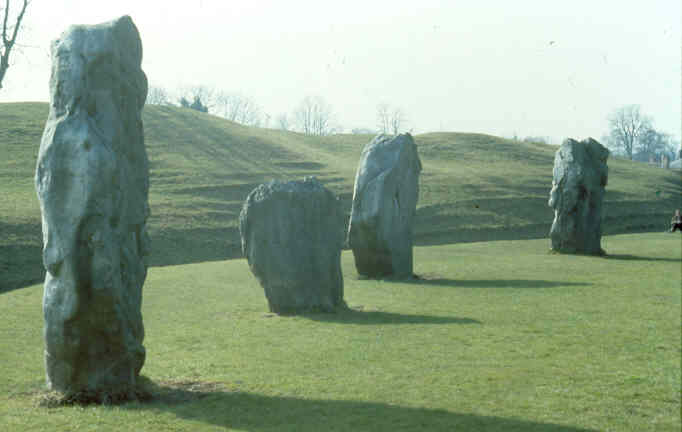
Stonehenge and Avebury Ring are impressive but the wood henges were probably equally impressive.
We think of the great medieval churches and cathedrals as masterpieces of stone but hidden within them is often a complicated framework of timber. One such a forest of timbers was consumed in the devastating fire at Notre Dame. One of the challenges for the craftsmen rebuilding the cathedral has been finding the necessary oak timbers, but this is not a new problem. Oliver Rackham noted that the great oaks used in the construction of the Octagon at Ely Cathedral were not quite big enough to avoid including some sapwood (Rackham, 2003).


woodwork inside Ely Cathedral and the Tudor Tretower Court in Wales
However, I have not often thought about what must also be inside other old buildings: there remain many examples of often quite substantial medieval timbers scattered through the country in churches, cathedrals, tithe barns etc (Hewett, 1999). Moreover, even more, smaller trees would have been needed for the scaffolding used during the construction of stone buildings. The role of wood in buildings is often overlooked because there may be some sort of stone, brick or plaster cladding put over the wooden framing which may only become obvious when there is major renovation, e.g. (Crone and Sproat, 2011). Modern timber-framed houses may be given an outer skin of brick.
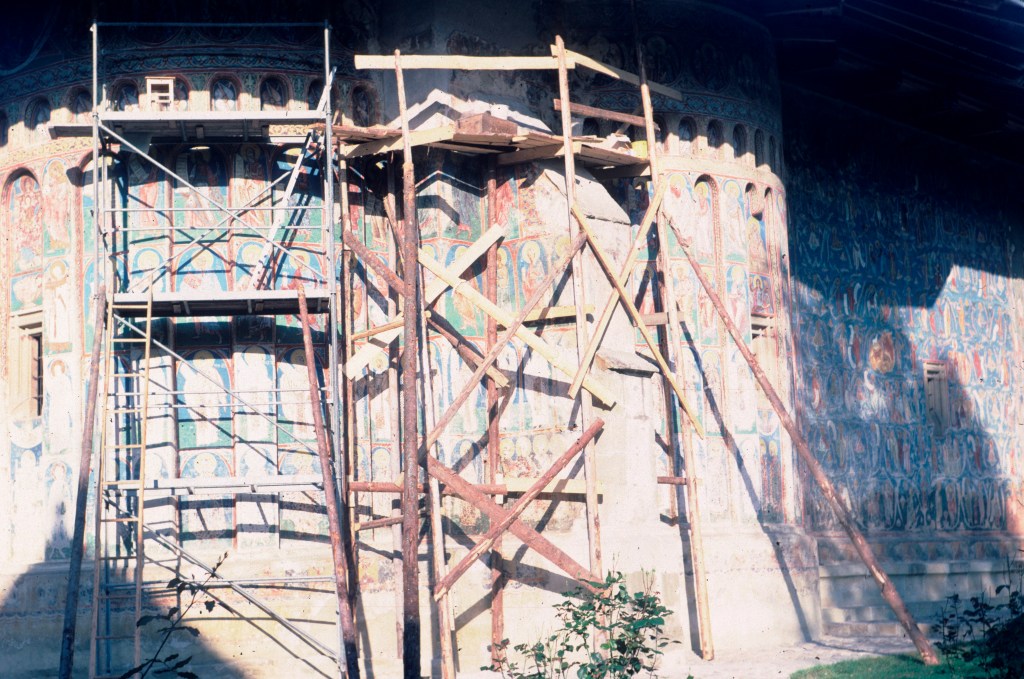
Wooden scaffolding, in this case a painted monastery in Romania.
A common concern with wooden buildings is that they have a high fire-risk or are not as strong as concrete (don’t mention RAAC though). Devastating fires do happen – London 1666 or San Francisco in 1851 – as well as more recent examples, but tragically, concrete, brick and metal structures can have fire weaknesses too. Modern properly designed and treated wooden structures are actually quite safe in fires. I was once being shown a 5-storey timber-framed building that had been constructed inside the giant airship hangers at Cardington. As part of safety trials they deliberately started a fire in the ground floor to see how long it took to cause serious structural damage: it passed the safety standard and the fire brigade were apparently satisfied with how resilient the building as a whole was.
The government recently published a report promoting the future use of wood in construction Timber in construction roadmap – GOV.UK (www.gov.uk). Timber in construction can reduce the whole life carbon, the full carbon impact, of the built environment. Timber products also act as a carbon store, locking away carbon for the duration of that product’s life, (and the life of any recycled wood products made from the original product). Well-designed and constructed wooden buildings last for centuries and while they last we can be growing the timbers to rebuild them when they do eventually need replacing or renovation. Many Japanese temples were associated with stands of old Cryptomeria trees: ready for their rebuilding after earthquake damage. So let’s celebrate the past and future Wood Age (Ennos, 2020)

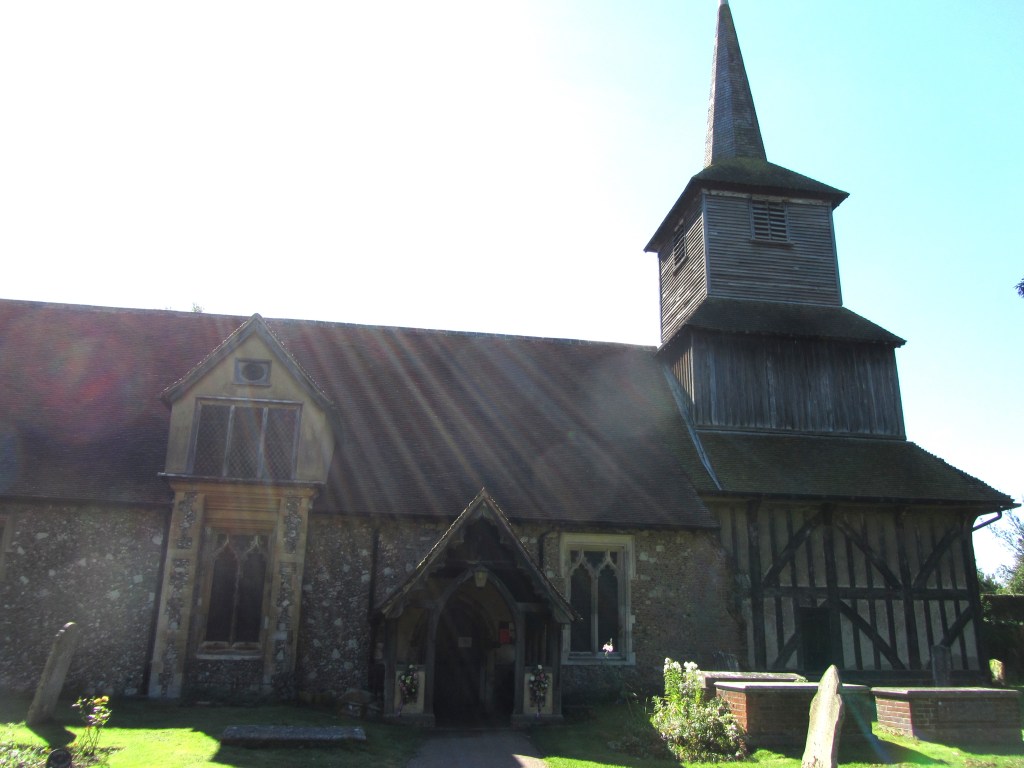

A Japanese wooden temple; a 15th century bell tower in Essex; and a Saxon oak-walled nave, also in Essex.
CRONE, A. & SPROAT, D. 2011. Revealing the history behind the facade: a timber-framed building at no. 302 Lawnmarket, Edinburgh. Architectural Heritage, 22, 19-36.
ENNOS, R. 2020. The Wood Age: how one material shaped the whole of human history, London, William Collins.
HEWETT, C. A. 1999. English cathedral and monastic carpentry, Cheltenham, The History Press.
NOBLE, G. 2017. Woodland in the Neolithic of Northern Europe, Cambridge, Cambridge University Press.
RACKHAM, O. 2003. Ancient woodland: its history, vegetation and uses in England (revised edition), Dalbeattie, Scotland, Castlepoint Press.

 The Old Man of Wytham