
The tree and woodland cover of the pre-farming landscape (some 6,000 years ago) are a source of debate amongst ecologists: what were they like: how did they grow; what beasts roamed under their shade; what influence did the Mesolithic hunters and the mammoth-killing Palaeolithic peoples have? Mostly we rely on the interpretation of sub-fossil remains, pollen grains extracted from cores through peat bogs, the remains of beetle wing-cases, tiny snail shells to build-up a picture of what the countryside might have looked like. We have a scatter of jig-saw pieces, and rarely the ‘edge’ ones, from which we try to extrapolate what the rest of the picture was like – hence the debate.


Cores from pond sediments or peat in fens and bogs can provide us we clues as to past conditions.
A recent paper has addressed the human-influence question by looking at the pollen signature from an even earlier time, the Eemian inter-glacial, roughly 129,000-116,000 years ago. This period is before Homo sapiens was a force to be reckoned with in Europe. Elena Pearce and her colleagues conclude that much of Europe was a mosaic of Open vegetation, forests of light-demanding trees such as oak, pine and hazel (Light woodland) with about half the landscape under forests of shade-tolerant trees such as beech and small-leaved lime (Closed forest).
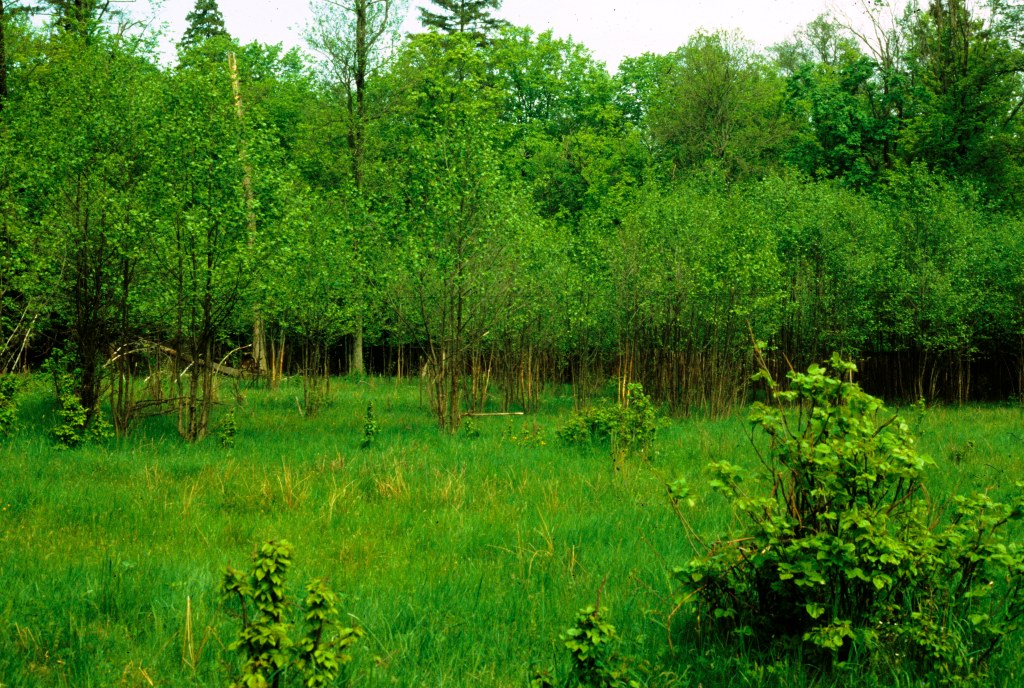


Open vegetation, Light (hazel dominated) woodland, Closed forest types
The conclusions are based on an elegant model that provides a valuable insight into the composition of the tree cover of this period. However, the paper leaves open some important questions about the structure and functioning of the landscape. At what scale did the patches of Open vegetation, Light woodland, Closed forest occur within the 1o x 1o cells of the model (roughly 900 ha in Eastern England): were they intimately mixed everywhere, or, perhaps, were the open vegetation and Light woodland spread over the floodplains with the Closed forest on the dryer ground. Over time, from the early to late stage of the interglacial, more than a third of the area of Light woodland appears to have turned into Closed forest, but the area of Open vegetation stayed the same. Does this indicate that there was a lot of permanent open ground or was the Open vegetation shifting round the landscape as blocks of woodland collapsed from disease, windthrow, fire etc. How closed was the ‘Light woodland’; trees such as pine, oak and hazel can cast dense shade when they grow up from dense patches of regeneration, rather than as scattered solitary seedlings. While a key role is suggested for the activity of megafauna such as elephants, other mechanisms are not ruled out.

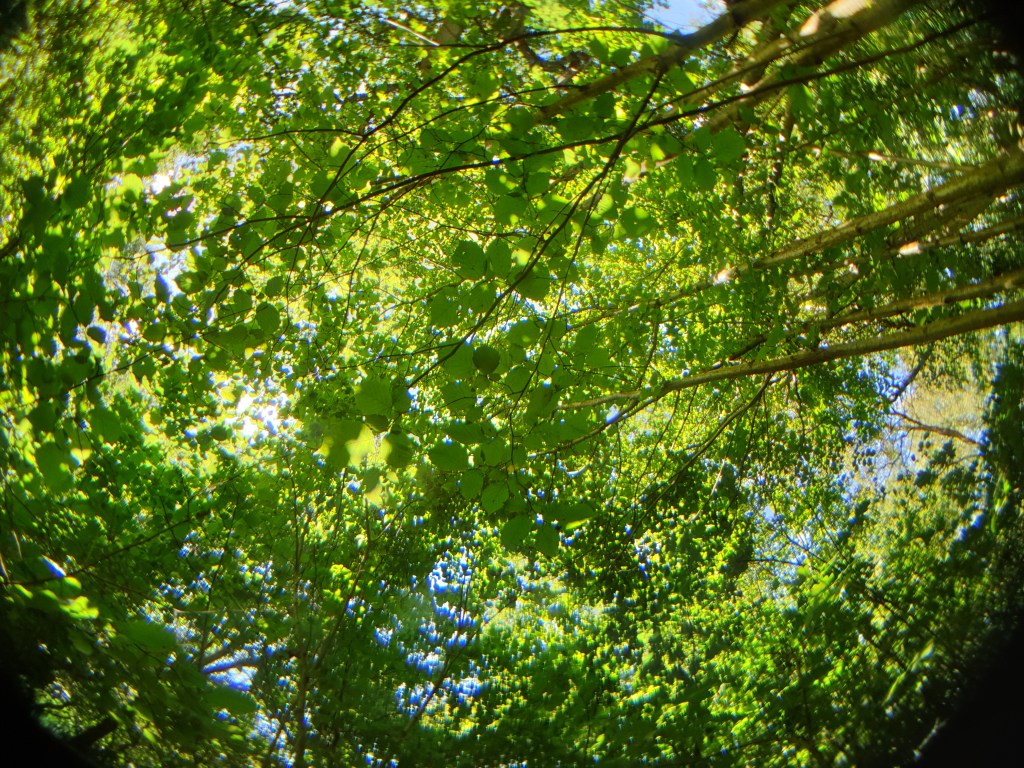
Dense oak regeneration in a gap in an oak wood; looking up into the canopy of an old hazel bush.
Fast-forward to the current period, the Holocene, that covers the last 10-12,000 years and tree and woodland cover development seems to have followed a different path. On the one hand the extinction (helped if not driven by ancient peoples) of mammoths and other mega-herbivores would favour a denser tree cover development; use of fire could have created more open areas. A difference is that for this more recent era we can amazingly look at, even touch, some of the trees that were present several thousand years ago and see how they grew from their growth rings. Around our coast and along major estuaries are the remains of forests that have become submerged through sea-level rise or the sinking of the land; other stumps and whole tree trunks are regularly pulled up out the peats of eastern England. They include pine, oak and a surprising amount of yew.


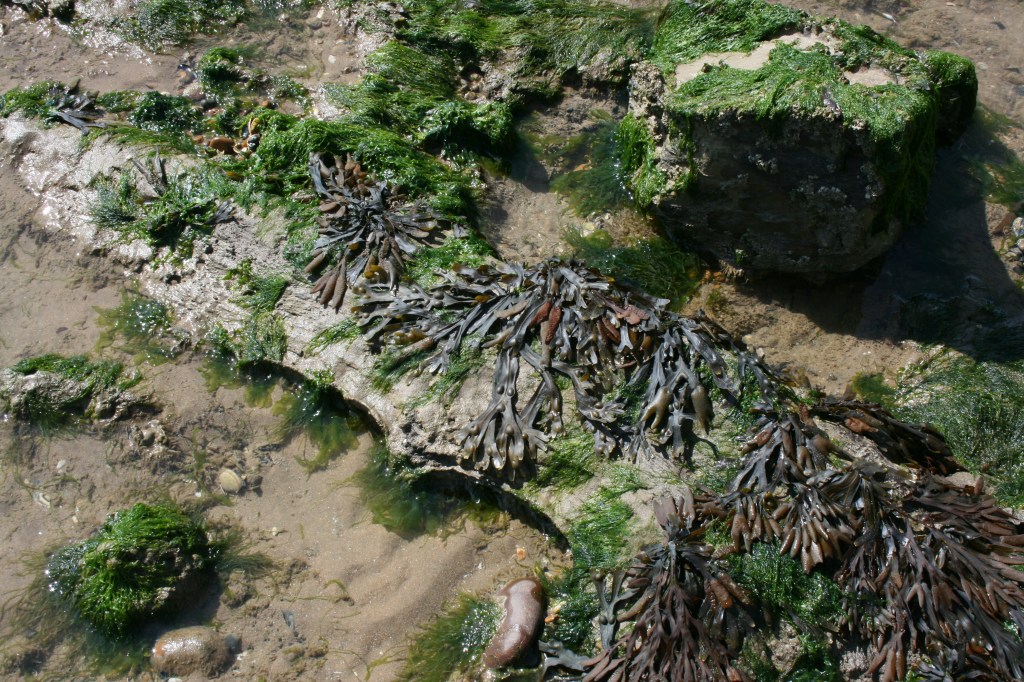
The remains of submerged forests off Borth (Ceredigion). the Thames Estuary, Pett Levels (Kent).
A oak tree, from about 5000 years ago, was found a few years back in Wissington Fen, Norfolk. The main section was about a metre diameter with over 13 m of straight, more-or-less parallel-sided trunk. The tree had lived for 250-300 years and its wood was still sound, once it had been dried out. Craftsmen turned it into an amazing table currently on display in Rochester Cathedral. This oak must have grown up amongst a dense thicket of similarly growing trees, for it not to have any low branches. Similarly-grown oaks were used by Bronze Age peoples to build the ‘Dover boat’ about 3,000 years ago and the 15m dug-out canoe seen in the Dublin Museum.


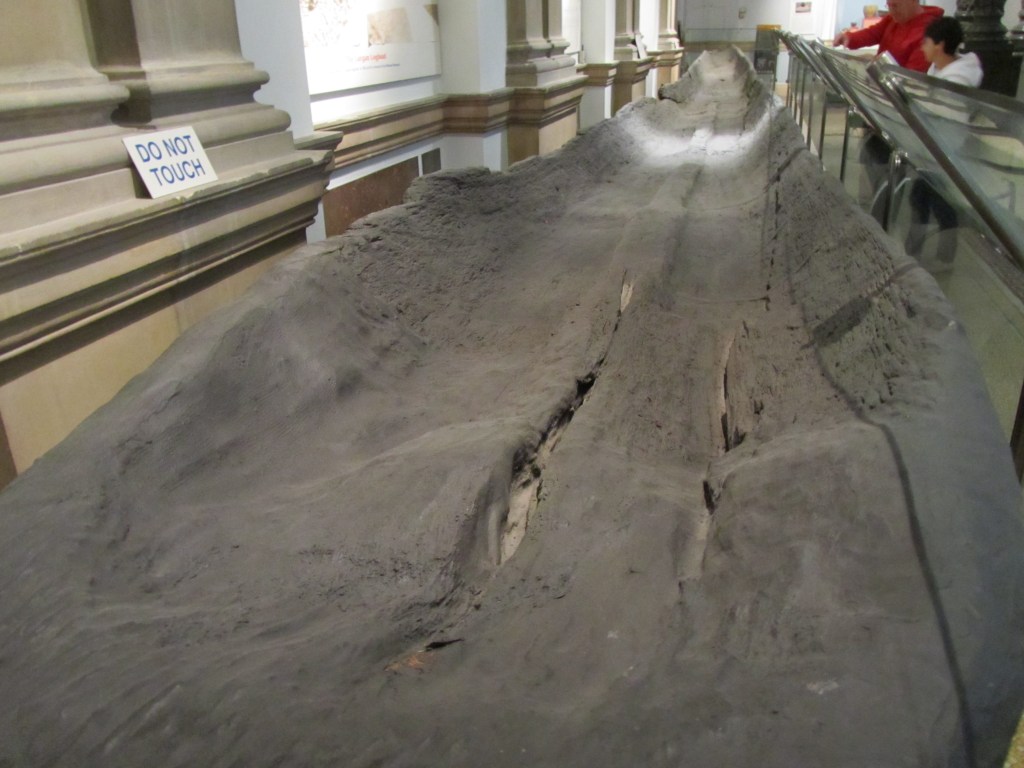
It is almost unheard of to see a closed stand of such big, old trees today in Britain, yet they clearly did exist in a variety of different places. Now 300+ yr-old trees tend to survive only where they have grown-up in relatively open conditions such as parks and the relicts of the former Royal hunting forests. However the past is a different country and the forests were also different.
PEARCE, E. A., MAZIER, F., NORMAND, S., FYFE, R., ANDRIEU, V., BAKELS, C., BALWIERZ, Z., BIŃKA, K., BOREHAM, S., BORISOVA, O. K., BROSTROM, A., DE BEAULIEU, J.-L., GAO, C., GONZÁLEZ-SAMPÉRIZ, P., GRANOSZEWSKI, W., HRYNOWIECKA, A., KOŁACZEK, P., KUNEŠ, P., MAGRI, D., MALKIEWICZ, M., MIGHALL, T., MILNER, A. M., MÖLLER, P., NITA, M., NORYŚKIEWICZ, B., PIDEK, I. A., REILLE, M., ROBERTSSON, A.-M., SALONEN, J. S., SCHLÄFLI, P., SCHOKKER, J., SCUSSOLINI, P., ŠEIRIENĖ, V., STRAHL, J., URBAN, B., WINTER, H. & SVENNING, J.-C. 2023. Substantial light woodland and open vegetation characterized the temperate forest biome before Homo sapiens. Science Advances, 9, eadi9135.


 The Old Man of Wytham