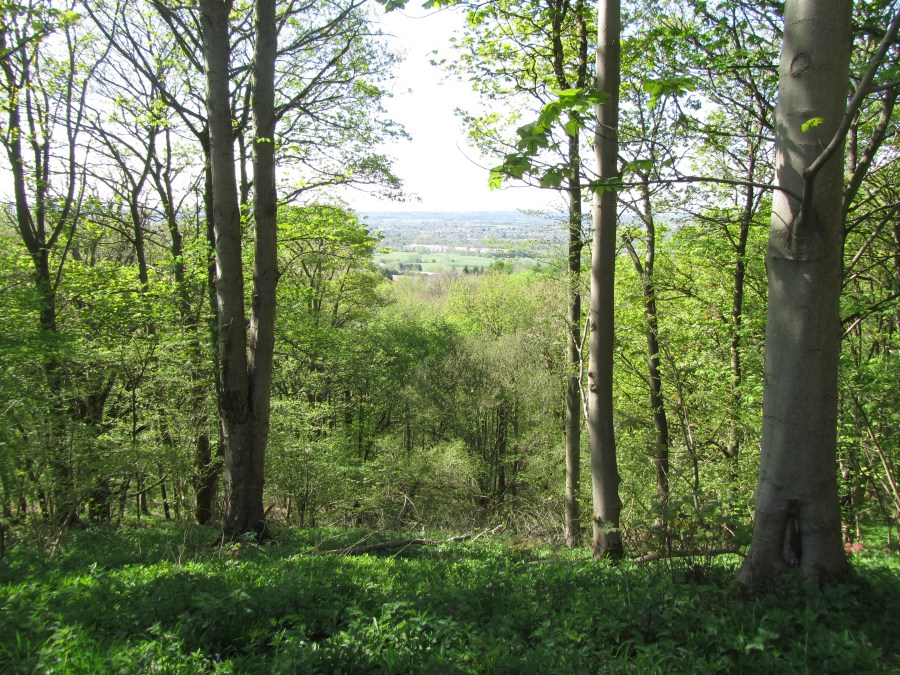
At the beginning of Lord of the Rings, Bilbo Baggins organises a party at which he gives away presents to his guests. We later learn that this is a way of trying to make it easier for him to pass on the ‘one ring to rule them all’ to his nephew Frodo. It nearly doesn’t work: he knows he should give the ring away, it is preying on his mind the whole time, yet still he wants to keep it. Fortunately Gandalf the Grey steps in to help him carry through his plan.
I took on recording the Wytham long-term vegetation plots (Dawkins and Field, 1978) from my D.Phil. supervisor, Colyear Dawkins, about 40 years ago . I have just completed the fifth re-recording: 24 days of field work, including at times cutting through 2 m high dense bramble thickets to lay-out the plots. A winter of analysis awaits, seeing how the woods have changed over the last five years, not least through the rapid spread of Ash Dieback.

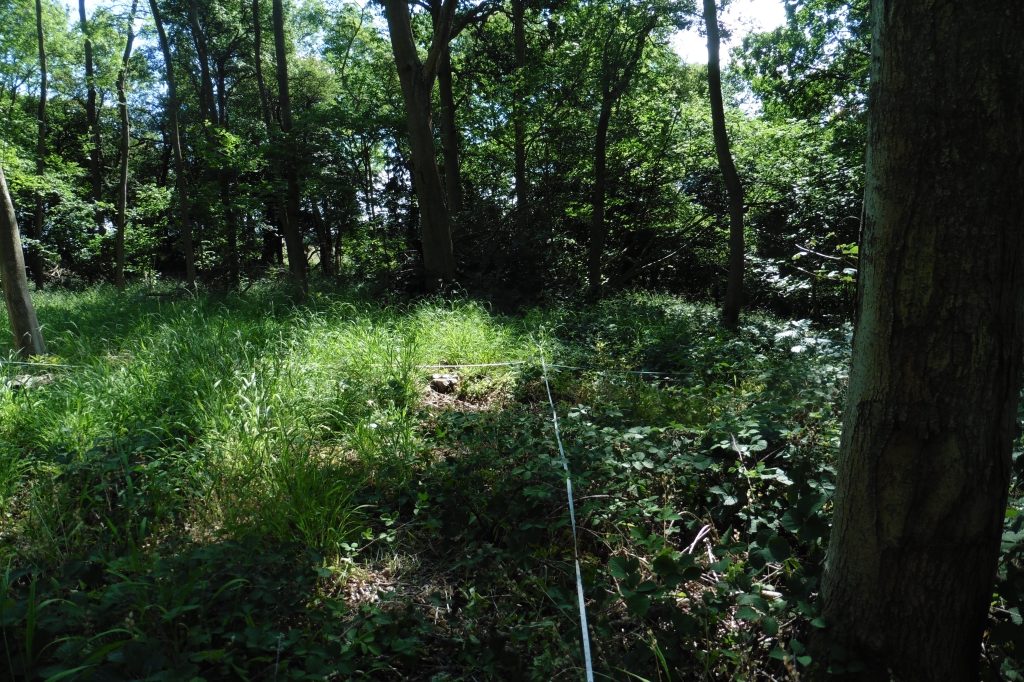
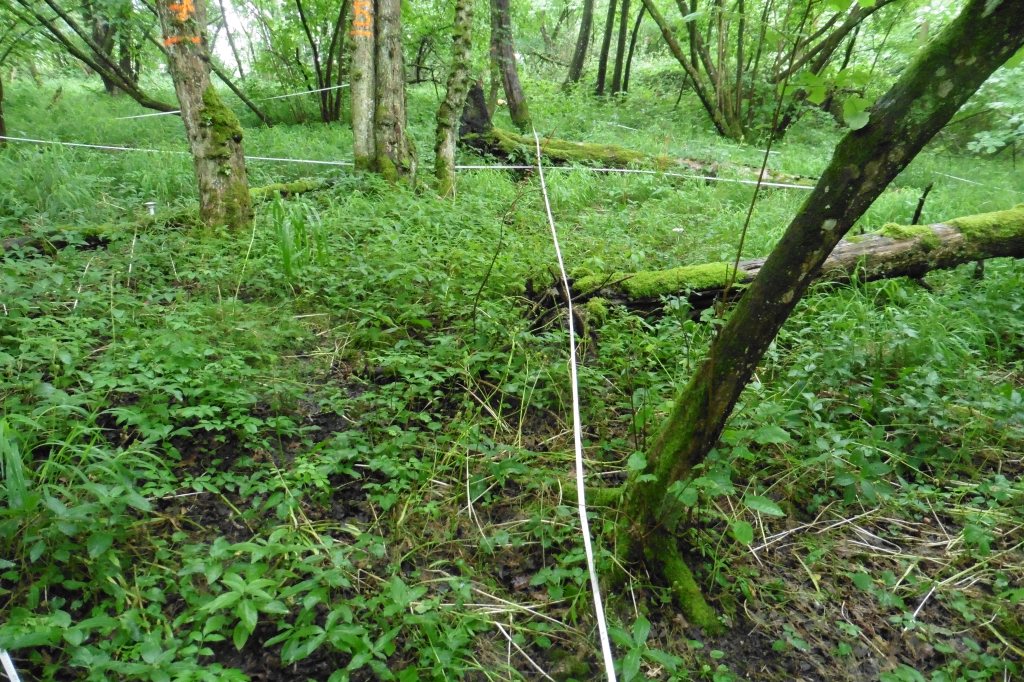

Plot 452081 in 2018 (upper) and 2023 (lower) Plot 452089 in 2018 (upper) and 2023 (lower).
I am making sure that both the plots and data (past and present) are properly curated in case the proverbial bus comes along, but what about future re-recording? What happens in 5 or 10 years time: will I still be fit enough to do another round; will I want to if the bramble thickets continue to spread as in plot 452089 above? Like Bilbo I know I should be planning to hand the project on, but at the same time there is a reluctance to let go of what has been the mainstay of my personal research for so long. The data are mine, my precious!
A different sort of dilemma faces us with another project in Wytham. About ten years ago fifteen (roughly) 30×30 m plots were laid out by researchers at the Open University and CEH; in five the litter was to be raked off each year overwinter and added to another five, with the remaining five as controls. The original project was about how reduced/increased litter availability might affect decomposition and below ground processes. A lot of data were collected over a three-year period with interesting results (Bréchet et al., 2018) but that recording has not been continued.
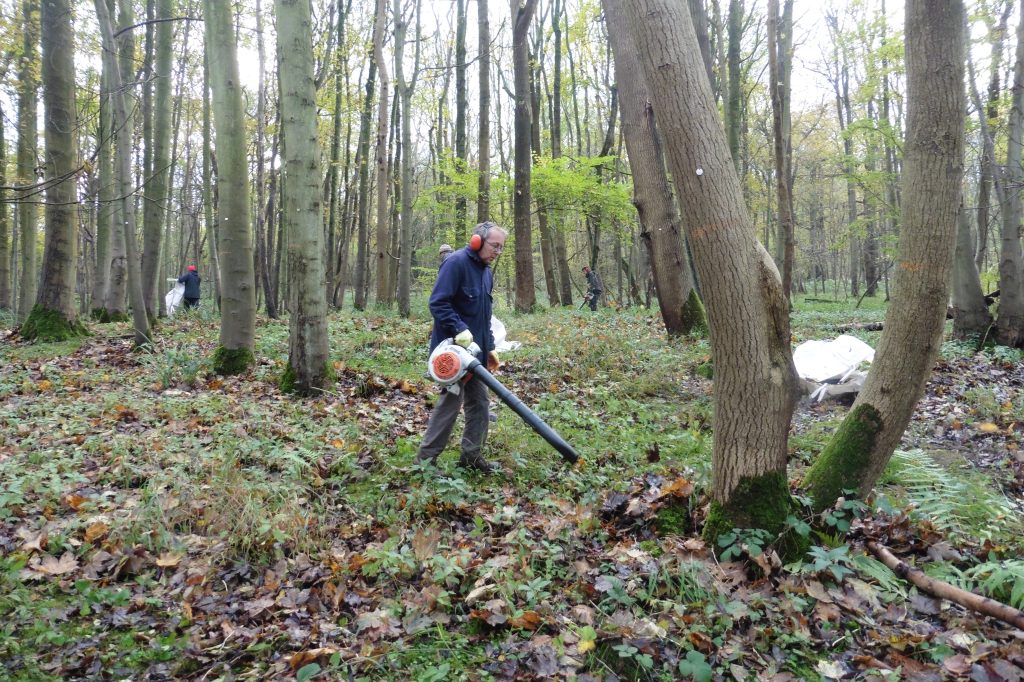
Collecting up litter from one plot to be moved on to the next; adjacent ‘raked’ and ‘doubled litter’ treatments (December 2019).
The Wytham Woods crew have however maintained the annual litter raking and litter addition treatments. I have also kept going a small side-study looking at whether litter raking has been any effect on the ground flora. I set this up because I was intrigued by some Polish work which suggested that in part the distinctive flora of ancient woodland might be related to the long history of removing leaf-litter for animal bedding which reduces the nutrient levels in the soil.
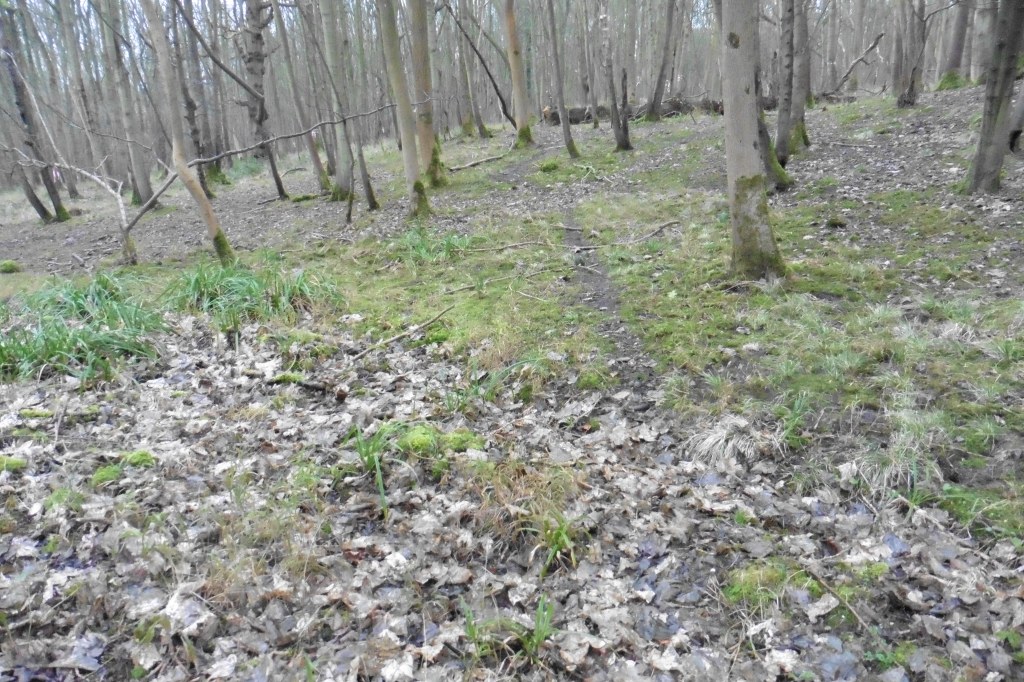
Well ,ten years on, my sub-plots (2 x 4 m) in the raked treatment areas tend to have more moss cover, the doubled litter treatment sub-plots more litter cover still in the summer; but little other change in their floral composition that can be related to these treatments. This may be because, unlike in the Polish study, there had been no recent history of litter removal in Wytham and the general nutrient levels of this mixed ash stand are higher. Litter raking does not therefore have the same nutrient-depletion effect. So, how much longer is it worth continuing, in the hope that at some stage either someone might be interested in following up the original soil studies, or that some differences in the flora in the raked plots will occur?
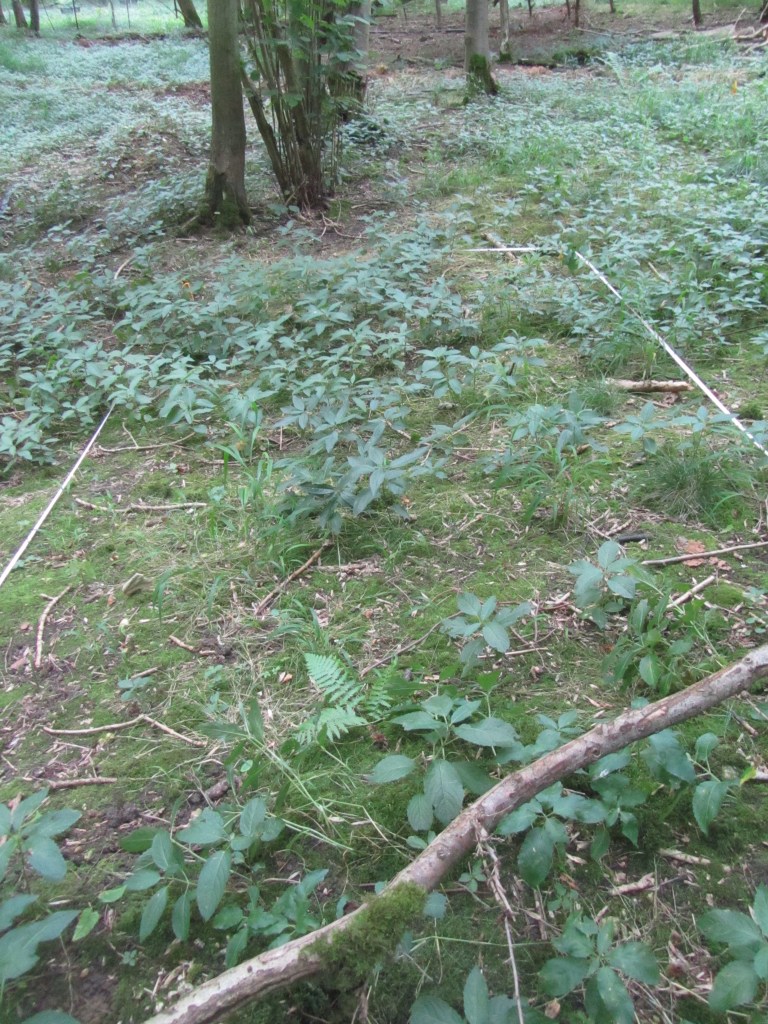
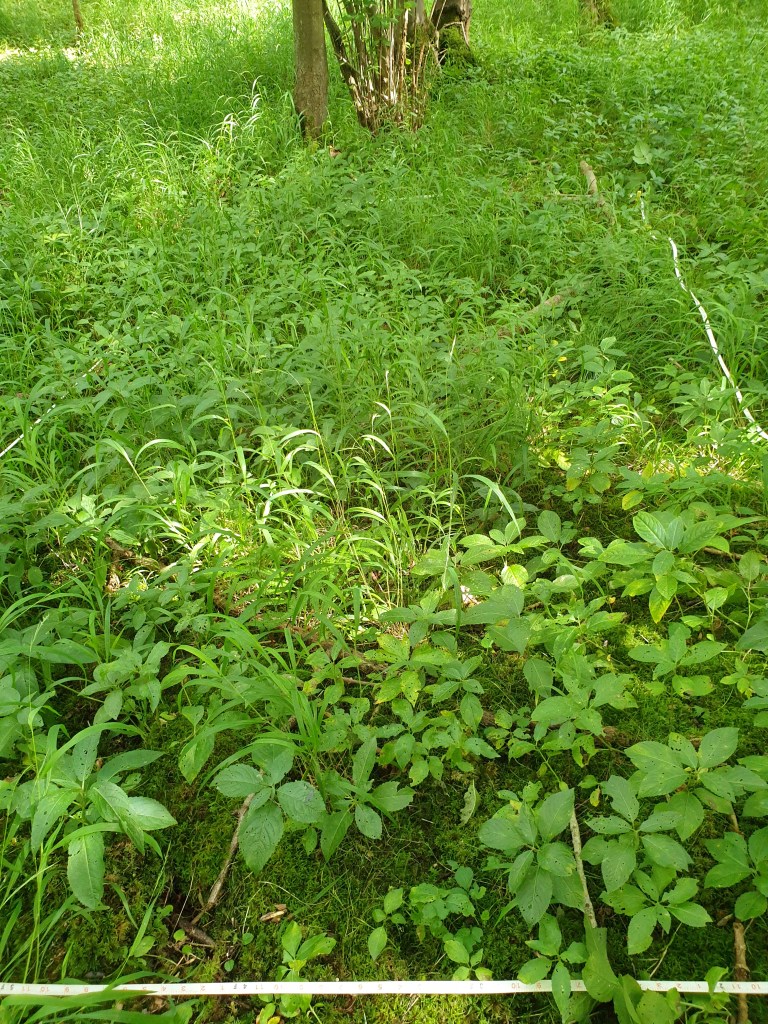
A raked plot in July 2014 and the same plot in 2023.
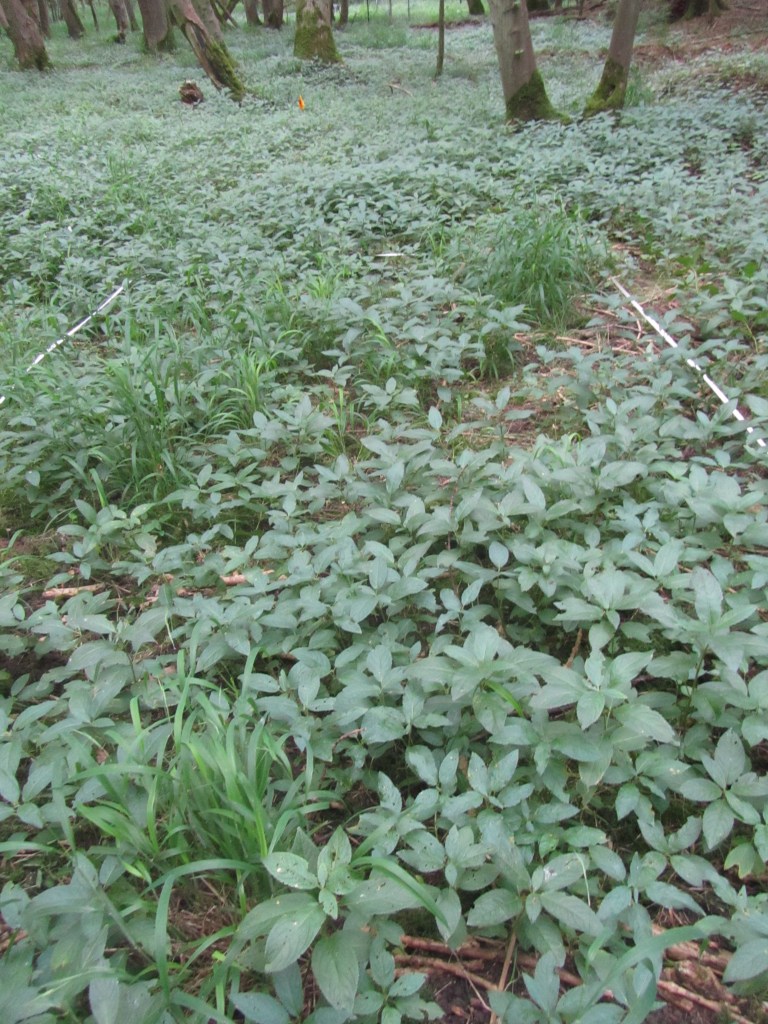

A double litter plot in 2014 and in 2023.
Maintaining and recording it is not cost-free: apart from my recording time (not much admittedly), there are two-days-worth of litter raking each year for a team of four or five volunteers. There are other things we could usefully do with that time. A further complication is that ash dieback is now affecting the canopy of the plots with some more affected than others, and this will compromise the future validity of the experimental design. There are no plans to close the experiment down, but I would be surprised if it does not come under review in the next few years.
I am a fan of long-term studies and efforts to keep them going, but succession planning becomes an issue, as George Peterken has discussed in his book on the Lady Park Wood recordings (Peterken and Mountford, 2017). We also acknowledge that sometimes long-term studies should be terminated because they have run their course.
BRÉCHET, L. M., LOPEZ-SANGIL, L., GEORGE, C., BIRKETT, A. J., BAXENDALE, C., CASTRO TRUJILLO, B. & SAYER, E. J. 2018. Distinct responses of soil respiration to experimental litter manipulation in temperate woodland and tropical forest. Ecology and Evolution, 8, 3787-3796.
DAWKINS, H. C. D. & FIELD, D. R. B. 1978. A long-term surveillance system for British woodland vegetation. Commonwealth Forestry Institute Occasional Paper 1. Oxford: Commonwealth Forestry Institute.
PETERKEN, G. F. & MOUNTFORD, E. P. 2017. Woodland development: a long-term study of Lady Park Wood, Wallingford, UK, CABI.

 The Old Man of Wytham
Oh that’s a conundrum. I’m thinking of succession planning in a totally different context, but I can’t believe the permanent Wytham plots have run their course. We never know what’s next round the corner.
LikeLike